Nadda Reviews RML Hospital, Eyes 2,204-Bed Capacity Boost
Synopsis
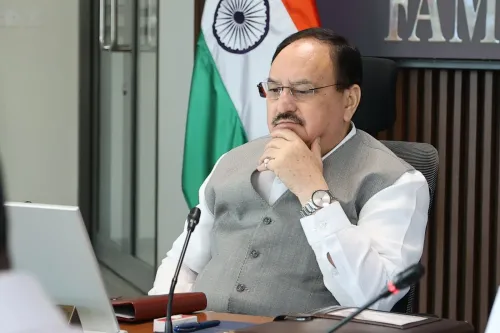
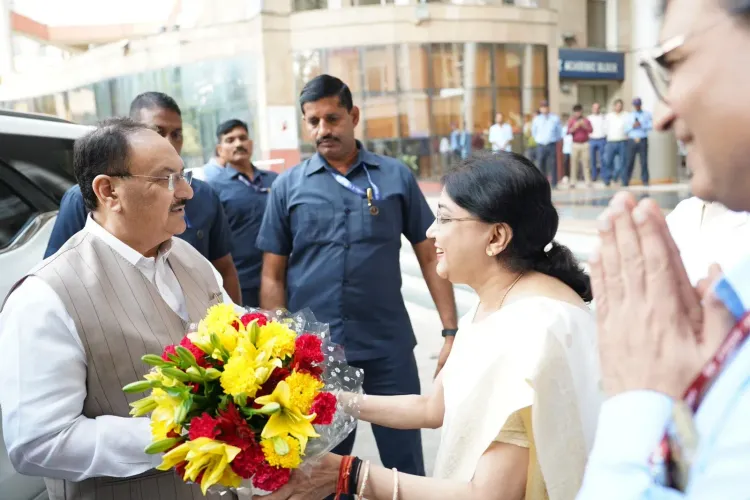
Union Health Minister J. P. Nadda reviewed ABVIMS and Dr. RML Hospital in New Delhi on 23 October 2026, highlighting an upcoming 666-bed Super Speciality Block that will raise total capacity to 2,204 beds, full NABH accreditation, and over 19 lakh OPD visits recorded in 2025.
Key Takeaways
Union Health Minister J.
Nadda conducted an on-site review of ABVIMS and Dr.
RML Hospital, New Delhi on 23 October 2026 .
An upcoming 666-bed Super Speciality Block will increase the hospital's total capacity to 2,204 beds , strengthening advanced and critical care services.
The hospital recorded over 19 lakh OPD visits in 2025 and achieved full NABH accreditation , a key clinical-quality benchmark.
Nadda stressed greater adoption of Ayushman Bharat Digital Mission (ABDM) tools for digitising patient records across the facility.
The minister also highlighted mental well-being of students and faculty and the ongoing cleanliness and efficiency drive under #SpecialCampaign6 .
The review aligns with the central government's broader push to upgrade premier Delhi hospitals under the Ayushman Bharat framework launched in 2018 .
A 666-bed Super Speciality Block, full NABH accreditation, and over 19 lakh OPD visits in 2025 — Union Health Minister J. P. Nadda walked the floors of ABVIMS and Dr. Ram Manohar Lohia Hospital, New Delhi, on Friday, 23 October 2026, and came away with a progress report that points squarely at the federal government's ambition to turn its flagship capital hospitals into tertiary-care powerhouses.
The 666-Bed Block That Will Reshape RML's Skyline
The centrepiece of Friday's review was the upcoming 666-bed Super Speciality Block, whose commissioning will push the hospital's total capacity from its current level to 2,204 beds. Nadda described the addition as one that will 'enhance advanced and critical care services' — a direct acknowledgement that high-acuity wards, ICU expansion, and specialist theatre space are where the bottleneck bites hardest in an oversubscribed public hospital. ABVIMS and Dr. RML Hospital already functions as one of New Delhi's busiest central-government teaching facilities, combining the Atal Bihari Vajpayee Institute of Medical Sciences with the legacy infrastructure of the Dr. Ram Manohar Lohia campus.
19 Lakh OPD Visits and NABH's Gold Standard
The numbers Nadda cited are striking. Recording more than 19 lakh outpatient visits in a single year places RML among the highest-footfall government hospitals in the country — a throughput that makes the quality accreditation question anything but academic. The minister specifically commended the hospital for achieving full NABH accreditation, the benchmark awarded by the National Accreditation Board for Hospitals and Healthcare Providers, a framework that has been progressively mandated for central government facilities since its introduction in 2005 to enforce clinical-safety and process standards.
Digital Health, Student Well-being, and the Cleanliness Push
Beyond bricks and beds, Nadda pressed on three softer but strategically important fronts. He emphasised greater adoption of digital healthcare tools under the Ayushman Bharat Digital Mission (ABDM) — the national programme, rolled out in 2020, that creates portable digital health IDs and interoperable patient records. At a teaching hospital, that digitisation effort intersects directly with the second priority he flagged: the mental well-being of students and faculty, a concern that has grown louder across India's medical institutions in recent years. The third front was operational hygiene, with the minister urging adherence to #SpecialCampaign6 — the latest edition of the government-wide drive for cleanliness, record management, and grievance redressal in central offices.
A Pattern of Upgrading Delhi's Central Hospitals
Friday's visit fits a clear template. Successive Union budgets have earmarked funds for super-speciality block construction and bed augmentation across premier Delhi institutions. The Ayushman Bharat programme, launched in 2018, set the architecture for expanding secondary and tertiary capacity in government hospitals, and ABDM built the digital layer on top of it. Each ministerial review of a flagship hospital now doubles as a public accountability moment — a signal that timelines and metrics are being watched from the top. The question that will matter next is when the 666-bed block actually opens, and how quickly it can be staffed to match its physical footprint.
For the patients already crowding RML's outpatient queues, the answer to that question is the only number that counts.
Point of View
Nadda is simultaneously claiming credit for delivery and setting a measurable benchmark for the next accountability cycle. The push on ABDM adoption inside a high-footfall teaching hospital signals that digital health integration is now an auditable expectation, not an aspiration. The real test of this review's weight will come when the Super Speciality Block's commissioning date is formally announced and staffing commitments are made public.
NationPress
23 Oct 2026
Frequently Asked Questions
What is the current bed capacity of Dr. RML Hospital and how will it change?
After the upcoming 666-bed Super Speciality Block is commissioned, Dr. RML Hospital's total capacity will rise to 2,204 beds , adding significant advanced and critical care facilities to one of New Delhi's busiest central-government hospitals.
What is NABH accreditation and why does it matter for RML Hospital?
NABH stands for the National Accreditation Board for Hospitals and Healthcare Providers. Full NABH accreditation signals that a hospital meets rigorous clinical-safety, infection-control, and patient-care process standards — a benchmark progressively mandated for central government hospitals since 2005 .
What is the Ayushman Bharat Digital Mission (ABDM)?
The Ayushman Bharat Digital Mission (ABDM) , rolled out in 2020 , is a national programme that creates unique digital health IDs for citizens and enables interoperable electronic health records across hospitals and clinics, making patient data portable and accessible.
What is Special Campaign 6.0 in government offices?
Special Campaign 6.0 is the latest government-wide drive for cleanliness, efficient record management, and grievance redressal across central government offices and institutions, including public hospitals like RML.
How many OPD visits did Dr. RML Hospital record in 2025?
According to Union Health Minister J. P. Nadda's review on 23 October 2026 , ABVIMS and Dr. RML Hospital recorded over 19 lakh outpatient visits in 2025 , underlining its position as one of Delhi's highest-footfall public healthcare facilities.