Anaemia Mukt Bharat Abhiyaan guidelines to be released by JP Nadda Monday
Synopsis
India's anaemia programme is getting a structural overhaul — not just a rename. The shift to 'Anaemia Mukt Bharat Abhiyaan' introduces a T4 model (Test, Treat, Talk, Track), a unified digital portal merging JANANI, RBSK and U-WIN data, and a community participation push. The real question is whether state health systems can execute this at the scale that NFHS data demands.
Key Takeaways
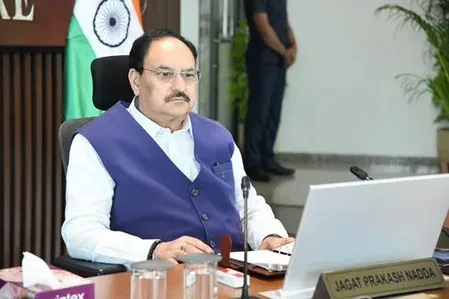
Nadda will release the Anaemia Mukt Bharat Abhiyaan operational guidelines on 30 June at Vigyan Bhawan, New Delhi .
The programme upgrades from the T3 (Test, Treat, Talk) to the T4 approach, adding systematic tracking of beneficiaries.
A unified Anaemia Mukt Bharat Abhiyaan Portal will merge data from the JANANI , RBSK , and U-WIN portals.
Target groups include children , adolescents , and women of reproductive age , with interventions covering testing, supplementation, deworming, and dietary counselling.
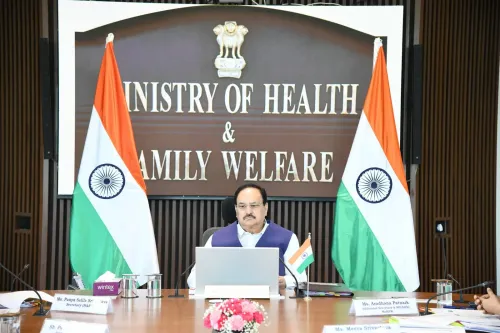
The launch takes place at the 16th Meeting of the Central Council of Health and Family Welfare (CCHFW) .
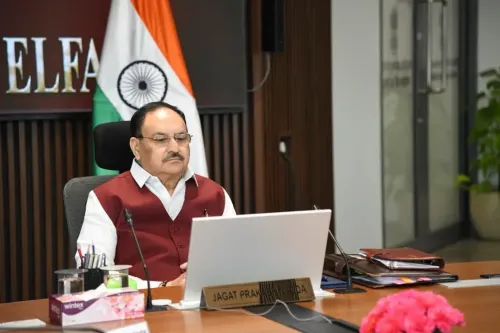
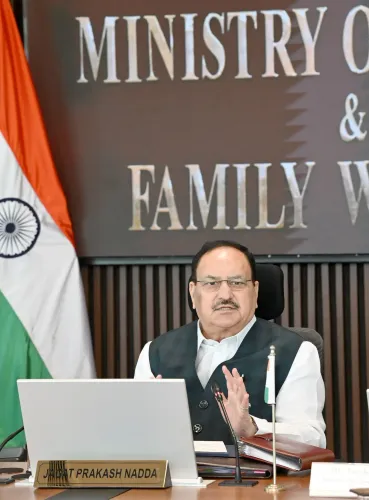
Union Health and Family Welfare Minister J.P. Nadda is set to release the operational guidelines for the Anaemia Mukt Bharat Abhiyaan (AMBA) on Monday, 30 June, marking a significant upgrade to India's flagship programme against anaemia. The release will take place during the 16th Meeting of the Central Council of Health and Family Welfare (CCHFW) at Vigyan Bhawan, New Delhi, according to an official statement.
What the New Guidelines Cover
The transition from Anaemia Mukt Bharat to Anaemia Mukt Bharat Abhiyaan signals a shift from a supplementation-focused model to a holistic, technology-enabled framework. The revised programme extends beyond iron supplementation to include haemoglobin testing, therapeutic management, dietary counselling, digital tracking, and community participation through Jan Chetna.
A central feature of the new strategy is the move from the T3 approach — Test, Treat, Talk — to the T4 approach: Test, Treat, Talk and Track. The addition of systematic tracking is designed to ensure beneficiaries receive referrals and follow-up care, rather than one-time interventions.
Digital Infrastructure and Monitoring
The guidelines will establish a unified digital ecosystem to monitor anaemia services across all beneficiary groups. Haemoglobin testing records for pregnant women will be mapped through the JANANI Portal (Journey of Antenatal, Natal and Neonatal Integrated Care), while data for children will be captured via the Rashtriya Bal Swasthya Karyakram (RBSK) and Universal Immunisation WIN (U-WIN) portals.
These platforms are slated to converge into a single Anaemia Mukt Bharat Abhiyaan Portal, enabling comprehensive monitoring, analysis, and evidence-based planning at the national level.
Who the Programme Targets
The Union government is intensifying efforts to reduce anaemia prevalence among the most vulnerable groups — children, adolescents, and women of reproductive age. Interventions will include prophylactic iron supplementation, deworming, and systematic testing, in line with national anaemia management protocols.
Notably, anaemia remains one of India's most persistent public health challenges, with high prevalence rates among women and children documented across successive National Family Health Surveys.
Significance of the CCHFW Meeting
The 16th CCHFW Meeting serves as the formal platform for the launch, reaffirming the Centre's commitment to strengthening nutrition and maternal and child health. The council, which brings together Union and state health officials, is a key body for coordinating national health policy. The release of the operational guidelines at this forum is expected to accelerate state-level adoption and implementation of the revised programme framework.
With the guidelines now formalising a more structured and trackable approach, the next phase will test whether state health systems can operationalise the T4 model at scale — particularly in high-burden districts.
Point of View
Yet the condition remains stubbornly prevalent — particularly among women and children in high-burden states. The rebranding to 'Abhiyaan' and the shift to a T4 model are directionally sound, but the history of similar national health schemes shows that digital portals and updated protocols rarely translate into outcomes without district-level capacity and accountability. The convergence of JANANI, RBSK, and U-WIN data is a genuine step forward in monitoring, but the harder challenge — ensuring frontline health workers actually use the system — remains unaddressed in the official statement. The 16th CCHFW meeting is the right forum for this launch; whether states treat it as a mandate or a formality will determine whether AMBA 2.0 moves the needle on NFHS numbers.
NationPress
27 Sept 2026
Frequently Asked Questions
What is the Anaemia Mukt Bharat Abhiyaan?
The Anaemia Mukt Bharat Abhiyaan (AMBA) is an upgraded version of the earlier Anaemia Mukt Bharat programme, designed to be a more comprehensive, people-centric, and technology-enabled initiative. It expands the focus beyond iron supplementation to include haemoglobin testing, therapeutic management, dietary counselling, digital tracking, and community participation through Jan Chetna.
When and where will the AMBA guidelines be released?
Union Health Minister J.P. Nadda will release the operational guidelines on Monday, 30 June, during the 16th Meeting of the Central Council of Health and Family Welfare (CCHFW) at Vigyan Bhawan in New Delhi.
What is the T4 approach introduced under the new programme?
The T4 approach stands for Test, Treat, Talk, and Track — an upgrade from the earlier T3 model (Test, Treat, Talk). The addition of 'Track' means beneficiaries will be systematically followed up for referral and continued care, rather than receiving one-time interventions.
Which digital portals will be used to monitor the programme?
Haemoglobin testing data for pregnant women will be recorded on the JANANI Portal, while children's records will be captured through the RBSK and U-WIN portals. All three platforms will converge into a single Anaemia Mukt Bharat Abhiyaan Portal for unified monitoring and evidence-based planning.
Who are the primary beneficiaries of the Anaemia Mukt Bharat Abhiyaan?
The programme primarily targets children, adolescents, and women of reproductive age — groups identified as most vulnerable to anaemia. Interventions include prophylactic iron supplementation, deworming, haemoglobin testing, and targeted nutritional counselling.