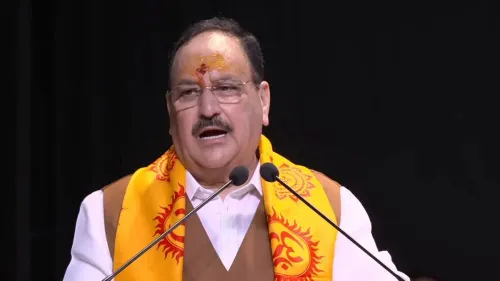
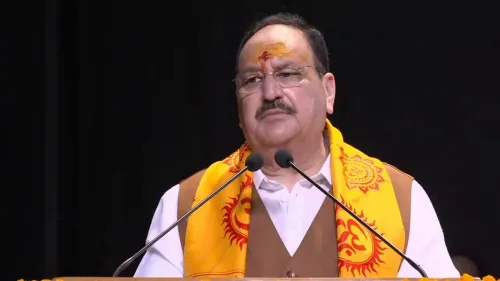
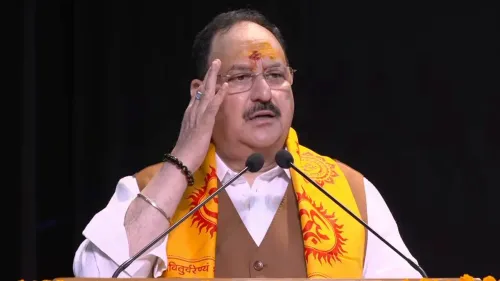
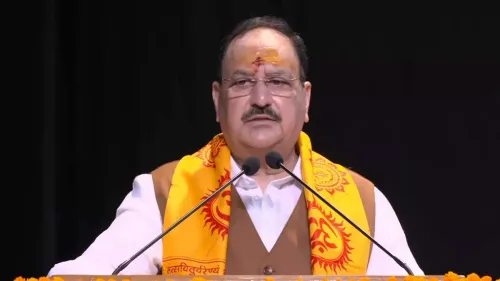
Nadda urges Indians to join organ donation drive
Synopsis
Union Health Minister J. P. Nadda on 27 June 2026 appealed to all Indians to join the organ donation campaign, serve those in need, and spread awareness under the motto 'We will change — the era will change', amplifying a long-standing policy push to address India's critically low deceased donor rates.
Key Takeaways
Nadda , Union Health Minister and BJP national president, posted a video appeal on 27 June 2026 urging citizens to join the organ donation campaign.
He asked the public to embody the motto 'हम बदलेंगे - युग बदलेगा' ('We will change — the era will change') and spread awareness among peers.
India has one of the lowest deceased organ donation rates globally, creating a chronic shortage for transplant patients.
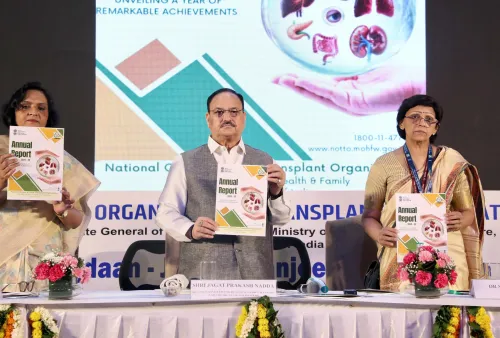
NOTTO , established in 2014 , is the national nodal body coordinating organ retrieval and allocation under the Transplantation of Human Organs and Tissues Act, 1994 .
The Health Ministry integrated organ donation awareness into the Ayushman Bharat Digital Mission platform in 2023 to ease digital pledge registration.
State-level follow-up drives and NOTTO pledge registration trends in the coming quarter will indicate the real-world impact of the ministerial appeal.
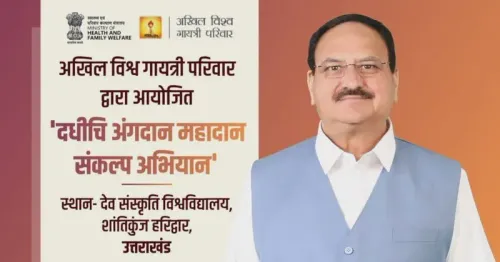
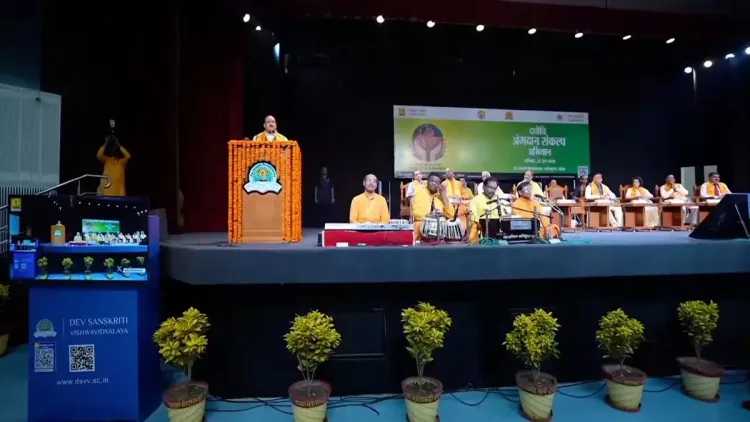
Union Health Minister J. P. Nadda on Saturday, 27 June 2026, called on all citizens to participate in the organ donation campaign and help those in need, sharing a video message on X to amplify the appeal.
In his post, Nadda appealed, 'मैं सभी से निवेदन करता हूँ कि अंगदान के इस परोपकारी अभियान से जुड़कर जरूरतमंदों की सेवा करें' ['I request everyone to join this noble organ donation campaign and serve those in need'], urging citizens to rally around the motto 'हम बदलेंगे - युग बदलेगा' ['We will change — the era will change'] and spread awareness among others.
Context
India continues to record one of the lowest rates of deceased organ donation in the world, creating a persistent gap between the number of patients awaiting transplants and the organs available. Voluntary pledge campaigns have repeatedly been identified as the primary lever to bridge this deficit. As the country's top health official and BJP national president, Nadda's social media outreach carries both policy weight and political reach.
Policy Backdrop
The National Organ and Tissue Transplant Organisation (NOTTO), established in 2014, serves as the nodal body for organ retrieval, allocation and transplantation across India. It operates under the framework of the Transplantation of Human Organs and Tissues Act, 1994, which was significantly amended in 2011 to broaden the regulatory scope. The National Organ Transplant Programme was launched as a central scheme to build both infrastructure and public awareness around deceased and living donation.
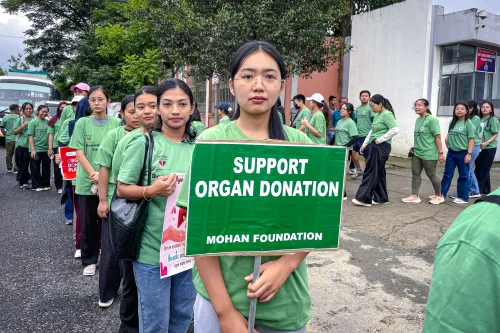
Earlier nationwide efforts, including the Angdaan Abhiyan of 2016–17, sought to increase voluntary donor pledges at scale. More recently, in 2023, the Health Ministry integrated organ donation awareness into the Ayushman Bharat Digital Mission platform, making it easier for citizens to register their intent digitally.
Stakeholders and Impact
The appeal directly concerns the thousands of organ failure patients on transplant waiting lists across India, for whom a voluntary donor pledge can be the difference between life and death. Civil society organisations, hospitals empanelled under NOTTO, and state health departments are the key implementers who translate ministerial appeals into on-ground pledge drives and donor registrations. Citizens who register as donors and their families remain the most critical link in the chain.
Successive health ministers have used public platforms and social media to link individual action — the pledge of a single donor — to systemic improvement in national transplant outcomes. Nadda's post extends this tradition, pairing a moral appeal with a call for peer-to-peer awareness, asking those who see the message to also educate others around them.
What's Next
Observers will watch NOTTO pledge registration trends in the weeks following the minister's appeal, as well as any state-level follow-up drives or hospital empanelment announcements. Sustained momentum typically requires coordinated action from state health authorities, and the coming quarter will indicate whether this social media push translates into measurable increases in donor registrations. A broader era of change in India's transplant landscape, as the motto envisions, will ultimately depend on consistent policy reinforcement alongside public awareness.
Point of View
Not merely a medical transaction. As BJP national president doubling as Health Minister, Nadda's outreach also serves a political function: demonstrating the party's social-welfare credentials on a non-partisan issue. The real test, however, lies in whether this digital momentum is matched by state-level implementation and a measurable uptick in NOTTO registrations.
NationPress
27 Jun 2026
Frequently Asked Questions
What did JP Nadda say about organ donation?
On 27 June 2026, J. P. Nadda urged all Indians to join the organ donation campaign, serve those in need, and spread awareness under the motto 'We will change — the era will change'.
What is NOTTO and how does it relate to organ donation in India?
NOTTO, the National Organ and Tissue Transplant Organisation, was established in 2014 as the nodal body that coordinates organ retrieval, allocation and transplantation across India under the Health Ministry.
How can I register as an organ donor in India?
Citizens can register as organ donors through the NOTTO portal or via the Ayushman Bharat Digital Mission platform, which integrated organ donation awareness and pledge registration in 2023.
Why is organ donation awareness important in India?
India records one of the lowest deceased organ donation rates globally, meaning thousands of patients on transplant waiting lists face critical shortages; voluntary pledges are the primary way to address this gap.
What is the Angdaan Abhiyan?
The Angdaan Abhiyan was a nationwide organ donation awareness campaign run by the Health Ministry in 2016–17 to increase voluntary donor pledges across India.