Nagaland Governor urges collective push to preserve Northeast tribal heritage
Synopsis
With over 86.5% of Nagaland's 20 lakh people belonging to tribal communities, Governor Nand Kishore Yadav's call at a national seminar in Kohima for universities and policymakers to actively preserve Northeast India's indigenous heritage is more than ceremonial — it is a warning that globalisation and urbanisation are quietly eroding languages, oral traditions, and cultural identity that took centuries to build.
Key Takeaways
Nagaland Governor Nand Kishore Yadav on 22 May called for collective efforts to document and preserve the tribal heritage of Northeast India .
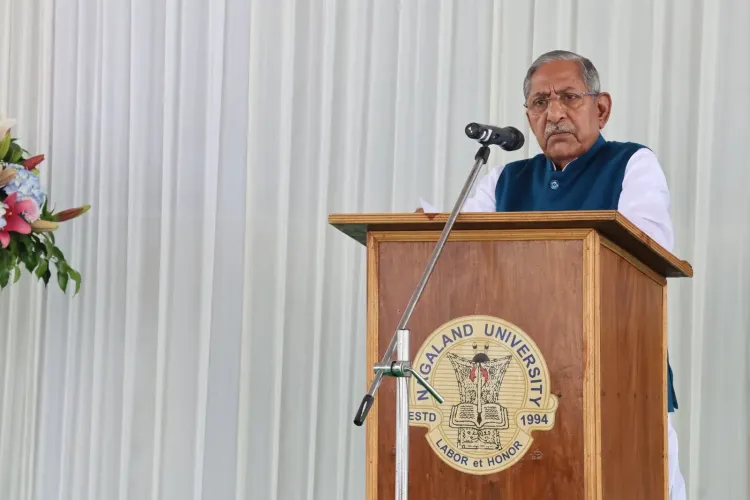
He addressed the inaugural session of a national seminar themed 'Revisiting Tribal Heritage of Northeast India: Challenges and Opportunities' at Nagaland University, Kohima .
Yadav flagged the steady decline of indigenous languages, fading oral traditions, and younger generations losing touch with cultural roots.
More than 86.5% of Nagaland's 20 lakh population belongs to tribal communities, underlining the cultural stakes.
Venuh (Pro-Vice Chancellor) and Vice Chancellor Prof.
Jagadish Kumar Patnaik also addressed the seminar.
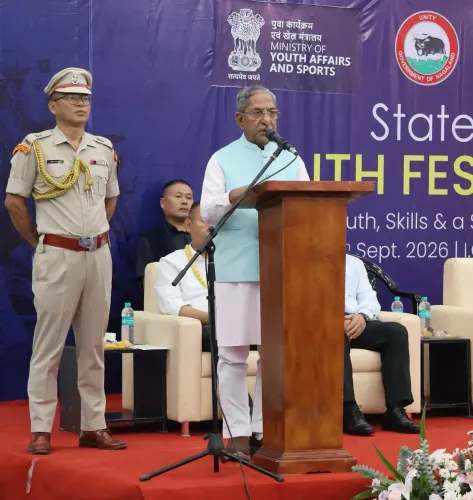
Nagaland Governor Nand Kishore Yadav on Friday, 22 May called upon academic institutions, researchers, policymakers, and civil society organisations to collectively document, preserve, promote, and reinterpret the tribal heritage of Northeast India in ways that remain meaningful to contemporary society. The appeal came during the inaugural session of a national seminar held at Nagaland University in Kohima.
Key Developments at the Seminar
The national seminar, themed 'Revisiting Tribal Heritage of Northeast India: Challenges and Opportunities', was organised by the School of Humanities and Education, Meriema Campus, Nagaland University, Kohima. Governor Yadav addressed the inaugural session alongside Prof. N. Venuh, Pro-Vice Chancellor of Nagaland University's Kohima Campus, and Vice Chancellor Prof. Jagadish Kumar Patnaik, among other scholars and experts from across the country.
Yadav stressed that preserving heritage should not be viewed as resistance to progress, but as a means of ensuring that development remains culturally sensitive, inclusive, and sustainable.
What the Governor Said
Highlighting the role of universities in safeguarding indigenous traditions, Yadav said Nagaland University can play a transformative role by encouraging interdisciplinary studies, strengthening indigenous knowledge systems, promoting local languages, and bridging traditional wisdom with modern scholarship.
He underlined the extraordinary diversity of tribes, languages, customs, and indigenous knowledge systems across the Northeast, describing the region's tribal heritage as an invaluable part of India's collective civilisational and cultural legacy.
The Governor also pointed to the immense traditional wisdom tribal communities hold — particularly in environmental conservation, sustainable living, community harmony, and coexistence with nature — arguing that these indigenous knowledge systems offer valuable lessons for addressing contemporary global challenges such as ecological sustainability and social cohesion.
Concerns Over Erosion of Cultural Identity
Yadav expressed concern over the growing pressures of rapid globalisation, modernisation, urbanisation, and technological advancement, noting that many traditional institutions and cultural practices are gradually weakening. He specifically pointed to the steady decline of indigenous languages, the fading of oral traditions, and a growing disconnect among younger generations from their cultural roots.
In this context, he emphasised the importance of academic discussions, research initiatives, and seminars aimed at revitalising tribal heritage and cultural identity in the Northeast.
Why This Matters: Nagaland's Tribal Fabric
The demographic context lends urgency to the conversation: more than 86.5% of Nagaland's 20 lakh population belongs to various tribal communities, making the preservation and promotion of indigenous heritage a matter of significant social and cultural importance for the state. This comes amid a broader national conversation about balancing rapid development with the protection of India's diverse indigenous identities.
As intellectual exchanges of this kind gain momentum, the seminar's outcomes are expected to feed into policy discussions on tribal heritage, identity, and development across Northeast India.
Point of View
But the real test is whether a seminar translates into sustained policy. Northeast India's tribal languages are disappearing at a pace that academic conferences alone cannot reverse — UNESCO has flagged several of them as endangered. The framing of heritage preservation as compatible with development, rather than opposed to it, is a necessary rhetorical shift; but without dedicated funding for language documentation, school curricula in indigenous languages, and legal protections for oral knowledge systems, the call risks remaining symbolic. India has signed international frameworks on indigenous rights, yet domestic implementation remains patchy. Nagaland University's role here is critical — and underfunded.
NationPress
15 Oct 2026
Frequently Asked Questions
What was the national seminar at Nagaland University about?
The seminar was themed 'Revisiting Tribal Heritage of Northeast India: Challenges and Opportunities' and was organised by the School of Humanities and Education, Meriema Campus, Nagaland University, Kohima. It brought together scholars, researchers, and experts from across the country to discuss the preservation and promotion of Northeast India's tribal heritage.
What did Nagaland Governor Nand Kishore Yadav say at the seminar?
Governor Yadav called on academic institutions, researchers, policymakers, and civil society to collectively document and preserve the tribal heritage of Northeast India. He warned that globalisation, urbanisation, and modernisation are causing indigenous languages and oral traditions to fade, and argued that heritage preservation is essential for culturally sensitive development.
Why is tribal heritage preservation particularly significant for Nagaland?
More than 86.5% of Nagaland's 20 lakh population belongs to various tribal communities, making indigenous heritage central to the state's social and cultural identity. The high tribal demographic concentration means that erosion of traditional practices and languages has an outsized impact on the state's cultural fabric.
What role did the Governor say Nagaland University should play?
Governor Yadav said Nagaland University can play a transformative role by encouraging interdisciplinary studies, strengthening indigenous knowledge systems, promoting local languages, and bridging traditional wisdom with modern scholarship.
Who else addressed the seminar?
Prof. N. Venuh, Pro-Vice Chancellor of Nagaland University's Kohima Campus, and Vice Chancellor Prof. Jagadish Kumar Patnaik also addressed the seminar, alongside scholars and experts from different parts of the country.