Nagaland tops SDG-5 Gender Equality ranking, CM Rio tells NITI Aayog council
Synopsis
Nagaland has quietly climbed to the top of India's Gender Equality SDG rankings — a notable achievement for a small northeastern state. At the NITI Aayog's 11th Governing Council, CM Rio leveraged that credibility to push for an IIT, AIIMS, a greenfield airport, and a trans-state highway, signalling that SDG performance is now Nagaland's bargaining chip with New Delhi.
Key Takeaways
Nagaland has emerged as a national frontrunner in SDG-5 (Gender Equality) , according to Chief Minister Neiphiu Rio .
Mokokchung , Kohima , and Dimapur ranked among the top 10 in the Northeast District SDG Index 2.0 .
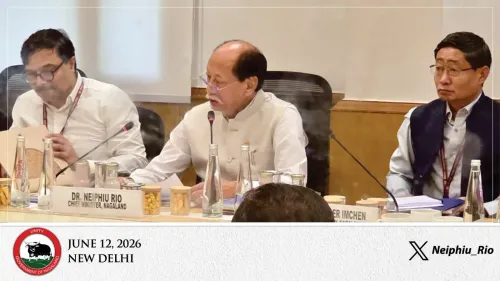
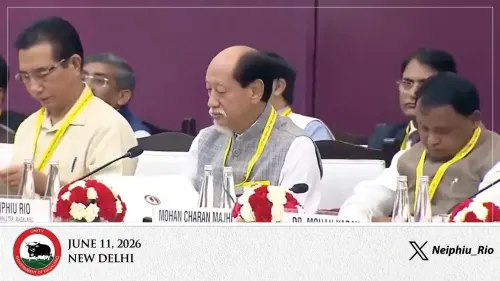
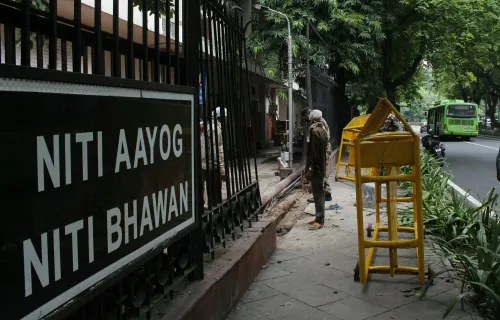
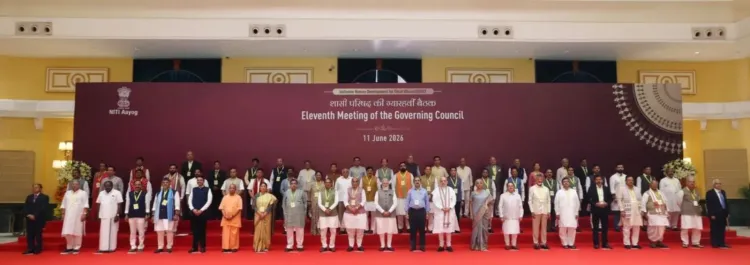
Rio addressed the NITI Aayog 11th Governing Council meeting in New Delhi on 12 June .
Key women-led initiatives include the Innovation Seed Fund for nano entrepreneurs and Pink Scooty Taxis .
The state has requested Centre support for a Greenfield Airport at Ciethu , IIT , AIIMS , and the Trans-Nagaland Highway .
A proposed AI Research Centre at Kohima and the e-GRAS digital revenue platform reflect the state's digital governance push.
Nagaland has emerged as a national frontrunner in SDG-5 (Gender Equality), Chief Minister Neiphiu Rio declared on Thursday, 12 June, while addressing the NITI Aayog 11th Governing Council meeting in New Delhi. Rio highlighted the state's broad progress across Sustainable Development Goals (SDGs), underscoring Nagaland's commitment to inclusive growth, women's empowerment, and sustainable development.
District-Level Recognition
Rio told the council that Mokokchung, Kohima, and Dimapur districts have been ranked among the top 10 performers in the Northeast District SDG Index 2.0. The Chief Minister expressed appreciation to Prime Minister Narendra Modi for convening the Governing Council meeting and reaffirmed Nagaland's commitment to the vision of Viksit Bharat @ 2047.
Governance and Fiscal Reforms
Rio outlined several governance reforms introduced by the state government, including an SDG-linked Budget Architecture, a Gender Budget Statement, and an Outcome Budgeting Framework aimed at strengthening transparency, accountability, and evidence-based planning. On the fiscal side, he cited the modernisation of land revenue systems, implementation of e-Stamping, rollout of the e-GRAS digital revenue platform, and the establishment of a Revenue and Development Fund Mobilisation Cell.
Women, Youth and Green Economy Initiatives
On women-led development, Rio highlighted the Innovation Seed Fund for nano women entrepreneurs and the introduction of Pink Scooty Taxis. He also spoke about the Nagaland Strategic Water Resilience Initiative, the expansion of bamboo-based value chains, and programmes promoting the green economy.
For youth empowerment, he cited the Nagaland Skill and Entrepreneurship Development Mission, the Nagaland Apprenticeship and Placement Exchange, the Chief Minister's STEM Incentive Programme, the Academic Excellence Corpus, and the Open Learning Support Scheme. Sports initiatives including the 'Catch Them Young, Teach Them Right' tournament and the Nagaland Super League were also highlighted, along with the creation of sports infrastructure across districts.
Agriculture, Tourism and Digital Governance
In agriculture, Rio stressed the need to strengthen food processing and post-harvest infrastructure to cut losses and improve market access. He spotlighted the Cluster-Based Coffee Value Chain Development Programme and cultivation of high-value horticultural crops including kiwi, persimmon, dragon fruit, avocado, and pineapple.
Rio underscored tourism's economic role, noting the contribution of the Hornbill Festival in promoting cultural heritage and creating livelihoods for artisans, weavers, performers, food entrepreneurs, and small businesses, alongside Mini Hornbill Festivals supporting tribal culture at the grassroots. On digital governance, he referenced the Personal Information Management System (PIMS), the Nagaland State Data Sharing and Accessibility Policy, the Common Scholarship Portal, and a proposed AI Research Centre at Kohima.
Infrastructure Requests to the Centre
Rio sought continued support from the Government of India for major infrastructure projects, including the Foothill Road (Trans-Nagaland Highway), a Greenfield Airport at Ciethu, establishment of an IIT and AIIMS in Nagaland, development of Nagaki City, railway expansion, resumption of oil and natural gas exploration, inland waterways development, urban flyovers, promotion of agarwood cultivation, and strengthening of power transmission infrastructure. The Chief Minister expressed confidence that the council's deliberations would strengthen cooperative federalism and contribute to a more resilient, developed India.
Point of View
But the metric's methodology deserves scrutiny — northeastern states often score well on formal gender indicators while structural barriers in land rights and inheritance persist under customary law. Rio's use of the ranking as a platform to seek an IIT, AIIMS, and a greenfield airport is smart statecraft, but the Centre's track record of approving such facilities for small northeastern states is uneven. The SDG-linked budget architecture is a credible reform signal; the real test is whether outcome budgeting translates into auditable results rather than another layer of reporting.
NationPress
13 Sept 2026
Frequently Asked Questions
How did Nagaland rank in SDG-5 Gender Equality?
Nagaland has emerged as a national frontrunner in SDG-5 (Gender Equality), according to Chief Minister Neiphiu Rio's address at the NITI Aayog 11th Governing Council on 12 June. The state's performance reflects initiatives such as the Innovation Seed Fund for nano women entrepreneurs and the introduction of Pink Scooty Taxis.
Which Nagaland districts featured in the Northeast District SDG Index 2.0 top 10?
Mokokchung, Kohima, and Dimapur were ranked among the top 10 performers in the Northeast District SDG Index 2.0, as highlighted by Chief Minister Rio at the NITI Aayog Governing Council meeting.
What infrastructure projects has Nagaland requested from the Centre?
Chief Minister Rio requested support for the Foothill Road (Trans-Nagaland Highway), a Greenfield Airport at Ciethu, an IIT, an AIIMS, development of Nagaki City, railway expansion, oil and natural gas exploration resumption, inland waterways, urban flyovers, agarwood cultivation promotion, and power transmission upgrades.
What governance reforms has Nagaland introduced?
Nagaland has adopted an SDG-linked Budget Architecture, a Gender Budget Statement, and an Outcome Budgeting Framework to improve transparency and evidence-based planning. Fiscal reforms include e-Stamping, the e-GRAS digital revenue platform, and a Revenue and Development Fund Mobilisation Cell.
What is the NITI Aayog Governing Council meeting?
The NITI Aayog Governing Council is the apex body for cooperative federalism in India, chaired by the Prime Minister and comprising all state Chief Ministers and Lieutenant Governors. The 11th meeting, held in New Delhi, focused on the theme of Human Capital for Viksit Bharat @ 2047.