Nagpur cyclotron project: Maharashtra cabinet clears ₹300 crore cancer care hub
Synopsis
Maharashtra has approved a ₹300 crore cyclotron facility in Nagpur that could end the diagnostic exodus of cancer patients from Central India. By producing radioisotopes locally, the project aims to make PET-CT and nuclear medicine accessible across five states — a rare instance of health infrastructure being built where the patient load actually is, not where the money is.
Key Takeaways
The Maharashtra cabinet approved the High-Energy Medical Cyclotron Project (HEMCP) in Nagpur on 16 June with a budget of ₹300 crore .
Funding is split 50:50 between the Medical Education Department and the Industry Department ; the former will immediately release ₹150 crore .
A 30-hectare site at Bhansoli (Kinhi), Hingna taluka has been allocated for the facility.
The hub will serve patients within a 500-km radius across Maharashtra, Madhya Pradesh, Chhattisgarh, Telangana , and Andhra Pradesh .
The project will be executed via a Special Purpose Vehicle under Mahacare , overseen by a steering committee led by Shrikar Pardeshi until the SPV is constituted.
The cabinet also approved the Maharashtra Rural Drinking Water Policy 2026 , capping household tariffs at ₹150–₹400 per month.
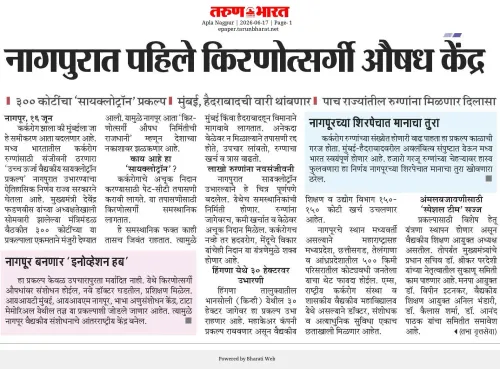
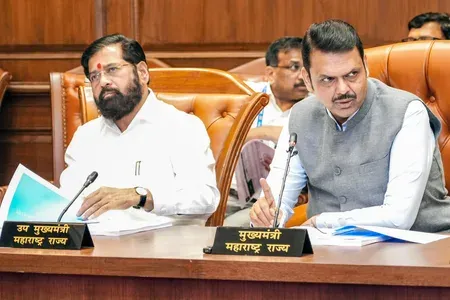
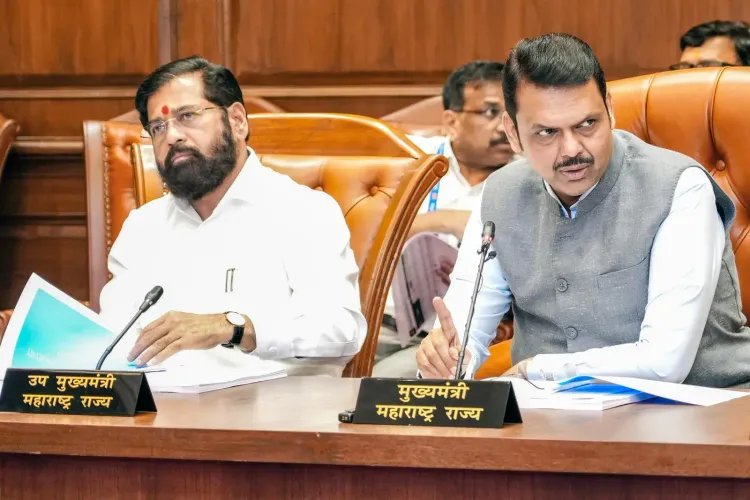
The Maharashtra cabinet, chaired by Chief Minister Devendra Fadnavis, on Tuesday, 16 June approved the establishment of a High-Energy Medical Cyclotron Project (HEMCP) in Nagpur at an estimated cost of ₹300 crore. The decision is expected to significantly improve access to advanced cancer diagnostics and treatment for patients across Central India, reducing dependence on distant medical hubs such as Mumbai and Hyderabad.
What the Project Entails
The HEMCP will transform Nagpur into a Radiopharmaceutical Innovation Hub, ensuring local availability of critical radioisotopes required for PET-CT and Nuclear Medicine services. A 30-hectare land parcel at Bhansoli (Kinhi) in Hingna taluka has been earmarked for the facility.
Funding will be shared equally between the Medical Education Department and the Industry Department on a 50:50 basis. The Medical Education Department will immediately release ₹150 crore as its initial contribution, according to the government release.
Execution and Governance Structure
The project will be executed through Mahacare, a dedicated Special Purpose Vehicle (SPV) incorporated under the Companies Act, 2013. Until the SPV is formally constituted, a steering committee chaired by Shrikar Pardeshi, Principal Secretary to the Chief Minister, will oversee operations and planning.
Notably, this institutional framework mirrors the state's approach to other large-scale health infrastructure projects, aiming to insulate execution from bureaucratic delays.
Who Will Benefit and Why Nagpur
Nagpur's central geographical position makes it a natural distribution point for radiopharmaceuticals. The facility is projected to serve patients within a 500-kilometre radius, covering Maharashtra, Madhya Pradesh, Chhattisgarh, Telangana, and Andhra Pradesh. It will leverage the existing healthcare ecosystem anchored by AIIMS Nagpur, the National Cancer Institute (NCI), and the Government Medical College (GMC).
This comes amid growing concern over the unequal distribution of nuclear medicine infrastructure in India, where PET-CT facilities remain heavily concentrated in metropolitan centres, leaving patients in Tier-2 and Tier-3 cities travelling hundreds of kilometres for diagnosis.
Cabinet Also Clears Rural Water Policy
In a separate decision, the cabinet approved the Maharashtra Rural Drinking Water Policy 2026, aimed at delivering sustainable, clean drinking water to rural households in line with the Viksit Maharashtra 2047 vision.
The policy creates a master plan for operations and maintenance of water schemes under Jal Jeevan Mission 2.0, with a central corpus fund at the Gram Panchayat, Zilla Parishad, and Maharashtra Jeevan Pradhikaran (MJP) levels. Monthly water tariffs for households have been capped between ₹150 and ₹400. SCADA systems, a GIS-based grievance dashboard, and the Nal Jal Seva mobile application will support real-time monitoring.
Priority for billing, collection, and maintenance contracts will be given to local Women Self-Help Groups (SHGs) and Primary Agricultural Credit Societies (PACS), with a three-tier Grievance Redressal Cell to handle complaints.
What Comes Next
With land already identified and the initial ₹150 crore allocation in place, the Mahacare SPV's formal constitution is the immediate next milestone. Industry observers will watch whether the project's execution timeline matches the ambition — radiopharmaceutical infrastructure typically requires stringent regulatory clearances from the Atomic Energy Regulatory Board (AERB) before commissioning.
Point of View
NCI, and GMC. The real test will be regulatory speed; AERB clearances for cyclotron facilities have historically been slow, and a project of this complexity could stall at that gate. The 50:50 industry co-funding model is also worth scrutiny — without naming a committed private partner, the ₹150 crore industry tranche remains contingent, not confirmed.
NationPress
24 Sept 2026
Frequently Asked Questions
What is the High-Energy Medical Cyclotron Project (HEMCP) approved in Nagpur?
The HEMCP is a ₹300 crore facility approved by the Maharashtra cabinet on 16 June to produce radioisotopes locally for PET-CT and Nuclear Medicine services. It will position Nagpur as a Radiopharmaceutical Innovation Hub serving patients across five states within a 500-km radius.
Where exactly will the Nagpur cyclotron project be built?
The facility will come up on a 30-hectare land parcel at Bhansoli (Kinhi) in Hingna taluka, Nagpur. The site has already been approved as part of the cabinet decision.
How will the ₹300 crore cyclotron project be funded?
Funding is split equally between the Medical Education Department and the Industry Department on a 50:50 basis. The Medical Education Department will immediately allocate ₹150 crore, with the remaining share expected from the Industry Department.
Which states will benefit from the Nagpur cyclotron hub?
The facility is designed to serve patients within a 500-kilometre radius, covering Maharashtra, Madhya Pradesh, Chhattisgarh, Telangana, and Andhra Pradesh. It will work in conjunction with AIIMS Nagpur, the National Cancer Institute, and the Government Medical College.
What is the Maharashtra Rural Drinking Water Policy 2026 approved in the same cabinet meeting?
It is a policy to ensure sustainable, clean drinking water for rural households under the Viksit Maharashtra 2047 vision, aligned with Jal Jeevan Mission 2.0. Monthly household tariffs are capped at ₹150 to ₹400, with SCADA systems and a GIS dashboard for real-time monitoring, and priority contracts for Women SHGs and PACS.