How Will the Regional Testing Laboratory Enhance Power Industries in Maharashtra?
Synopsis
The establishment of the Central Power Research Laboratory's regional testing facility in Nashik marks a transformative moment for Maharashtra's power industry. With local testing capabilities, industries can boost production, particularly in the electric vehicle sector, paving the way for sustainable energy solutions and positioning Maharashtra as a key player in India's energy landscape.
Key Takeaways
Establishment of RTL will eliminate testing travel for industries.
Nashik as a hub for electric vehicle manufacturing.
Rs 2 lakh crore investment in the energy sector.
Focus on sustainable energy and reliable power supply.
Growth of local industries through improved infrastructure.
Nashik, Sep 10 (NationPress) Chief Minister Devendra Fadnavis announced on Wednesday that the launch of the Central Power Research Laboratory's regional testing laboratory (RTL) in Nashik will eliminate the need for electrical equipment manufacturing industries to travel to Hyderabad or Bhopal for testing. This initiative lays the groundwork for local production of electrical equipment within the state.
“Maharashtra is poised to become a key hub for electric vehicle manufacturing in India. The establishment of electric vehicle testing facilities at the CPRI's regional testing laboratory in Nashik will further propel the growth of the EV sector,” he stated.
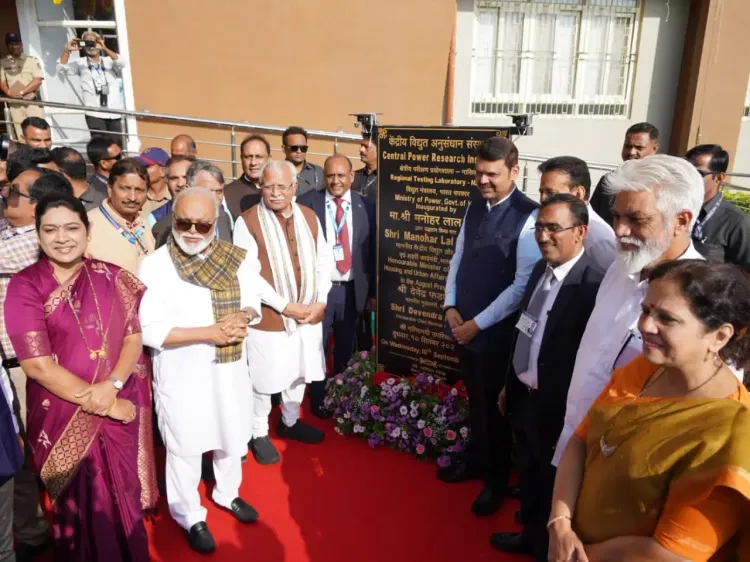
During the inauguration of the Regional Testing Laboratory of the Central Power Research Institute in Shilapur, the Chief Minister highlighted the presence of Union Power Minister Manohar Lal Khattar, along with state Ministers Chhagan Bhujbal, Girish Mahajan, and Dadaji Bhuse, as well as CPRI Director General Ashish Singh and others.
CM Fadnavis emphasized the significance of the CPRI's Regional Testing Laboratory for Maharashtra, noting that its approval was secured during the 12th Finance Commission, resulting in a robust system now in place.
Previously, investments in this sector were hampered due to high costs associated with testing electrical equipment.
“The RTL will establish essential systems for various products, ranging from transformers to electrical devices. The production of EVs is being supported in Pune, Nashik, and Chhatrapati Sambhajinagar, and this laboratory will benefit that sector,” he added.
“Under the leadership of Prime Minister Narendra Modi, significant reforms have been introduced in the energy sector. It is anticipated that electricity consumption will quadruple over the next 25 years, compared to the previous 25 years. Consequently, Maharashtra has initiated plans to install 45,000 MW of capacity over the last three years, aiming for self-sufficiency in energy,” stated the Chief Minister.
He mentioned that by strategizing for power generation, transmission, and distribution until 2035, the state is investing Rs 2 lakh crore in the energy sector, with support from the Central government. This investment focuses on enhancing electricity distribution networks, green energy generation, and reliable electricity supply.
He noted that Maharashtra ranks first in the Central government’s energy sector evaluation.
Looking ahead, he said: “In the next three to four years, Maharashtra will build a dependable energy infrastructure. The state is progressing towards implementing the world’s largest solar energy distribution system. In due course, 16,000 MW of electricity will be generated, allowing farmers to access daytime electricity. Additionally, electricity prices will be reduced by 2 percent annually from 2025 to 2030, benefiting both consumers and industries, alongside sustainable power supply provisions for industries.”
“Nashik district is transforming into a significant investment hub. In the past six months, seven major industrial firms have invested in the area. Mining equipment manufacturing will take place in Nashik. The district is establishing itself as a prominent investment center due to the Samruddhi Highway. Efficient transportation of goods from Nashik to JNPT will be facilitated, and Nashik will also be connected to Vadhavan Port, positioning it as an 'industrial junction' in the future,” remarked the Chief Minister.
Union Power Minister Khattar emphasized that this laboratory is vital for the power sector, as electrical appliances for both domestic and commercial use undergo rigorous testing before deployment. Every appliance in the power sector is manufactured based on quality testing standards. The RTL is crucial for this testing and will address the growing needs of industries in Western India. This advanced Regional Testing Laboratory symbolizes progress in science and engineering.
Point of View
The establishment of the Regional Testing Laboratory in Maharashtra signifies a strategic move towards energy independence and technological advancement. This initiative not only supports local industries but also aligns with the nation's goals for sustainable development and electric vehicle adoption. As the energy landscape evolves, it is crucial for states to innovate and adapt, ensuring robust infrastructure and reliable power supply for future generations.
NationPress
3 Oct 2026
Frequently Asked Questions
What is the purpose of the Regional Testing Laboratory in Nashik?
The Regional Testing Laboratory aims to facilitate local testing of electrical equipment, eliminating the need for industries to travel to other cities like Hyderabad or Bhopal.
How will this laboratory impact the electric vehicle industry?
The laboratory will provide essential testing facilities for electric vehicles, helping to accelerate the growth of this sector in Maharashtra.
What are the investment plans for Maharashtra's energy sector?
Maharashtra is investing Rs 2 lakh crore to enhance power generation, transmission, and distribution, with a focus on sustainable energy solutions.
How does this initiative contribute to Maharashtra's economic growth?
By establishing a regional testing facility, Maharashtra is creating a favorable environment for investments, attracting major industrial players and boosting local manufacturing.
What future developments are planned for Maharashtra's energy infrastructure?
Maharashtra plans to implement the world's largest solar energy distribution system and aims to reduce electricity rates for consumers and industries.