NCERT aligns school syllabus with NEP 2020, Lok Sabha told
Synopsis
NCERT has released two sweeping curriculum frameworks under NEP 2020 — backed by inputs from over 13 lakh citizens and 1,550 district consultations — and is now developing entirely new textbooks for every subject and grade. With NCERT also newly designated a Deemed University, India's school education architecture is undergoing its most structural overhaul in decades.
Key Takeaways
NCERT has released the NCF-FS 2022 (20 October 2022) and NCF-SE 2023 (23 August 2023) under the NEP 2020 mandate.
Over 13 lakh citizens and 1.5 lakh educators contributed to the framework's development through national and state-level consultations.
More than 1,550 district-level consultations were held across 32 States and Union Territories .
The Education Ministry declared NCERT a 'Deemed to be University' in April 2025 , enabling broader research and international collaboration.
The newly formed NSTC is now developing NEP-aligned textbooks across 13 Curricular Area Groups for all subjects and grades.
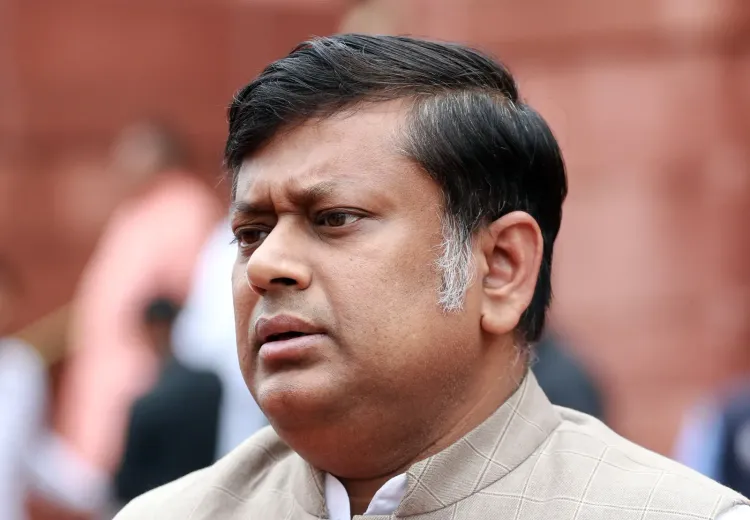
The National Council of Educational Research and Training (NCERT) is actively realigning its school curriculum with the National Education Policy (NEP) 2020, Minister of State for Education Sukanta Majumdar informed the Lok Sabha on Monday, 10 August. The council has already released two foundational frameworks — the National Curriculum Framework for Foundational Stage (NCF-FS) 2022 and the National Curriculum Framework for School Education (NCF-SE) 2023 — that govern curricular goals, learning outcomes, syllabi, textbooks, pedagogy, and assessment across all school stages.
What the Curriculum Frameworks Cover
According to Majumdar, the two frameworks provide the structural basis for stage-wise and subject-wise curricular goals, competencies, and learning outcomes. NCERT updates its textbooks annually during reprinting, incorporating feedback from students, teachers, and other stakeholders — without making structural changes. Where necessary, the council invites domain experts to finalise revisions.
The NCF-FS was released on 20 October 2022, and the NCF-SE followed on 23 August 2023. Both frameworks emerged from one of the most extensive public consultation exercises in Indian education history.
Scale of Stakeholder Consultation
Developing the frameworks involved inputs from over 13 lakh citizens — including students and parents — through a citizen-centric mobile app survey at the national level. At the state level, more than 1.5 lakh teachers, parents, students, and educationists participated through a separate mobile app survey.
Additionally, over 1,550 district-level consultations were held across 32 States and Union Territories. Inputs were also received from 35 groups of institutions and 8,000 stakeholders who attended 12 consultations with universities and civil society groups. More than 600 position papers on 25 themes were contributed by Focus Groups from states and UTs, comprising over 4,000 experts. An additional 25 papers were submitted by National Focus Groups with over 175 members constituted by NCERT itself.
NCERT's Deemed University Status
In a related development, the Education Ministry declared NCERT a 'Deemed to be University' in April this year. Majumdar said the designation will strengthen NCERT's capacity for educational research and innovation and enable collaboration with national and international agencies.
The application was examined by the University Grants Commission (UGC) through its Expert Committee under the UGC (Institutions Deemed to be Universities) Regulations, 2023. The minister noted that the status will further reinforce NCERT's role as a national think tank providing technical support to both the Centre and state governments.
What Comes Next: The NSTC and New Textbooks
As a follow-up to the curriculum frameworks, NCERT has constituted the National Syllabus and Teaching-Learning Material Committee (NSTC). Under this body, 13 Curricular Area Groups (CAGs) and corresponding Textbook Development Teams (TDTs) have been set up across all subjects and grades. The NSTC has been tasked with developing new teaching-learning materials, including revised textbooks aligned with the NEP vision.
The rollout of NEP-aligned textbooks will be closely watched by educators and parents, as the new materials are expected to shift pedagogy from rote learning toward competency-based outcomes — a significant structural change for India's school system.
Point of View
1,550 district meetings, 600 position papers — is impressive on paper, but India has seen large participatory processes before that did not prevent implementation gaps. The harder question is whether the new textbooks, when they arrive, will reflect the competency-based shift NEP promises or default to familiar content-heavy formats. NCERT's Deemed University status is a structural upgrade, but its real value will depend on whether it translates into faster, evidence-driven curriculum iteration rather than added bureaucratic layers. The next test is the NSTC's delivery timeline — and whether new textbooks reach classrooms before the political cycle changes priorities again.
NationPress
10 Aug 2026
Frequently Asked Questions
What is NCERT's syllabus alignment with NEP 2020?
NCERT is revising its school curriculum in line with the National Education Policy 2020, guided by two frameworks: the NCF-FS 2022 for the foundational stage and the NCF-SE 2023 for school education. These set the goals, competencies, syllabi, and assessment standards for all grades.
What are the NCF-FS 2022 and NCF-SE 2023?
The National Curriculum Framework for Foundational Stage (NCF-FS) was released on 20 October 2022, and the National Curriculum Framework for School Education (NCF-SE) was released on 23 August 2023. Both frameworks form the structural basis for NEP-aligned textbooks, pedagogy, and assessment across India's school system.
Why was NCERT granted Deemed University status?
The Education Ministry granted NCERT 'Deemed to be University' status in April 2025 to strengthen its capacity for educational research, innovation, and international collaboration. The UGC examined the application under its 2023 regulations before the status was conferred.
How many people were consulted in developing the new curriculum frameworks?
Over 13 lakh citizens participated through a national mobile app survey, and more than 1.5 lakh teachers, parents, and educationists responded at the state level. Additionally, 1,550 district-level consultations were held across 32 States and Union Territories.
What is the NSTC and what is its role?
The National Syllabus and Teaching-Learning Material Committee (NSTC) is a body constituted by NCERT to develop new textbooks and teaching materials aligned with the NEP 2020 frameworks. It operates through 13 Curricular Area Groups and Textbook Development Teams covering all subjects and grades.