Kumaraswamy celebrates NDA sweep of all 4 Karnataka MLC seats, hits Congress on cross-voting
Synopsis
The NDA has swept all four Karnataka MLC seats — three for BJP, one for JD(S) — leaving the ruling Congress with a clean zero. Union Minister Kumaraswamy has publicly taunted the Congress over cross-voting, while Leader of Opposition Ashoka is already projecting 160-plus seats in the next Assembly elections. For a state Congress government already under pressure, losing every MLC seat to an alliance it once crushed is a significant early warning.
Key Takeaways
NDA swept all four Karnataka MLC seats in elections held on 23 October 2026 , with Congress winning none .
BJP won the North-East Teachers' , South-East Graduates' , and West Graduates' constituencies; JD(S) took the Bengaluru Teachers' seat.
Kumaraswamy accused Congress of past cross-voting in Rajya Sabha elections and said NDA winners secured 'straight wins'.
Leader of Opposition R.
Ashoka projected the BJP-JD(S) alliance winning over 160 seats in the 224-member Karnataka Assembly .
Defeat of Congress-backed Puttanna in Bengaluru Teachers' constituency was described as a setback for CM D.K.
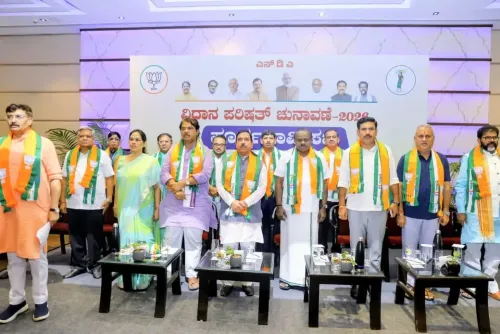
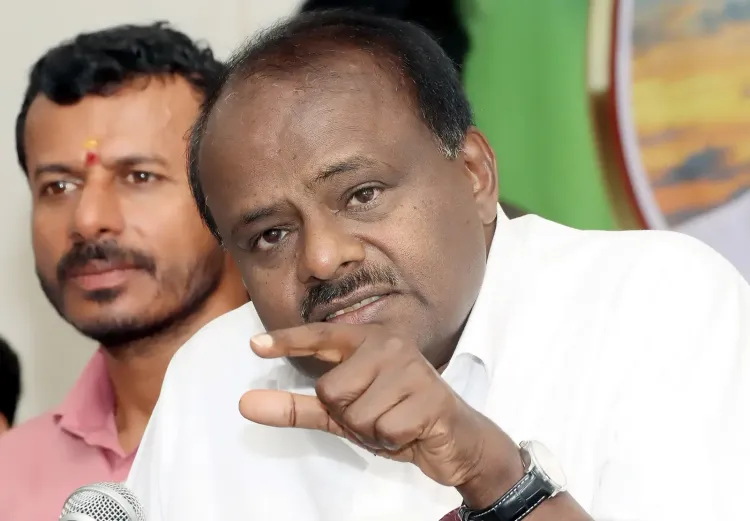
Union Minister for Heavy Industries and Steel H.D. Kumaraswamy on Thursday, 29 October 2026, hailed the NDA's clean sweep of all four Karnataka Legislative Council (MLC) seats, targeting the ruling Congress over alleged cross-voting while asserting that BJP and Janata Dal (Secular) candidates had each recorded straight wins. The results, from elections held on 23 October, saw the Congress score a blank — winning zero of the four contested seats.
Key Developments
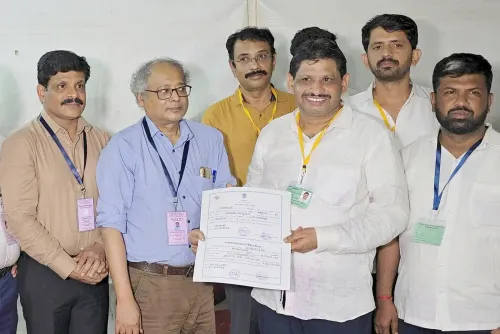
The BJP claimed three of the four seats — the North-East Teachers' constituency, the South-East Graduates' constituency, and the West Graduates' constituency. Alliance partner JD(S) secured the Bengaluru Teachers' constituency, with candidate A.P. Ranganath defeating the Congress-backed Puttanna. The Karnataka Legislative Council has 75 seats in a 224-member Assembly ecosystem, making these Teachers' and Graduates' constituency results a barometer of grassroots support.
What Kumaraswamy Said
Reacting sharply to the results, Kumaraswamy said none of the four NDA winners had benefited from cross-votes. 'Our four winners are not among the candidates who got cross votes. This is the right time for the cross-vote crooks to introspect. Our heroes will face the consequences of cross voting,' he said, in a pointed message aimed at the ruling party. He also drew a contrast with earlier Rajya Sabha elections, where he claimed Congress had previously benefited from cross-voting — a charge the Congress has not yet formally responded to.
NDA's Reading of the Results
Leader of Opposition R. Ashoka went further, calling the NDA's four-seat sweep a signal of the alliance's prospects in the next Karnataka Assembly elections. He expressed confidence that a coordinated BJP-JD(S) campaign could win over 160 seats in the 224-member Assembly. Ashoka specifically described the defeat of Congress-backed Puttanna in the Bengaluru Teachers' constituency as a direct setback for Chief Minister D.K. Shivakumar.
Context: Why the MLC Polls Mattered
The 23 October elections were widely viewed as a test of coordination between the BJP-JD(S) alliance partners, whose pre-poll chemistry had been uneven since the 2023 Karnataka Assembly defeat. Teachers' and Graduates' constituency elections are contested by a small, educated electorate and are historically sensitive to local grievances rather than pure party loyalty — making the Congress whitewash more significant than raw numbers suggest. Notably, this result comes as the Congress-led government in Karnataka faces headwinds over administrative controversies, and the NDA camp will use the outcome to build momentum ahead of the next state election cycle.
What Happens Next
Both the BJP and JD(S) are likely to amplify the result as proof of alliance cohesion. The Congress faces internal pressure to explain the cross-voting narrative and its failure to retain any seat in a state it governs. Observers will watch whether the ruling party initiates any disciplinary action against MLAs suspected of defection, and whether Kumaraswamy's cross-voting allegations translate into a formal complaint or probe.
Point of View
Yet its inability to leverage that strength in Teachers' and Graduates' constituencies points to either quiet dissent among its own MLAs or a sharp erosion of credibility among educated voters. Kumaraswamy's cross-voting allegation, if substantiated, would add a governance crisis to an electoral embarrassment. More broadly, the result suggests the BJP-JD(S) alliance has resolved enough of its post-2023 friction to coordinate on the ground — and that cohesion, if sustained, is the single biggest threat to a Congress second term in Karnataka.
NationPress
29 Oct 2026
Frequently Asked Questions
What were the results of the Karnataka MLC elections held on 23 October 2026?
The NDA won all four Karnataka Legislative Council seats contested on 23 October 2026 — BJP took three (North-East Teachers', South-East Graduates', West Graduates') and JD(S) won one (Bengaluru Teachers'). The ruling Congress failed to win any of the four seats.
Why did Kumaraswamy raise the cross-voting issue after the MLC results?
Union Minister H.D. Kumaraswamy claimed that unlike earlier Rajya Sabha elections — where Congress allegedly benefited from cross-voting by opposition MLAs — all four NDA winners in the MLC polls secured straightforward victories without any cross-votes. He called it 'the right time for cross-vote crooks to introspect.'
What do the MLC results mean for Karnataka politics ahead of the next Assembly election?
Leader of Opposition R. Ashoka has interpreted the NDA sweep as a sign that a coordinated BJP-JD(S) alliance could win over 160 seats in the 224-member Karnataka Assembly. The result is being read as a test of alliance cohesion following the partners' 2023 defeat, and as an early indicator of Congress vulnerability in the state.
Who is A.P. Ranganath and why is his win significant?
A.P. Ranganath is the JD(S) candidate who won the Bengaluru Teachers' constituency, defeating Congress-backed Puttanna. His win is considered significant because the Bengaluru seat required tight coordination between BJP and JD(S) workers, and the result was described by Ashoka as a direct setback for Chief Minister D.K. Shivakumar.
What happens next following the Karnataka MLC election outcome?
The BJP and JD(S) are expected to use the sweep to strengthen their alliance narrative ahead of the next state elections. Within the Congress, there is internal pressure to address the cross-voting allegations and explain the whitewash; disciplinary action against suspected defectors remains a possibility.