Hong Kong property slump, business closures deepen as Beijing's influence grows
Synopsis
Hong Kong's economic unravelling is no longer just about a property correction — it's about the slow dismantling of the legal and regulatory distinctiveness that made the city a global capital magnet. With office vacancies above 12%, unemployment touching 1,54,000, and a confidence vicious cycle now entrenched, the question is whether the 'One Country, Two Systems' framework can still be sold as a meaningful guarantee to international investors.
Key Takeaways
Hong Kong's office vacancy rate is over 12 per cent as of 2026 , with landlords struggling to find tenants across multiple districts.
The city's unemployment rate stood at approximately 3.8 per cent in mid- 2026 , with roughly 1,54,000 people officially out of work.
Retail, hospitality, food services, construction, and small businesses are under significant pressure despite the headline unemployment figure.
A growing number of analysts argue that Beijing's tightening influence has eroded business confidence and narrowed the 'One Country, Two Systems' framework.
The city has seen sustained outflows of both capital and skilled talent over the past decade as regulatory certainty declined.
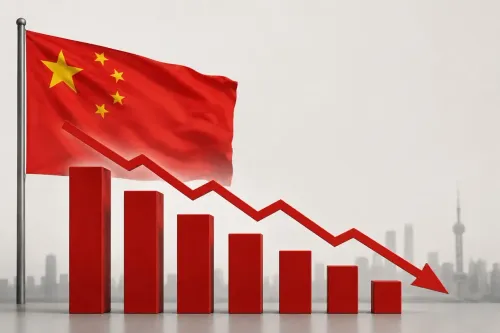
Hong Kong, once celebrated as Asia's premier economic success story, is now grappling with mounting economic and social hardship — marked by vacant storefronts, collapsing property values, and a steady exodus of capital and talent — as Beijing's tightening grip over the city erodes business confidence, according to a new report published in October 2026. The findings underscore a structural shift in one of the world's most storied financial hubs.
A City Transformed: The Visible Signs of Decline
Rental notices now hang from once-premium retail properties. Restaurants that once thrived on the city's cosmopolitan foot traffic are struggling. Office vacancy rates remain elevated at over 12 per cent, and landlords across multiple districts are reportedly unable to secure tenants, according to the report. The transformation is not just economic — many long-time residents say the city has lost its defining character as a dynamic, opportunity-rich metropolis.
The report attributed Hong Kong's deterioration to a convergence of factors: economic shocks, corrections in the property market, demographic shifts, and intensifying global geopolitical tensions. However, a growing number of analysts and business figures argue that Beijing's increasing political and economic influence has been the central variable eroding investor confidence.
The 'One Country, Two Systems' Erosion
For decades, Hong Kong's 'One Country, Two Systems' framework — which preserved a legal and economic environment distinct from mainland China — was the city's primary draw for international capital. Businesses valued the regulatory predictability, common law tradition, and the freedoms that encouraged risk-taking and entrepreneurial activity.
Over the past decade, however, that separation has visibly narrowed. Regulatory uncertainty has increased, and the governance gap between Hong Kong and the mainland has closed considerably. The cumulative result, the report argues, has been a sustained outflow of both capital and skilled professionals — a demographic and economic drain that is difficult to reverse quickly.
Unemployment and Sectoral Stress
Hong Kong's unemployment rate stood at approximately 3.8 per cent in mid-2026, with roughly 1,54,000 people out of work, according to official statistics. While that figure may appear moderate by global benchmarks, the report noted that conditions in retail, hospitality, food services, construction, and small businesses remain under significant pressure — suggesting the headline number masks deeper sectoral distress.
Notably, investors who had long assumed that Hong Kong property values would rise indefinitely are now watching their commercial assets depreciate rapidly. The scale of commercial real estate stress is a sharp departure from the city's historical trajectory.
The Confidence Vicious Cycle
'The collapse in confidence has created a vicious cycle. Falling property values weaken business balance sheets. Weak businesses cut jobs, while lower consumer spending further hurts retailers and more closures follow,' the report explained. This feedback loop — where declining asset values feed job losses, which in turn suppress consumption and trigger further closures — is among the more difficult economic dynamics to break without a significant policy intervention or external demand shock.
While Hong Kong retains its formal status as a major international financial centre, and official figures project a degree of stability, the on-the-ground reality paints a more sobering picture. How the city navigates the tension between its historical openness and its deepening integration with mainland China will likely define its economic trajectory for the decade ahead.
Point of View
Even a nominally low unemployment rate masks the true depth of the damage. The more uncomfortable question is whether Hong Kong's role as a standalone international financial centre is now in permanent structural retreat, or whether Beijing can recalibrate in time to prevent further talent and capital flight.
NationPress
29 Oct 2026
Frequently Asked Questions
Why is Hong Kong's economy struggling in 2026?
Hong Kong is facing a combination of property market corrections, business closures, demographic shifts, and geopolitical pressures. A growing number of analysts also point to Beijing's increasing political and economic influence, which has narrowed the 'One Country, Two Systems' framework and eroded investor confidence over the past decade.
What is Hong Kong's current office vacancy rate?
Hong Kong's office vacancy rate remains elevated at over 12 per cent as of 2026, with landlords in multiple districts struggling to secure tenants. Commercial property values have also declined sharply, hitting business balance sheets.
How bad is unemployment in Hong Kong right now?
Hong Kong's unemployment rate stood at approximately 3.8 per cent in mid-2026, with roughly 1,54,000 people out of work according to official statistics. However, sectors including retail, hospitality, food services, and construction continue to face significant pressure beyond what the headline figure reflects.
What was the 'One Country, Two Systems' framework and why does it matter?
'One Country, Two Systems' was the arrangement that preserved a distinct legal, economic, and regulatory environment in Hong Kong, separate from mainland China's governance model. It was the primary reason international investors regarded Hong Kong as a safe and predictable place for capital deployment — and its perceived erosion is central to the current confidence crisis.
What is the vicious cycle described in the report?
The report describes a self-reinforcing decline where falling property values weaken business balance sheets, prompting job cuts. Reduced employment lowers consumer spending, which hurts retailers further and triggers more closures — making recovery progressively harder without a major external catalyst.