New MEMU halt at Chandkheda Road boosts Gujarat industrial belt connectivity
Synopsis
Western Railway's new MEMU halt at Chandkheda Road — effective 28 October — quietly addresses a long-standing gap for one of Ahmedabad's busiest industrial corridors. With the Becharaji belt employing thousands and the station earmarked for hub status, this small timetable addition signals a larger infrastructure play for Gujarat's expanding urban fringe.
Key Takeaways
The Ahmedabad Division of Western Railway introduced a new halt at Chandkheda Road station for trains 69249 and 69250 from 28 October 2026 .
Train 69250 stops at 9:40 am (Katosan Road to Sabarmati) and train 69249 at 5:27 pm (Sabarmati to Katosan Road).
The halt benefits industrial workers in the Becharaji belt , students, and devotees visiting the Mata temple at Becharaji .
Gujarat's annual railway budget has grown from ₹589 crore pre-2014 to ₹17,366 crore — nearly 30 times higher.
88 stations in Gujarat are being redeveloped under the Amrit Bharat Station Scheme .
A proposed mega coaching depot at Vatva with around 100 lines is being planned to handle rising passenger demand.
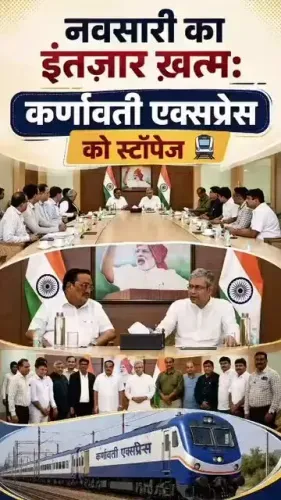
The Ahmedabad Division of Western Railway introduced a new halt for the Sabarmati–Katosan Road MEMU train at Chandkheda Road railway station in Gujarat on 28 October 2026, improving rail access for daily commuters, industrial workers, and devotees heading to Becharaji. Trains 69249 and 69250 now stop at the station, filling a connectivity gap for one of Ahmedabad's fastest-growing suburban corridors.
Inauguration and Key Officials
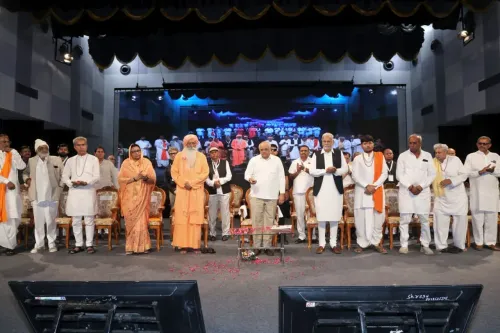
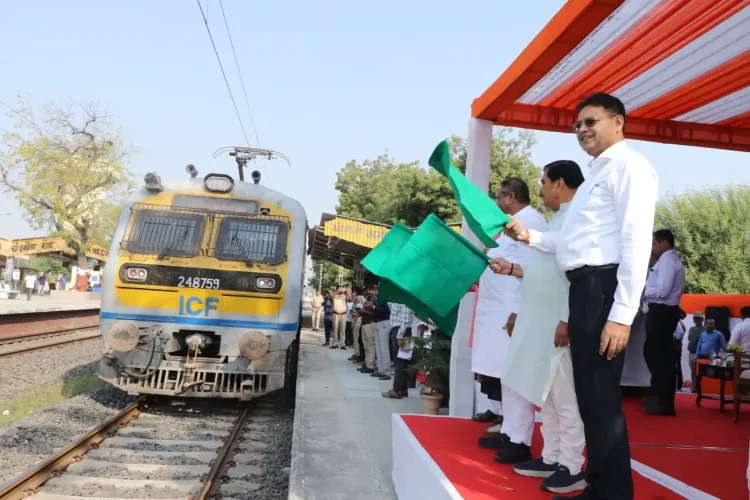
Ahmedabad Mayor Hitesh Barot, Deputy Mayor Anju Shah, and Divisional Railway Manager Ved Prakash jointly flagged off the Katosan Road–Sabarmati MEMU at Chandkheda Road station, marking the formal launch of the new service. The ceremony was attended by other senior railway and civic officials.
Train Timings and Route
Train 69250, running from Katosan Road to Sabarmati, will arrive at Chandkheda Road at 9:40 am and depart at 9:41 am. Train 69249, travelling in the reverse direction from Sabarmati to Katosan Road, will arrive at 5:27 pm and depart at 5:28 pm. The halt gives passengers from Chandkheda and neighbouring areas direct rail access to Sabarmati, Kalol, Kadi, Katosan Road, and Becharaji.
Who Benefits and Why It Matters
The new stop is expected to serve workers employed in industrial units along the route, students travelling to educational institutions, and devotees visiting the Mata temple at Becharaji. Divisional Railway Manager Ved Prakash specifically highlighted the importance of rail access for employees commuting to the Becharaji industrial belt, which includes the Maruti industrial area. This comes amid rapid residential and commercial expansion around Chandkheda, which has strained road transport in the zone.
Plans to Upgrade Chandkheda Road Station
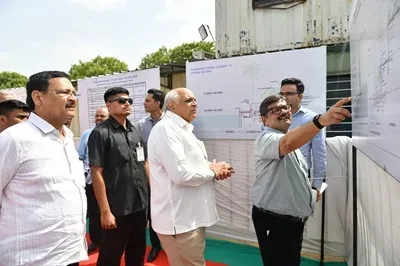
According to Ved Prakash, Chandkheda Road station has the potential to develop into a significant railway hub. 'Plans are being drawn up to upgrade the station and improve its road connectivity, with the aim of integrating it more effectively into Ahmedabad's urban transport network,' he said. A joint survey by the state government's Urban Development Department, Gujarat Metro, and Indian Railways has already assessed population patterns and projected urban expansion to guide future transport planning.
Broader Railway Investment in Gujarat
The halt is part of a wider push to expand rail infrastructure across the state. Ved Prakash noted that Gujarat's annual railway budget allocation has risen from ₹589 crore before 2014 to ₹17,366 crore — an increase of nearly 30 times. Separately, 88 railway stations across Gujarat are being redeveloped under the Amrit Bharat Station Scheme to upgrade passenger amenities and strengthen urban connectivity. A proposed mega coaching depot at Vatva, expected to have around 100 lines, is also in the pipeline to meet growing maintenance and operational demands. Railway officials said infrastructure planning is being conducted with transport requirements over the next 50 to 100 years in mind, including a circular railway network and new lines across the Ahmedabad rail complex.
Point of View
But Chandkheda Road's addition speaks to a structural challenge Ahmedabad has sidestepped for years: its industrial periphery runs on road transport by default, not design. The Becharaji belt employs tens of thousands, and reliable rail access directly reduces absenteeism, lowers worker transport costs, and eases arterial road congestion. The more telling signal is the joint survey by Urban Development, Gujarat Metro, and Indian Railways — coordinated multi-agency planning at this scale is rare and suggests Chandkheda could eventually anchor a broader network node. The real test, however, is execution speed: station upgrades in India are frequently announced, less frequently delivered on time.
NationPress
28 Oct 2026
Frequently Asked Questions
What is the new MEMU halt at Chandkheda Road?
The Western Railway has added a stop at Chandkheda Road station in Ahmedabad for the Sabarmati–Katosan Road MEMU trains (69249 and 69250), effective 28 October 2026. The halt improves rail access for commuters, industrial workers, and devotees travelling to Becharaji.
What are the train timings at the new Chandkheda Road halt?
Train 69250 (Katosan Road to Sabarmati) arrives at Chandkheda Road at 9:40 am and departs at 9:41 am. Train 69249 (Sabarmati to Katosan Road) arrives at 5:27 pm and departs at 5:28 pm.
Who will benefit from the Chandkheda Road train halt?
Daily commuters, students, employees of industrial units in the Becharaji belt (including the Maruti industrial area), and devotees visiting the Mata temple at Becharaji are the primary beneficiaries of the new halt.
What are the plans for Chandkheda Road station's future development?
Divisional Railway Manager Ved Prakash said plans are being drawn up to upgrade the station and improve its road connectivity to integrate it into Ahmedabad's urban transport network. A joint survey by the Urban Development Department, Gujarat Metro, and Indian Railways has already assessed the area's growth potential.
How much has Gujarat's railway budget grown in recent years?
According to the Divisional Railway Manager, Gujarat's annual railway budget allocation has increased from ₹589 crore before 2014 to ₹17,366 crore — a rise of nearly 30 times. The state also has 88 stations being redeveloped under the Amrit Bharat Station Scheme.