Gujarat's 63-km Katosan Road-Becharaji-Ranuj rail line clears 120 kmph speed trial
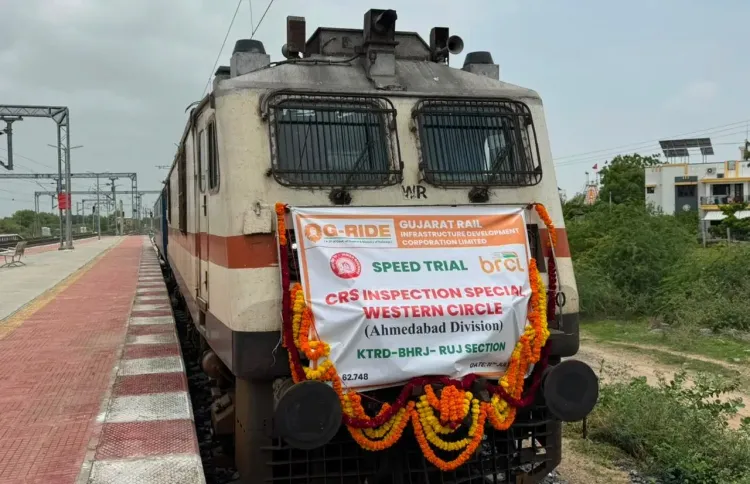
Synopsis
A ₹1,000 crore broad gauge rail line connecting Katosan Road, Becharaji, and Ranuj in Gujarat has passed its 120 kmph speed trial and completed a three-day statutory safety inspection — the final technical hurdle before passenger trains can run. The route's 14 stations include Becharaji, gateway to one of Gujarat's most visited Shakti Peeths, making this as much a pilgrim lifeline as an infrastructure milestone.
Key Takeaways
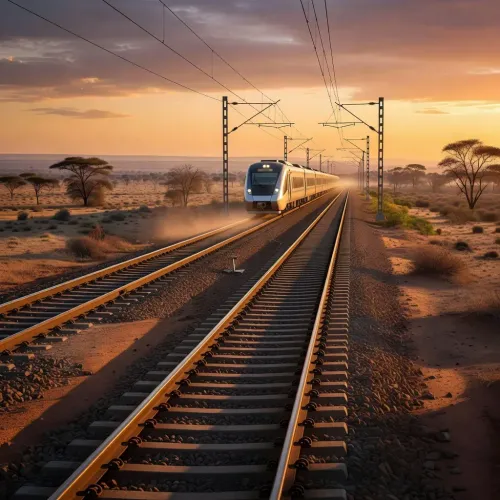
The 63-km Katosan Road-Becharaji-Ranuj broad gauge rail line in Gujarat successfully completed a speed trial at 120 kmph .
A three-day statutory safety inspection by Commissioner of Railway Safety (Western Circle) E.
Srinivas concluded on 11 July .
The project was sanctioned in 2017 at an estimated cost of ₹1,000 crore , developed jointly by Indian Railways and G-RIDE .
The route covers 14 stations , 9 major bridges , 100 minor bridges , and 47 RUB/LHS structures.
Becharaji station provides rail access to the Shri Bahuchar Mata Temple in Mehsana district, a major Shakti Peeth drawing lakhs of pilgrims annually.
Passenger services will begin after final statutory clearance is issued by railway authorities.
The 63-km Katosan Road-Becharaji-Ranuj broad gauge rail line in Gujarat has cleared a critical pre-launch milestone after a successful speed trial at 120 kmph and a three-day statutory safety inspection by the Commissioner of Railway Safety (Western Circle), completed on 11 July. Passenger train services on the route will commence once final safety clearance is issued by railway authorities.
Inspection Details and What Was Assessed
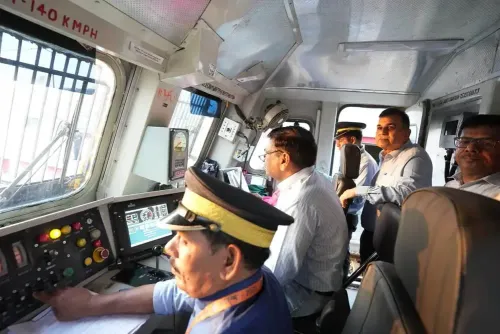
The statutory inspection, conducted from 9 to 11 July, was the final technical stage before the line can be opened for passenger operations. Commissioner of Railway Safety (Western Circle) E. Srinivas led a detailed examination of the entire rail section using a motor trolley.
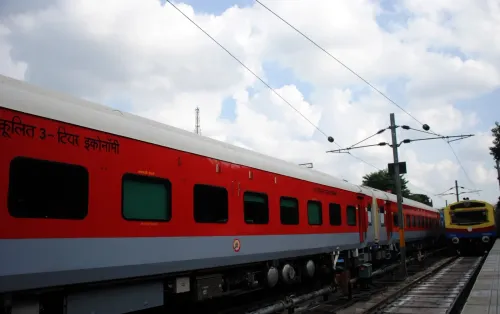
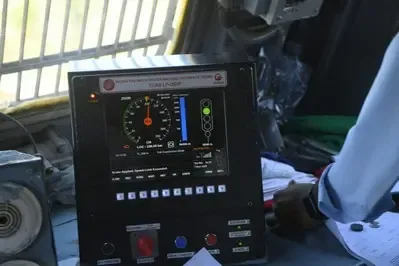
On Saturday, a speed trial at 120 kmph was successfully completed to determine the route's maximum safe operating speed. The inspection covered all critical infrastructure — track quality, signalling and telecommunication systems, bridges, overhead electrification (OHE), interlocking systems, track fittings, ballast, OHE height, and other prescribed safety parameters.
Senior Officials Present
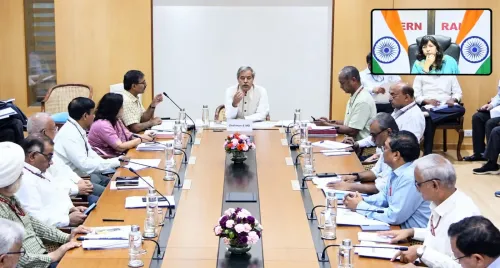
The inspection was attended by Divisional Railway Manager, Ahmedabad, Ved Prakash; Chief Administrative Officer (Construction) Pradeep Gupta; Gujarat Rail Infrastructure Development Corporation Limited (G-RIDE) Director Rajkumar; G-RIDE General Manager (Civil) Shivendra Kumar; the Chief Track Engineer; the Chief Operations Manager (General); and senior officials from the construction and open line departments.
Route Infrastructure and Project Background
The Katosan Road-Becharaji-Ranuj gauge conversion project was sanctioned in 2017 and developed at an estimated cost of approximately ₹1,000 crore as a joint venture between Indian Railways and G-RIDE. The 63-km route comprises 14 railway stations, 9 major bridges, 100 minor bridges, 47 Road Under Bridges/Limited Height Subways (RUB/LHS), and 16 curves.
The three-day inspection was structured systematically: the Katosan Road-Becharaji section on Day 1, the Becharaji-Chanasma section on Day 2, and the Chanasma-Ranuj section on Day 3.
Significance for Pilgrims, Residents and Industry
Becharaji station, one of the principal stops on the route, serves as the gateway to the Shri Bahuchar Mata Temple in Mehsana district — one of Gujarat's prominent Shakti Peeths that draws lakhs of devotees annually. Notably, the then Maharaja Sayajirao Gaekwad had historically extended the Gaekwad Baroda Railway to Becharaji specifically to improve pilgrim access.
The new connectivity is expected to reduce dependence on road transport for residents, pilgrims, students, traders, and industrial units across Becharaji, Khambhel, and Chanasma in the Mehsana and Patan districts. Railway authorities confirmed that passenger services will move forward once all statutory formalities are completed and the final clearance is issued.
Point of View
But the deeper story is how long it has taken: sanctioned in 2017, this ₹1,000 crore gauge conversion has spent eight years in construction and approvals. For the Mehsana-Patan belt — dependent on road transport and underserved by rail — the delay has had real costs for pilgrims, students, and small traders. The Becharaji Shakti Peeth angle also signals that this line carries political weight in a state where religious tourism is a governance priority. Whether passenger services actually launch on schedule after final clearance, or slip further, will be the real test of delivery.
NationPress
10 Oct 2026
Frequently Asked Questions
What is the Katosan Road-Becharaji-Ranuj rail line?
It is a 63-km broad gauge railway line in Gujarat, developed as a joint venture between Indian Railways and Gujarat Rail Infrastructure Development Corporation Limited (G-RIDE) at an estimated cost of ₹1,000 crore. Sanctioned in 2017, the line connects Katosan Road, Becharaji, and Ranuj across the Mehsana and Patan districts.
What happened during the July 2025 safety inspection?
Commissioner of Railway Safety (Western Circle) E. Srinivas conducted a three-day statutory inspection from 9 to 11 July, covering track quality, signalling, bridges, overhead electrification, and other safety parameters. A speed trial at 120 kmph was also successfully completed during the inspection period.
When will passenger train services start on this route?
Railway authorities have stated that passenger services will begin once all statutory formalities are completed and the final safety clearance is issued. No specific launch date has been announced yet.
Why is the Becharaji station significant on this route?
Becharaji station serves as the rail gateway to the Shri Bahuchar Mata Temple in Mehsana district, one of Gujarat's prominent Shakti Peeths that attracts lakhs of devotees every year. Historically, the Maharaja Sayajirao Gaekwad had extended the Gaekwad Baroda Railway to Becharaji to facilitate pilgrim access.
Who will benefit from the new rail connectivity?
The line is expected to benefit commuters, students, traders, pilgrims, and industrial units in Becharaji, Khambhel, and Chanasma across the Mehsana and Patan districts, reducing dependence on road transport in the region.