Has Indian Railways Expanded the Kavach 4.0 Safety System by Another 472 km?
Synopsis
The Indian Railways has achieved a remarkable feat by commissioning 472.3 km of the Kavach 4.0 safety system across various sections. This significant advancement not only enhances rail safety but also showcases the dedication of Indian Railways towards operational reliability and passenger confidence.
Key Takeaways
472.3 km of Kavach 4.0 system commissioned across three sections.
Enhances rail safety and operational reliability.
Integrates advanced technology for train protection .
First Kavach-enabled service was the Sasaram Intercity Express .
More sections expected to be operational by 2026 .
New Delhi, Jan 30 (NationPress) On Friday, the Indian Railways officially launched an impressive 472.3 route kilometres of the Kavach Version 4.0 (Automatic Train Protection System) across three key segments of its network, representing a major advancement in enhancing rail safety.
The newly activated segments encompass Vadodara–Virar (344 km) on the Western Railway, Tuglakabad Junction Cabin–Palwal (35 km) on the Northern Railway, and Manpur–Sarmatanr (93.3 km) on the East Central Railway. This initiative demonstrates Indian Railways' commitment to swiftly implementing the indigenous Kavach system, aimed at improving train safety, operational dependability, and reliability on high-traffic routes, as stated by the Railways Ministry.
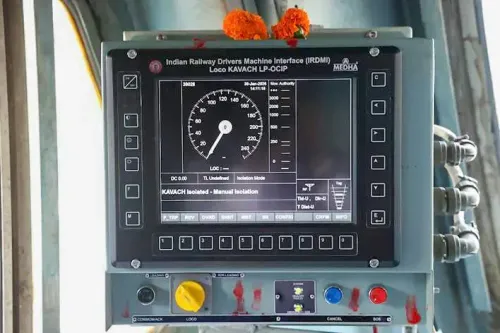
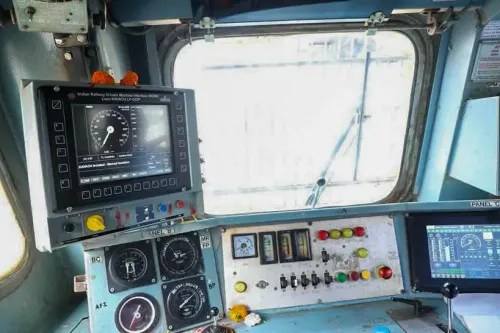
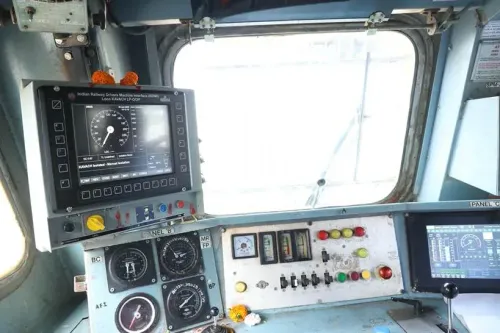
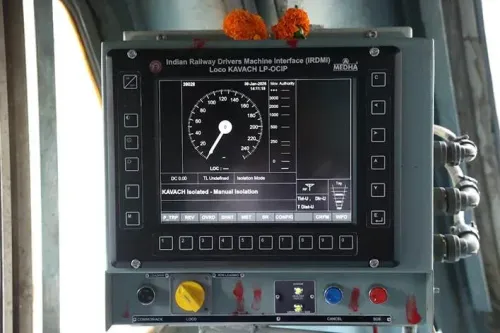
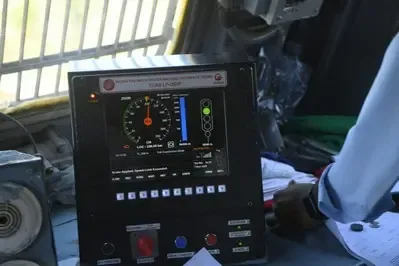
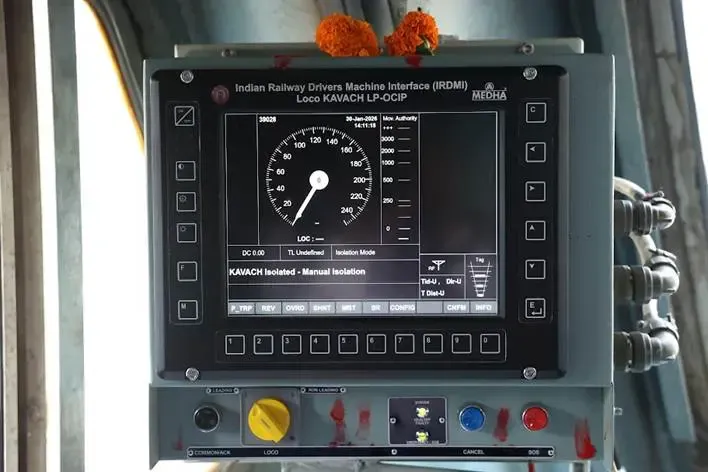
The Kavach system combines microprocessors, Global Positioning System (GPS), and radio communication technologies to facilitate safe train operations. In instances where another train is detected on the same track within a specified range, the system alerts the locomotive pilot and can automatically apply brakes if necessary.
This commissioning signifies the highest number of route kilometres (RKms) for Kavach introduced on a single day and within a month. The previous record was 324 RKms, set on the Kota–Mathura section of the West Central Railway. With this latest expansion, Kavach Version 4.0 is now operational across five zones of Indian Railways.
Following this latest addition, a total of 1,306.3 RKms of Kavach Version 4.0 has been installed across the Indian Railways network. Previously, Kavach Version 4.0 had been implemented over 834 RKms, which included the Palwal–Mathura–Nagda section (633 RKm) on the Delhi–Mumbai route and the Howrah–Bardhaman section (105 RKm) on the Delhi–Howrah route. Additionally, 96 RKms were activated on Gujarat’s inaugural Bajwa (Vadodara)–Ahmedabad section.
Indian Railways has successfully launched Kavach 4.0 on the 35-km Tuglakabad Junction Cabin–Palwal segment of the four-line Delhi–Mumbai route, which totals 152 main line track kilometres. Kavach has been integrated throughout this corridor, which includes major station yards, two main lines featuring an automatic signalling system, and two lines equipped with absolute block signalling.
This commissioning represents a considerable safety improvement on one of the most heavily trafficked corridors of the Indian Railways, which serves the Delhi suburban and long-distance rail networks. This area is a high-traffic zone catering to passengers, suburban, and freight trains, and the installation of Kavach in this section greatly enhances operational safety, reliability, and passenger trust.
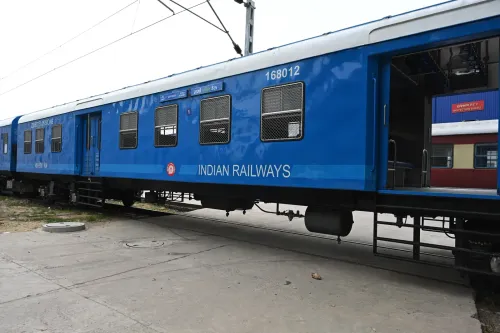
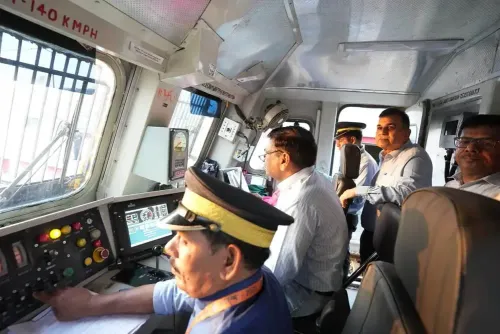
Indian Railways has also initiated train operations with Kavach 4.0 on the 93.3 km Manpur–Sarmatanr section of the DDUGJ–Pt. Deen Dayal Upadhyaya division. The inaugural Kavach-enabled service, Train No 13305 Sasaram Intercity Express, successfully operated on this section, departing from Sone Nagar at 07:42 a.m. and arriving at Manpur at 09:35 a.m. During its journey, a head-on collision test was successfully conducted, during which the train automatically halted, confirming the system’s efficacy.
The Kavach system is also being implemented across 4,235 RKms of the East Central Railway, including 417 RKms on the Pt. Deen Dayal Upadhyaya Junction–Manpur section, a vital part of the Delhi–Howrah trunk route traversing Uttar Pradesh, Bihar, and Jharkhand. This section accommodates mixed traffic and is currently approved for speeds of 130 kmph, with ongoing enhancements under Mission Raftar aimed at increasing the speed potential to 160 kmph.
Work on the Vadodara–Surat–Virar segment of the Delhi-Mumbai route commenced in January 2023, and Kavach was successfully implemented on this 344-km section on Friday. This remarkable achievement was celebrated with Train No. 20907, the Dadar–Bhuj Sayajinagri Express, becoming the first Kavach-equipped train to operate from Mumbai.
Progress continues on the Vadodara–Nagda section, expected to be operational by March 2026, while the Virar–Mumbai Central segment is also advancing well and is slated for completion by September 2026, as noted in the statement.
Point of View
I affirm that the Indian Railways' commitment to enhancing safety through the Kavach 4.0 system reflects a proactive approach to safeguarding passengers and improving operational efficiency. This initiative is a testament to the advancements in technology aimed at ensuring a safer travel experience for all.
NationPress
7 Oct 2026
Frequently Asked Questions
How many route kilometres have been commissioned with Kavach 4.0?
A total of 1,306.3 route kilometres of Kavach 4.0 have been commissioned across Indian Railways, with the latest addition being 472.3 km.
What are the benefits of the Kavach system?
The Kavach system enhances train protection, operational safety, and reliability, significantly improving passenger confidence and safety.
Which routes have been equipped with Kavach 4.0?
Kavach 4.0 has been implemented on several routes, including Vadodara-Virar, Tuglakabad Junction Cabin-Palwal, and Manpur-Sarmatanr, among others.
When is the Vadodara-Nagda section expected to be operational?
The Vadodara-Nagda section is expected to be commissioned by March 2026.