Indian Railways sanctions ₹140 crore Kavach 4.0 project for Ahmedabad Division
Synopsis
Indian Railways has closed the Kavach coverage gap in Ahmedabad Division with a ₹140 crore sanction for 598 km across 48 block sections — completing the zone's full deployment. With simultaneous approvals for Southern, North Central, and South Central Railways under a ₹27,693 crore national programme, the pace of India's indigenous train protection rollout is accelerating sharply.
Key Takeaways
Indian Railways sanctioned ₹140 crore for Kavach Version 4.0 on 598 route kilometres across 48 block sections of the Ahmedabad Division , Western Railway .
This completes Kavach coverage for the entire Ahmedabad Division, which had previously seen sanction over 702 route kilometres .
Southern Railway received approval for Kavach on 232 locomotives at ₹208.81 crore under a ₹2,950 crore sub-umbrella.
North Central Railway was sanctioned ₹176.7699 crore for optic fibre cable infrastructure supporting Kavach deployment.
South Central Railway received ₹578.02 crore across two works for electronic interlocking systems under a ₹1,857 crore sub-umbrella.
The overall national Kavach deployment programme carries a combined outlay of ₹27,693 crore .
Indian Railways has approved the installation of Kavach Version 4.0 across 598 route kilometres covering 48 block sections of the Ahmedabad Division of Western Railway in Gujarat, sanctioning the project at a cost of ₹140 crore. The move, confirmed on 15 June, completes coverage of the remaining sections of the division under the indigenous train protection system.
What the Project Covers
The Ahmedabad Division had previously seen Kavach sanctioned over 702 route kilometres. With this fresh approval, the entire division will come under the Kavach umbrella, marking a significant step in full-division coverage. The work falls under the broader national programme for Kavach deployment with a Long-Term Evolution (LTE)-based communication backbone on balance routes of Indian Railways.
What Kavach Does
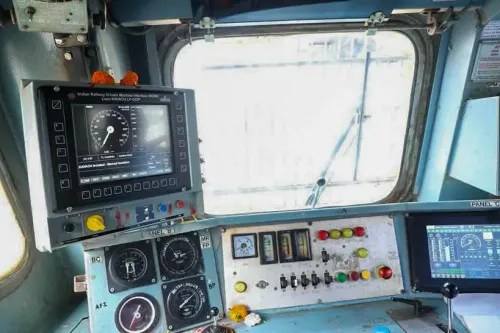
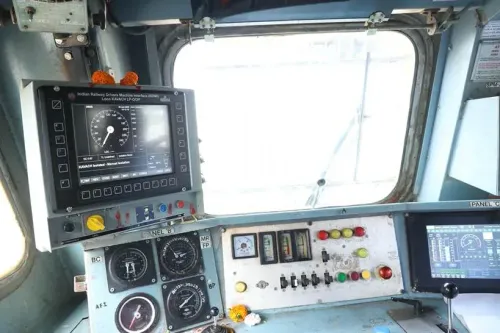
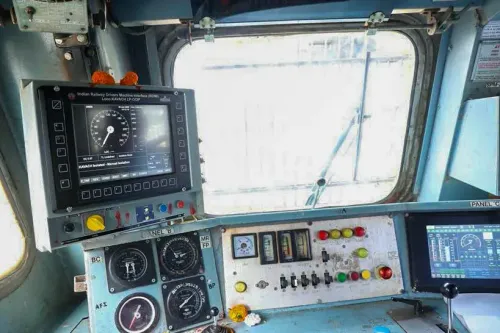
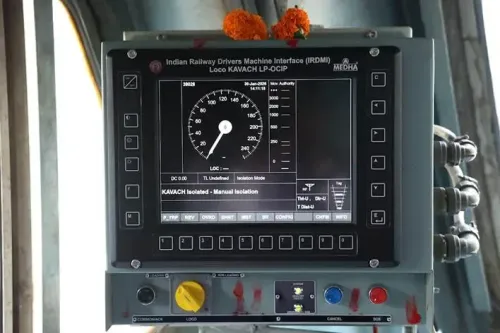
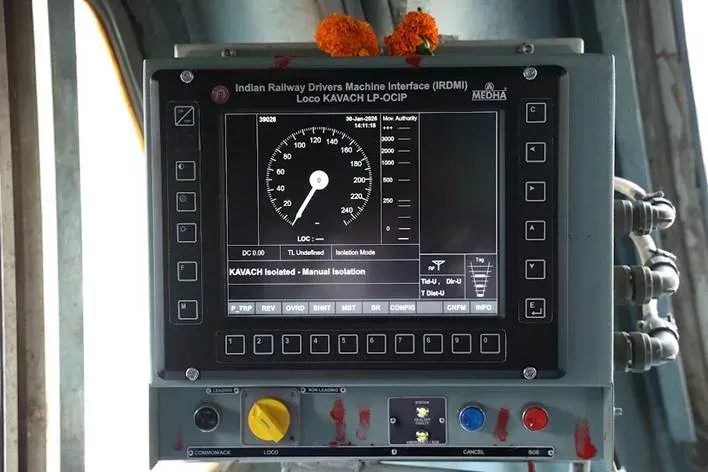
Kavach is an indigenously developed Automatic Train Protection (ATP) system engineered to prevent collisions and reduce human error in train operations. It prevents Signal Passing at Danger (SPAD), automatically applies brakes in unsafe situations, and controls train speed in critical conditions. The system is central to Indian Railways' modernisation and safety agenda.
Wider Rollout Across Zones
The Ahmedabad sanction is part of a larger wave of approvals. Southern Railway has received approval for on-board Kavach equipment on 232 locomotives at a cost of ₹208.81 crore, under a sub-umbrella allocation of ₹2,950 crore earmarked for the zone. The overall national programme carries a combined outlay of ₹27,693 crore.
Additionally, North Central Railway has been sanctioned ₹176.7699 crore for optic fibre cable infrastructure to support Kavach deployment on high-density corridors. In South Central Railway, two itemised works worth a combined ₹578.02 crore have been approved for replacing panel interlocking with electronic interlocking systems, under a sub-umbrella of ₹1,857 crore for the zone.
What Comes Next
Indian Railways is progressively scaling Kavach across its entire network as part of a long-term safety modernisation drive. The completion of Ahmedabad Division's coverage sets a template for full-division rollouts in other zones. With multi-zone sanctions now moving in parallel, the pace of national deployment is expected to accelerate through the current financial year.
Point of View
But the real story is the ₹27,693 crore national programme moving on multiple fronts simultaneously — Southern, North Central, and South Central Railways all receiving approvals in the same cycle. Kavach's credibility, however, still rests on deployment speed: years after the Balasore tragedy sharpened public scrutiny of train safety, the kilometres covered remain a fraction of the total network. Multi-zone parallel sanctioning is the right structural move, but execution timelines and commissioning rates — not sanction orders — will be the true measure of whether Indian Railways is genuinely closing its safety gap.
NationPress
23 Sept 2026
Frequently Asked Questions
What is the ₹140 crore Kavach project sanctioned for Ahmedabad Division?
Indian Railways has approved ₹140 crore for installing Kavach Version 4.0 across 598 route kilometres covering 48 block sections of the Ahmedabad Division of Western Railway in Gujarat. This completes Kavach coverage for the entire division, building on an earlier sanction covering 702 route kilometres.
What is Kavach and how does it improve train safety?
Kavach is an indigenously developed Automatic Train Protection (ATP) system that prevents Signal Passing at Danger (SPAD), automatically applies brakes in unsafe situations, and controls train speed in critical conditions. It is designed to significantly reduce the risk of train collisions and human error in operations.
Which other railway zones have received Kavach-related sanctions recently?
Southern Railway received approval for on-board Kavach equipment on 232 locomotives at ₹208.81 crore, North Central Railway was sanctioned ₹176.7699 crore for optic fibre cable infrastructure, and South Central Railway received ₹578.02 crore for electronic interlocking replacement across two works.
What is the total outlay for the national Kavach deployment programme?
The umbrella programme for Kavach deployment with an LTE-based communication backbone across Indian Railways carries an overall cost of ₹27,693 crore, with individual sub-umbrella allocations earmarked for each railway zone.
What is LTE-based communication and why does it matter for Kavach?
Long-Term Evolution (LTE) is a high-speed wireless communication standard used as the backbone for Kavach's real-time train-to-infrastructure data exchange. It enables faster, more reliable signalling, which is critical for the automatic braking and collision-prevention functions of the Kavach system.