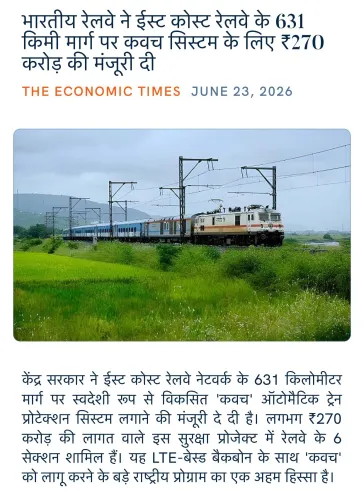
Kavach safety system approved for 811 km Ambala Division route at ₹201 crore
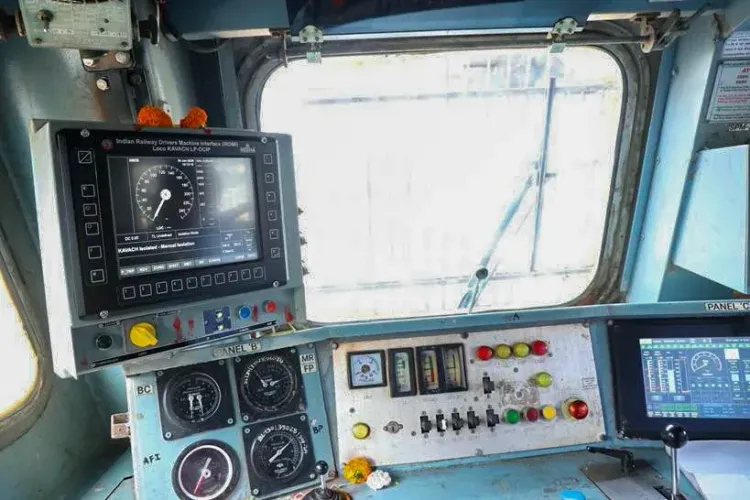
Synopsis
Indian Railways has cleared a ₹201 crore Kavach deployment across 811 km of the Ambala Division — covering critical Haryana-Punjab-Himachal Pradesh corridors — as part of a broader ₹1,364 crore safety and signalling overhaul. The move signals a decisive technology-first shift in how India's rail network is approaching collision prevention.
Key Takeaways
Indian Railways approved ₹201 crore for Kavach installation across 811 km of broad gauge sections in Ambala Division on 15 June .
Routes covered include Ambala Cantonment–Ludhiana , Rajpura–Bathinda–Shri Ganganagar , and Ludhiana–Dhuri–Jakhal , linking Haryana , Punjab , and Himachal Pradesh .
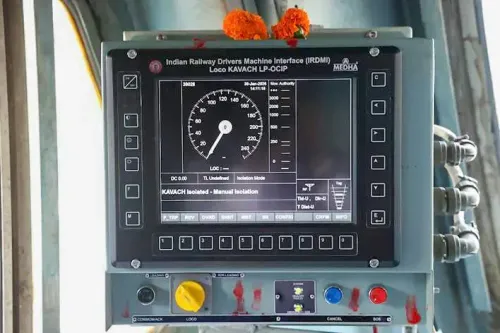
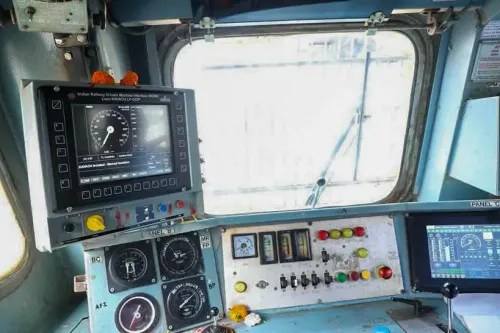
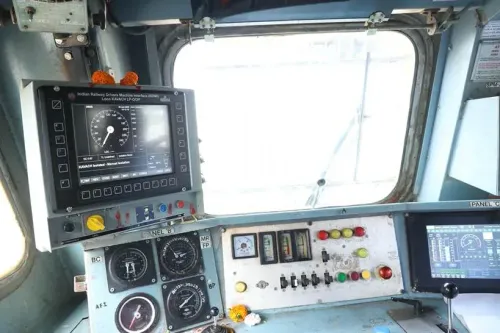
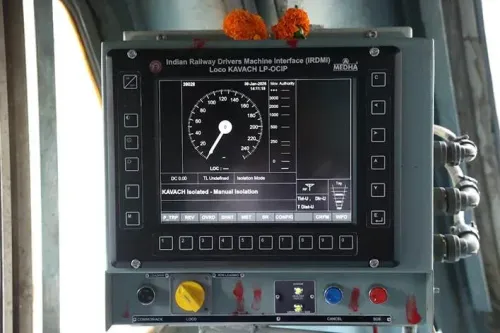
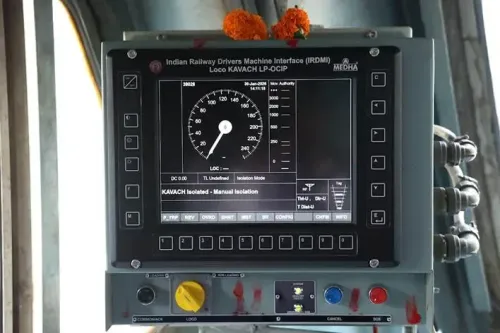
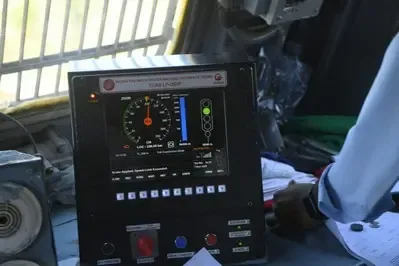
Kavach is an indigenously developed Automatic Train Protection (ATP) system that prevents Signal Passing at Danger and auto-applies brakes in unsafe conditions.
Multiple projects worth ₹1,364.45 crore have been approved network-wide for safety, signalling, and communication upgrades.
Northern Railway has a sub-umbrella allocation of ₹871 crore for fibre cable laying across Ambala , Delhi , and Lucknow divisions covering over 3,204 route km .
Indian Railways has sanctioned the installation of the Kavach automatic train protection system across the remaining 811 km of broad gauge sections in the Ambala Division of Northern Railway, with an outlay of ₹201 crore, according to an official statement released on Monday, 15 June. The approval marks a significant expansion of the indigenously developed collision-avoidance technology into one of north India's busiest rail corridors.
Routes Covered Under the Sanction
The sanctioned work spans several strategically critical sections within the Ambala Division, including Ambala Cantonment–Ludhiana, Kalka–Chandigarh–New Morinda–Sahnewal, Sirhind–Daulatpur Chowk, Rajpura–Bathinda–Shri Ganganagar, and Ludhiana–Dhuri–Jakhal. These corridors are key arteries linking the states of Haryana, Punjab, and Himachal Pradesh, handling heavy volumes of both passenger and freight traffic daily.
What Kavach Does
Kavach is an indigenously developed Automatic Train Protection (ATP) system engineered to prevent Signal Passing at Danger (SPAD) — one of the leading causes of train collisions on the Indian network. The system automatically applies brakes when an unsafe situation is detected, regulates train speed in critical zones, and significantly lowers collision risk. It operates on an LTE-based communication backbone, enabling real-time data exchange between locomotive and trackside infrastructure.
Broader Safety Investment Push
The ₹201 crore Ambala sanction is part of a wider capital push by Indian Railways. Multiple projects totalling ₹1,364.45 crore have been approved to strengthen safety, signalling, and communication infrastructure across the network. These include Kavach deployment on locomotives, expansion of the optical fibre cable network, and replacement of panel interlocking with electronic interlocking systems across various railway zones.
Separately, Northern Railway has received sanction for three itemised works worth ₹400.86 crore to strengthen its communication backbone — part of a larger umbrella project approved at ₹4,871 crore. A sub-umbrella allocation of ₹871 crore has been earmarked specifically for Northern Railway, covering fibre cable laying along 926.05 route km in Ambala Division, 1,204 route km in Delhi Division, and 1,074 route km in Lucknow Division.
Context and Significance
The Kavach rollout has gained urgency following a series of high-profile train accidents in recent years that intensified public and parliamentary scrutiny of railway safety systems. This is the third successive financial year in which Indian Railways has accelerated Kavach sanctions, reflecting a policy shift toward technology-led safety rather than reliance on manual protocols alone. Notably, the Ambala Division routes being covered are high-density corridors where the consequences of SPAD incidents are particularly severe. The expansion of the optical fibre backbone alongside Kavach is also significant — without robust communication infrastructure, the ATP system cannot function at its designed reliability.
Indian Railways is progressively rolling out Kavach across high-density and strategically important routes nationwide, with the long-term goal of covering the entire broad gauge network.
Point of View
Coverage of the broad gauge network is still far from complete. The simultaneous push for an LTE and optical fibre backbone is the right call, since Kavach is only as reliable as the communication layer beneath it. The real accountability test will be whether these sanctioned works translate into commissioned, live Kavach sections within the promised timelines — a record that has historically lagged announcements.
NationPress
24 Sept 2026
Frequently Asked Questions
What is the Kavach system approved for the Ambala Division?
Kavach is an indigenously developed Automatic Train Protection (ATP) system that prevents Signal Passing at Danger (SPAD), auto-applies brakes in unsafe situations, and reduces collision risk. Indian Railways has sanctioned its installation across 811 km of broad gauge sections in the Ambala Division of Northern Railway at a cost of ₹201 crore.
Which rail routes in Ambala Division will get Kavach?
The sanctioned routes include Ambala Cantonment–Ludhiana, Kalka–Chandigarh–New Morinda–Sahnewal, Sirhind–Daulatpur Chowk, Rajpura–Bathinda–Shri Ganganagar, and Ludhiana–Dhuri–Jakhal — corridors connecting Haryana, Punjab, and Himachal Pradesh.
How much has Indian Railways invested in safety and signalling overall?
Multiple projects totalling ₹1,364.45 crore have been approved network-wide for safety, signalling, and communication upgrades, including Kavach on locomotives, optical fibre expansion, and electronic interlocking systems. Northern Railway alone has a sub-umbrella allocation of ₹871 crore for fibre cable laying across three divisions.
Why is the LTE communication backbone important for Kavach?
Kavach operates on an LTE-based communication backbone that enables real-time data exchange between trains and trackside systems. Without a robust fibre and LTE infrastructure, the ATP system cannot function at its designed reliability — which is why fibre cable laying is being sanctioned alongside Kavach deployment.
Is the ₹201 crore Ambala project part of a larger programme?
Yes. The work is sanctioned under an umbrella programme for Kavach provision with LTE-based communication on balance routes of Indian Railways. Northern Railway has separately received sanction for works worth ₹400.86 crore under a broader umbrella project approved at ₹4,871 crore.