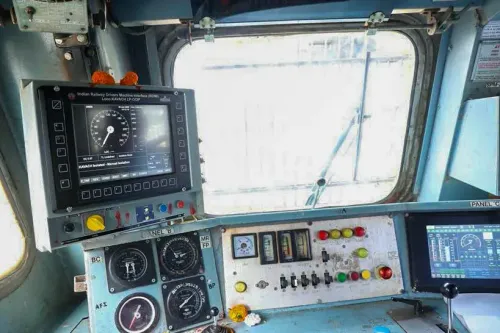
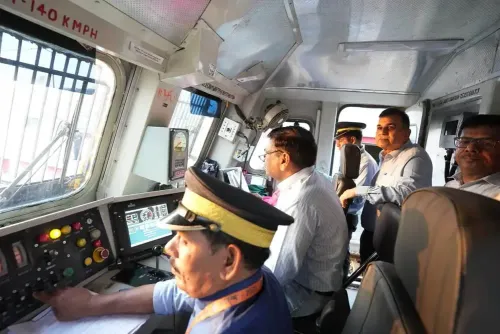
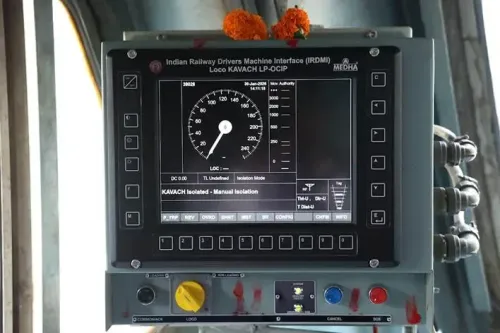
KAVACH 4.0 debuts on Indian Railways: 108 km live on Hyderabad division
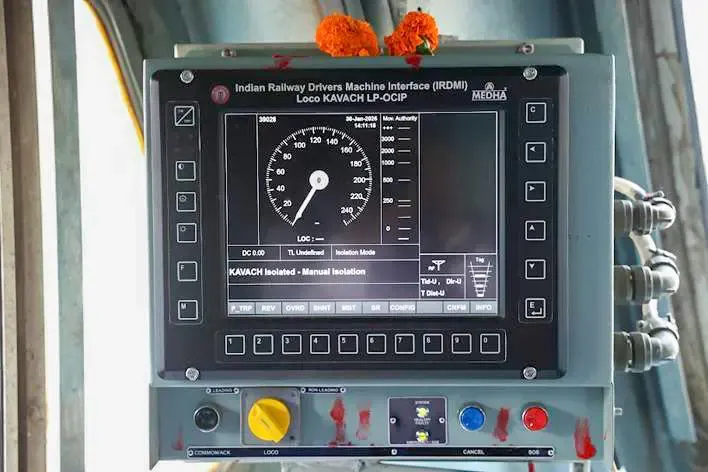
Synopsis
Indian Railways has switched on KAVACH 4.0 — its most advanced Automatic Train Protection system yet — for the first time on a live section, covering 108 km in the Hyderabad Division. With SIL-4 certification, OFC-based station-to-station communication, and tighter signal integration, Version 4.0 is now the blueprint for a nationwide safety roll-out across one of the world's largest rail networks.
Key Takeaways
KAVACH Version 4.0 has been commissioned for the first time on South Central Railway , covering 108 km on the Malkajgiri–Kamareddi section , Hyderabad Division .
The upgrade from Version 3.2 draws on experience from its deployment across 1,465 km on the same railway zone.
Key improvements include higher location accuracy , better yard signal-aspect information , OFC-based station-to-station interface , and direct Electronic Interlocking integration .
KAVACH is certified to Safety Integrity Level 4 (SIL-4) — the highest safety certification tier for such systems.
The system automatically applies brakes, prevents Signal Passing at Danger (SPAD) , and supports safe operations in adverse weather.
Indian Railways plans large-scale deployment of KAVACH 4.0 across its network following this successful commissioning.
Indian Railways has commissioned KAVACH Version 4.0 — the latest iteration of its indigenously developed Automatic Train Protection (ATP) system — for the first time on South Central Railway (SCR), according to an official statement issued on Wednesday, 23 September 2026. The deployment covers 108 kilometres on the Malkajgiri–Kamareddi section of the Hyderabad Division, marking a significant step in the national roll-out of upgraded rail safety technology.
From Version 3.2 to 4.0: What Changed
The upgrade from KAVACH Version 3.2 to Version 4.0 builds directly on operational learnings gathered from deploying Version 3.2 across 1,465 kilometres on South Central Railway. Officials say the new version incorporates increased location accuracy for more precise train positioning and improved signal-aspect information in larger yards, strengthening situational awareness for loco pilots. Notably, Version 4.0 introduces a station-to-station KAVACH interface through Optical Fibre Cable (OFC), enabling more robust communication and system integration. It also features a direct interface with existing Electronic Interlocking Systems, simplifying integration with established signalling infrastructure — a gap that earlier versions required workarounds to address.
How KAVACH Works
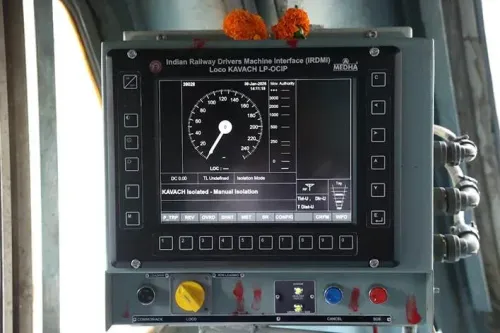
KAVACH is designed to assist loco pilots in maintaining prescribed speed limits and can automatically apply brakes if the pilot fails to respond to a danger signal. The system is built to prevent Signal Passing at Danger (SPAD), a leading cause of train collisions globally. It also controls train speed in critical situations and supports safe operations during adverse weather conditions — factors particularly relevant to India's vast and varied rail network. As a safety-critical system, KAVACH is certified to Safety Integrity Level 4 (SIL-4), the highest order of safety certification available for such technology.
Infrastructure Involved in Deployment
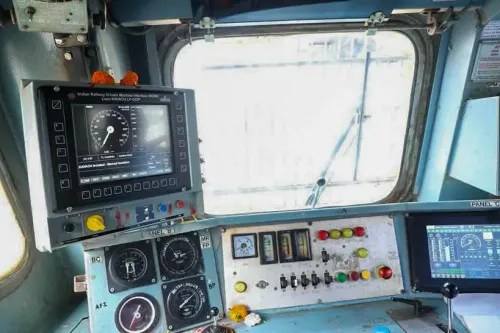
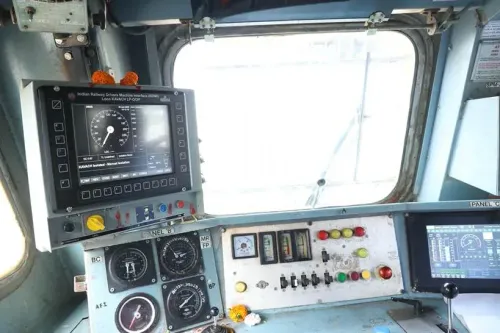
Rolling out KAVACH is a multi-layered exercise. Each section requires installation of KAVACH units at stations and block sections, placement of RFID tags along the entire track length, erection of telecommunication towers, and laying of optical fibre cable alongside the track. Critically, Loco KAVACH units must also be fitted on all locomotives operating on the equipped sections. The scale of this infrastructure requirement explains why the national deployment has been phased and methodical.
Plans for Large-Scale Roll-Out
Indian Railways has stated that KAVACH 4.0 is planned for large-scale deployment across its entire network following the successful commissioning on the Hyderabad Division. This comes amid sustained scrutiny of rail safety standards in India, particularly after a series of high-profile accidents in recent years that intensified public and parliamentary pressure on the Ministry of Railways to accelerate protective technology deployment. The SCR commissioning serves as a live pilot validating Version 4.0's readiness for broader network-wide adoption. How quickly the Railways scales this across its 67,000-plus kilometres of route will be the key metric to watch in the months ahead.
Point of View
But the harder story is pace. Indian Railways operates over 67,000 route kilometres, and Version 3.2 had covered just 1,465 km on South Central Railway before this upgrade. At that rate, full network coverage remains decades away unless deployment tempo is dramatically accelerated and funding ring-fenced against competing infrastructure priorities. The SIL-4 certification and OFC integration are credible engineering milestones — yet the public interest question is not whether KAVACH works on 108 km in Hyderabad, but whether the Ministry has a credible, time-bound plan to reach every high-density corridor before the next avoidable collision.
NationPress
23 Sept 2026
Frequently Asked Questions
What is KAVACH 4.0 and what does it do?
KAVACH 4.0 is the latest version of Indian Railways' indigenously developed Automatic Train Protection system. It assists loco pilots in maintaining speed limits, automatically applies brakes if the pilot fails to respond to danger signals, and is designed to prevent Signal Passing at Danger (SPAD) — a major cause of train collisions.
Where has KAVACH 4.0 been deployed for the first time?
KAVACH 4.0 has been commissioned for the first time on the Malkajgiri–Kamareddi section of the Hyderabad Division on South Central Railway, covering 108 kilometres. The official statement was issued on 23 September 2026.
How is KAVACH 4.0 different from the earlier Version 3.2?
KAVACH 4.0 introduces increased location accuracy for more precise train positioning, improved signal-aspect information in larger yards, a station-to-station interface via Optical Fibre Cable (OFC), and direct integration with existing Electronic Interlocking Systems. These improvements build on operational experience gathered from deploying Version 3.2 across 1,465 km on South Central Railway.
What safety certification does KAVACH 4.0 carry?
KAVACH 4.0 is certified to Safety Integrity Level 4 (SIL-4), which is the highest safety certification order for technology-intensive safety systems. This certification is mandatory for its deployment on Indian Railways.
When will KAVACH 4.0 be rolled out across the entire Indian Railways network?
Indian Railways has stated that KAVACH 4.0 is planned for large-scale deployment across the network following the successful commissioning on the Hyderabad Division. No specific timeline or completion date has been officially announced yet.