Kavach commissioned on 404 km Gujarat rail network; Sabarmati-Sarkhej doubling begins
Synopsis
Home Minister Amit Shah unveiled over ₹1,542 crore in Gujarat rail projects on 27 September, including the commissioning of Kavach across 404 km of the Ahmedabad Division — one of the most significant regional rollouts of the collision-prevention system since Balasore — alongside automatic signalling on 122 km and the start of the Sabarmati-Sarkhej doubling that will unlock connectivity to the Dholera SIR.
Key Takeaways
Kavach commissioned on 404 km of the Ahmedabad Division — covering the Ahmedabad-Palanpur (157 km) and Ahmedabad-Samakhiyali (247 km) sections — at an estimated cost of ₹411 crore .
Automatic Block Signalling (ABS) launched on 122.57 km across two corridors at a cost of ₹118.83 crore , designed to increase line capacity.
Doubling of the 21-km Sabarmati-Sarkhej section begins at ₹313.27 crore ; targeted for completion by March 2028 .
The full package, including a ₹700 crore WAG-12 locomotive shed and India's first LNG-powered train , totals more than ₹1,542 crore .
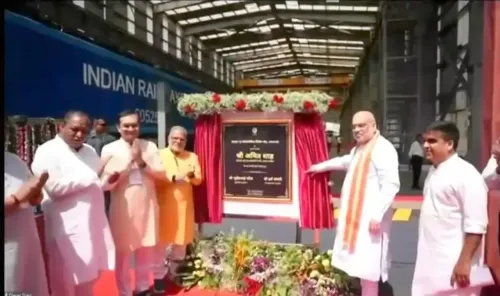
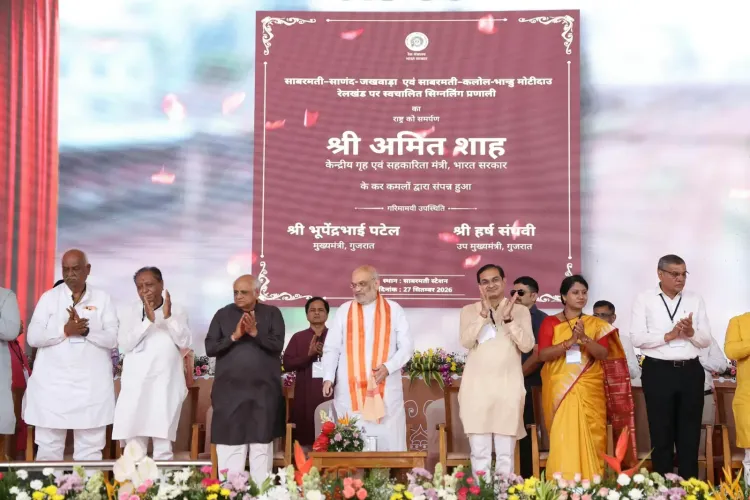
Projects launched by Union Home Minister Amit Shah alongside CM Bhupendra Patel and Deputy CM Harsh Sanghavi in Ahmedabad on 27 September 2026 .
Railway safety and capacity in Gujarat received a significant boost on Sunday, 27 September 2026, with the commissioning of the indigenous Kavach automatic train protection system across 404 km of the Ahmedabad Division, the launch of automatic signalling on two key corridors, and the formal start of the ₹313.27 crore doubling project on the Sabarmati-Sarkhej railway section. The initiatives are part of a railway package worth more than ₹1,542 crore unveiled in Sabarmati and Ahmedabad.
Kavach Rollout Across Key Sections
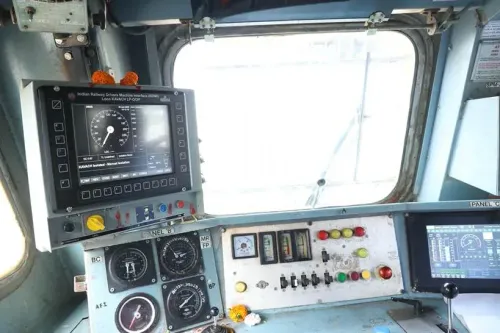
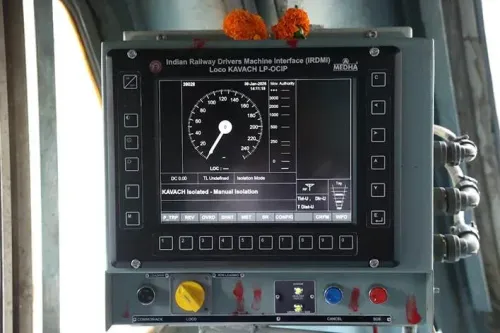
The Kavach system was commissioned on two critical routes: the Ahmedabad-Palanpur section, spanning 157 km, and the Ahmedabad-Samakhiyali section, covering 247 km. The total estimated cost for equipping the Ahmedabad Division network with the indigenous Standard Kavach system stands at approximately ₹411 crore.
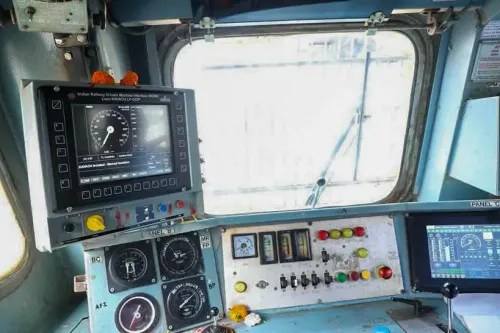
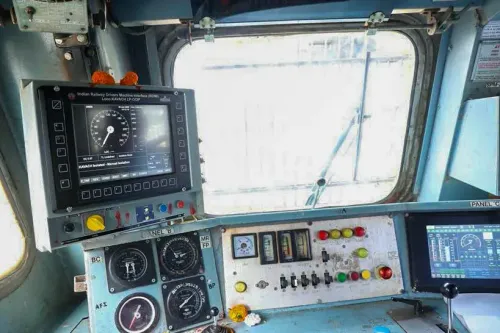
Kavach is designed to prevent train collisions by automatically applying brakes when a loco pilot fails to observe a signal or exceeds prescribed speed limits. The system is intended to substantially reduce human-error-related incidents — a recurring concern in India's rail safety record. Notably, Kavach has been at the centre of national debate since the Balasore train tragedy of 2023, which accelerated the Centre's push to fast-track its deployment across the national network.
Automatic Signalling on Two Corridors
Automatic Block Signalling (ABS) was simultaneously launched on the Sabarmati-Sanand-Jakhwada and Sabarmati-Kalol-Bhandu Motidau sections. The system covers 122.57 km at an estimated cost of ₹118.83 crore. ABS works by dividing railway routes into signalling blocks, enabling trains to run at safe, optimised intervals without manual intervention at each signal point.
This is expected to meaningfully increase line capacity, allowing more trains to operate on already-congested corridors — a key operational bottleneck on the Western Railway network that runs through Gujarat's industrial belt.
Sabarmati-Sarkhej Doubling Project
Work on doubling the 21-km Sabarmati-Sarkhej section was formally launched, with a targeted completion date of March 2028. The project, budgeted at ₹313.27 crore, covers four stations — Sabarmati, Gandhigram, Vastrapur, and Sarkhej — and involves construction of 16 minor bridges, 13 road underbridges, one major bridge, and work at six level crossings.
The additional line is intended to ease operational bottlenecks for both passenger and freight traffic, and is expected to strengthen rail connectivity towards the Sarkhej–Dholera corridor — a strategically important zone given the ongoing development of the Dholera Special Investment Region (SIR).
The Broader Package and Political Context
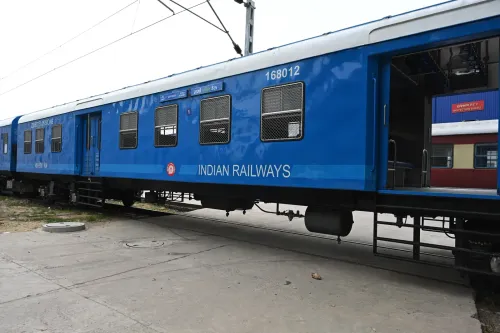
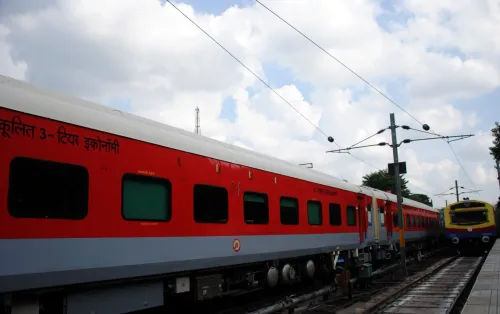
The projects were launched by Union Home Minister Amit Shah in the presence of Gujarat Chief Minister Bhupendra Patel and Deputy Chief Minister Harsh Sanghavi. The broader package unveiled during Shah's Gujarat visit also includes the inauguration of a ₹700 crore WAG-12 locomotive maintenance shed and the launch of the country's first LNG-powered train from Sabarmati railway station.
This is the latest in a series of Central Government investments in Gujarat's rail infrastructure, reflecting both the strategic importance of the state's industrial corridors and the political salience of visible infrastructure delivery ahead of future electoral cycles. With Kavach deployment, automatic signalling, and the Dholera-linked doubling work now under way, Gujarat's rail network is set to undergo one of its most substantive upgrades in recent years.
Point of View
But the Kavach rollout deserves scrutiny beyond the ribbon-cutting. With 404 km commissioned in Ahmedabad Division, India's overall Kavach coverage still covers a fraction of the 68,000-km network — deployment pace has repeatedly lagged stated timelines since the system was first announced. The Sabarmati-Sarkhej doubling's strategic value is real, but its March 2028 deadline needs to be held to account; railway infrastructure projects in India routinely overrun by a year or more. The Dholera connectivity angle is worth watching: if the SIR industrialisation accelerates, this section will matter far more than its modest 21-km length suggests.
NationPress
27 Sept 2026
Frequently Asked Questions
What is the Kavach train protection system commissioned in Gujarat?
Kavach is an indigenous automatic train protection system that prevents collisions by applying brakes when a loco pilot overshoots a signal or exceeds speed limits. In Gujarat, it has been commissioned across 404 km of the Ahmedabad Division — covering the Ahmedabad-Palanpur (157 km) and Ahmedabad-Samakhiyali (247 km) sections — at an estimated cost of ₹411 crore.
What is the Sabarmati-Sarkhej railway doubling project?
It is a ₹313.27 crore project to lay an additional railway line across the 21-km Sabarmati-Sarkhej section, covering Sabarmati, Gandhigram, Vastrapur, and Sarkhej stations. Work began on 27 September 2026 and is targeted for completion by March 2028, with the aim of reducing congestion and strengthening connectivity toward the Sarkhej–Dholera corridor.
What is Automatic Block Signalling and why was it launched in Gujarat?
Automatic Block Signalling (ABS) divides a railway route into blocks and regulates train movement at safe intervals without manual intervention at every signal. It was launched across 122.57 km on the Sabarmati-Sanand-Jakhwada and Sabarmati-Kalol-Bhandu Motidau sections at ₹118.83 crore to increase line capacity on Gujarat's congested corridors.
Who launched these railway projects in Gujarat?
Union Home Minister Amit Shah launched the projects on 27 September 2026 in the presence of Gujarat Chief Minister Bhupendra Patel and Deputy Chief Minister Harsh Sanghavi at Sabarmati and Ahmedabad.
What is the total value of railway projects unveiled during Amit Shah's Gujarat visit?
The total railway package unveiled exceeds ₹1,542 crore. It includes the Kavach commissioning, automatic signalling, the Sabarmati-Sarkhej doubling, the inauguration of a ₹700 crore WAG-12 locomotive maintenance shed, and the launch of India's first LNG-powered train from Sabarmati railway station.