Eastern Railway wins national award for Kavach deployment on Howrah–Delhi route
Synopsis
Eastern Railway didn't just deploy Kavach — it set five national firsts doing it. Covering 260 route km, 47 stations, and 119 locomotives on India's busiest corridor, ER's SIL-4-certified rollout has become the blueprint for how Indian Railways can modernise without halting a single commuter train.
Key Takeaways
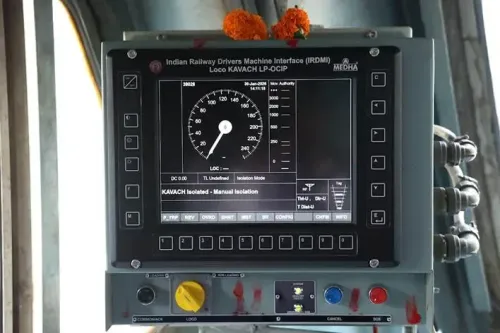
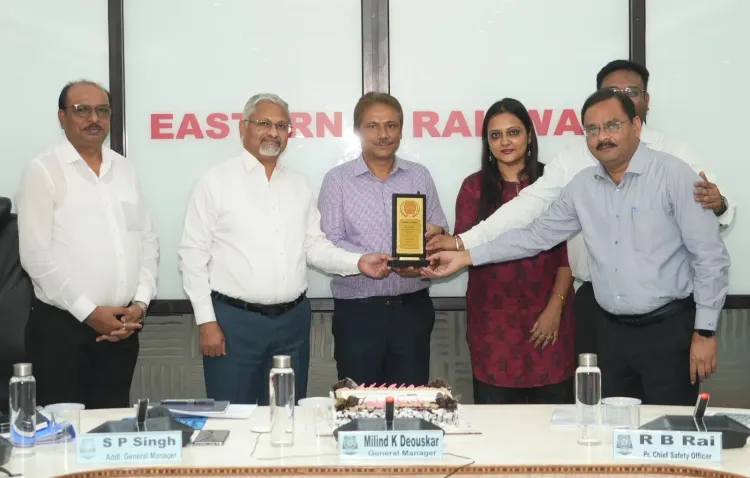
Eastern Railway won the National S&T Award 2026 from the IRSE for excellence in Kavach Version 4.0 deployment.
ER is the first zonal railway to commission Kavach on the Howrah–New Delhi high-density corridor under Mission Raftar .
The project covered 260 route km and 47 stations , with 118 WAP-5/WAP-7 locomotives and one EMU integrated.
Infrastructure includes 7,900 RFID tags , 60 UHF radio towers , and 520 km of dedicated optical fibre cable.
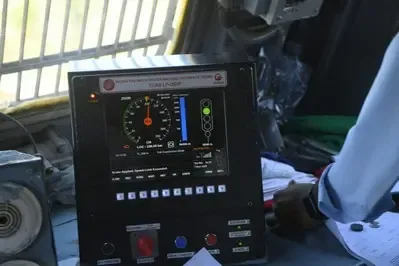
The system protects trains at speeds up to 160 kmph and meets the highest international SIL-4 safety standard.
Zero disruption to commuter services was reported during the entire implementation on the Howrah–Barddhaman–Chota Ambana section.
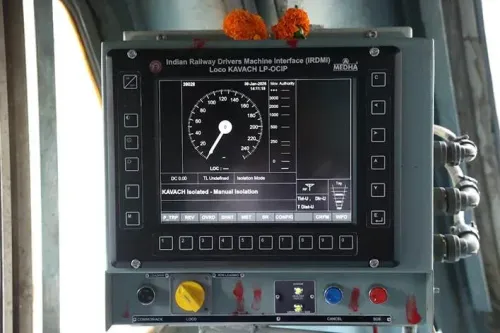
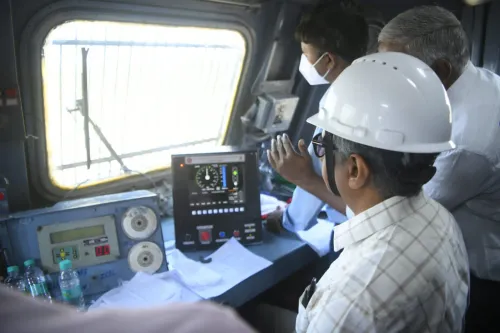
Eastern Railway (ER) has been conferred the National Signalling and Telecommunications (S&T) Award 2026 by the Institution of Railway Signal Engineers (IRSE) for demonstrating excellence in the deployment of Kavach Version 4.0, India's indigenous Automatic Train Protection (ATP) system, on the high-density Howrah–New Delhi corridor. The award recognises ER as the 'Best Zonal Railway Showing Excellence in Kavach Deployment and Automatic Train Protection Implementation.'
A String of Railway Firsts
Eastern Railway has carved out several landmark achievements within Indian Railways through this project. It became the first zonal railway to award and execute an EPC (Engineering, Procurement and Construction) contract for Kavach implementation on the high-density Mission Raftar Howrah–New Delhi route. ER is also the first zone to commission its portion of Kavach Version 4.0 on that corridor, the first to commission the system in automatic signalling territory, and the first to successfully achieve direct interfacing of Kavach with Electronic Interlocking systems.
Scale and Scope of the Deployment
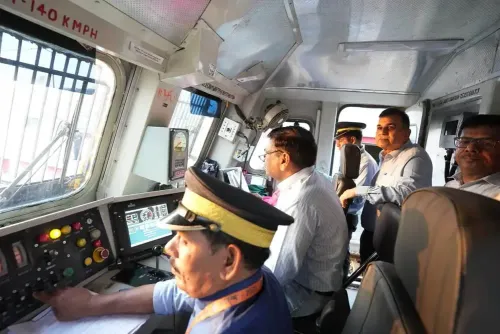
The project covered 260 route kilometres and integrated 47 stations — including 11 equipped with electronic interlocking, six with major route relay interlocking, and 30 with panel interlocking. Key stations such as Howrah, Liluah, Barddhaman, Asansol, and Sitarampur were brought into the Kavach network. The system was commissioned on 118 WAP-5 and WAP-7 electric locomotives and one EMU, all conforming to SIL-4 safety standards — the highest international benchmark.
Infrastructure built for the project includes the installation of nearly 7,900 RFID tags along the tracks, the erection of 60 UHF radio towers, the laying of 520 kilometres of dedicated Optical Fibre Cable (OFC), and the establishment of Centralised Intelligent Kavach Monitoring Systems (CIKMS) at Howrah and Asansol for real-time monitoring and diagnostics.
Why This Corridor Was a Tough Test
The implementation was carried out on the Howrah–Barddhaman–Chota Ambana section, described by officials as one of the most operationally demanding corridors in the country. It is characterised by dense passenger and freight traffic, multiple-line territories, diverse legacy signalling systems, and round-the-clock train operations. According to officials, the project was executed without a single disruption to daily commuter services.
The system underwent rigorous field trials, validation exercises, and independent audits by an Independent Safety Assessor (ISA) before being commissioned, ensuring compliance with SIL-4 requirements. A senior ER official noted that the deployment has 'permanently solved' vulnerabilities such as accidental Signal Passing at Danger (SPAD), sudden train rollbacks, and real-time tracking challenges that previously burdened loco pilots during fog, heavy rain, or peak-hour operations.
What It Means for Passengers
With Kavach Version 4.0 operational, trains on the protected corridor can run at speeds of up to 160 kmph under an automated safety shield. Officials say passengers can expect smoother journeys, improved punctuality, and protection against human-error-driven accidents on one of India's busiest rail routes.
Shibram Majhi, Chief Public Relations Officer (CPRO) of Eastern Railway, said: 'Travelling by train is now safer, smarter, and more reliable than ever before on our most crowded routes. We are deeply committed to continuing this journey of modernisation to build a world-class railway network.'
This recognition comes as Indian Railways accelerates the nationwide rollout of Kavach, with Eastern Railway's deployment now serving as a replicable model for other zones tackling complex, high-density corridors.
Point of View
High-density corridor without operational disruption. The five 'firsts' ER has claimed also reveal how fragmented and slow the broader national rollout has been; if one zone needed this many pioneering steps, the path ahead for other zones remains steep. The real question is whether the Howrah–Delhi model can be replicated quickly enough on other accident-prone corridors, particularly in zones with older infrastructure and less administrative bandwidth. Train safety in India has long suffered from the gap between announced targets and ground-level execution.
NationPress
15 Sept 2026
Frequently Asked Questions
What award did Eastern Railway win in 2026?
Eastern Railway received the National Signalling and Telecommunications (S&T) Award 2026 from the Institution of Railway Signal Engineers (IRSE), recognising it as the best zonal railway for excellence in Kavach deployment and Automatic Train Protection implementation.
What is Kavach Version 4.0 and how does it work?
Kavach Version 4.0 is India's indigenous Automatic Train Protection (ATP) system that automatically applies brakes to prevent collisions, signal overruns, and rollbacks. It meets the international SIL-4 safety standard — the highest available — and protects trains at speeds up to 160 kmph using RFID tags, UHF radio towers, and optical fibre networks.
Which route was covered under Eastern Railway's Kavach deployment?
The deployment covered the Howrah–Barddhaman–Chota Ambana section of the Howrah–New Delhi high-density corridor under Mission Raftar, spanning 260 route kilometres and 47 stations including Howrah, Liluah, Barddhaman, Asansol, and Sitarampur.
How many locomotives were fitted with Kavach by Eastern Railway?
A total of 118 WAP-5 and WAP-7 electric locomotives and one EMU were commissioned with Kavach Version 4.0, all conforming to SIL-4 safety standards.
What makes Eastern Railway's Kavach rollout a national first?
Eastern Railway achieved multiple firsts: it was the first zone to award an EPC contract for Kavach on a high-density route, the first to commission Kavach Version 4.0 on the Howrah–New Delhi corridor, the first to deploy it in automatic signalling territory, and the first to directly interface Kavach with Electronic Interlocking systems.