Indian Railways logs only 2 train accidents in 2026-27, Kavach covers 2,490 km

Synopsis
Indian Railways has recorded just two consequential train accidents so far in 2026-27 — a figure Railway Minister Ashwini Vaishnaw cited in Parliament as proof that technology-led safety upgrades are working. With Kavach 4.0 live on 2,490 route kilometres and rollout underway on nearly 22,000 more, India's rail network is making its most ambitious automated safety push yet.
Key Takeaways
Indian Railways recorded only two consequential train accidents in 2026-27 , as stated by Railway Minister Ashwini Vaishnaw in the Lok Sabha on 29 July 2026 .
Kavach 4.0 has been commissioned on 2,490 route kilometres covering the Delhi–Mumbai and Delhi–Howrah high-density corridors.
Kavach implementation is under progress on 21,937 route kilometres , covering 7,435 locomotives and 1,200 EMU/MEMU trains .
Electrical/Electronic Interlocking Systems and complete track circuiting have been provided at 6,671 stations as of 30 June 2026 .
10,395 level crossing gates have been interlocked; all unmanned Broad Gauge level crossings were eliminated by January 2019 .
Fire detection and suppression systems are being fitted in newly manufactured coaches and progressively retrofitted across existing rolling stock.
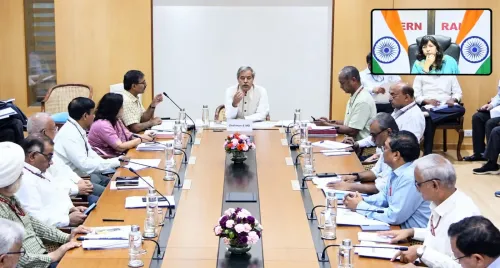
Railway Minister Ashwini Vaishnaw informed the Lok Sabha on Wednesday, 29 July 2026 that Indian Railways has recorded just two consequential train accidents so far in 2026-27, citing technology deployment, infrastructure upgrades, and strengthened maintenance as the driving forces behind the sharp decline in rail mishaps.
Record Safety Performance
Vaishnaw, responding to a query in the Lower House through a written reply, stated that safety has been accorded the highest priority on Indian Railways, resulting in a steep fall in accident numbers. The figure of two consequential accidents in the current financial year marks a significant improvement over previous years and reflects the impact of sustained investment in rail safety infrastructure.
Kavach 4.0: Deployment and Reach
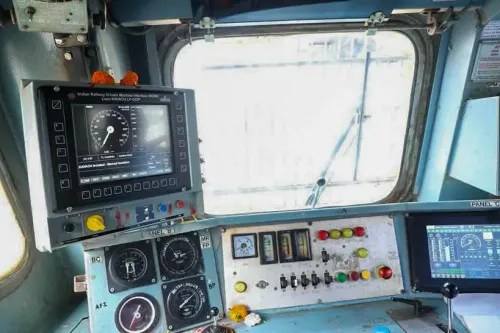
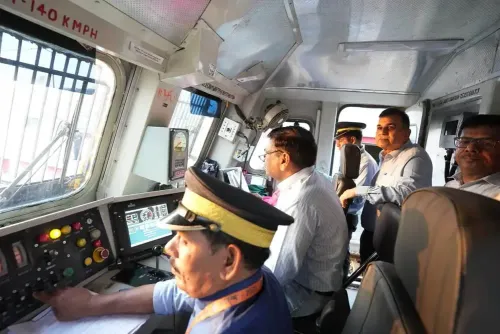
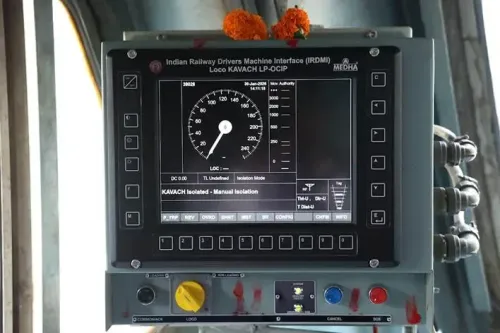
At the centre of India's rail safety push is the indigenously developed Kavach 4.0 Automatic Train Protection System, which has been successfully commissioned on 2,490 route kilometres, covering the high-density Delhi–Mumbai and Delhi–Howrah corridors. Implementation work is additionally under progress on 21,937 route kilometres, with installation being taken up on 7,435 locomotives and 1,200 EMU/MEMU trains.
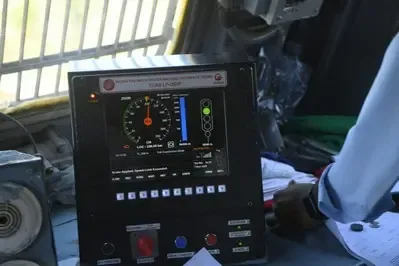
The system assists loco pilots by automatically applying brakes if speed limits are breached or if the pilot fails to act, and also enables safe train operations during adverse weather conditions. Station Kavach is being installed at every station within block sections, complemented by Radio Frequency Identification (RFID) tags, telecom towers, and Optical Fibre Cable laid along track lengths.
Vaishnaw described the rollout as 'a significant milestone in safety for Indian Railways,' noting that the system was developed, tested, and deployed within a short period.
Interlocking, Track Circuiting and Level Crossings
Beyond Kavach, Electrical/Electronic Interlocking Systems with centralised control of points and signals have been installed at 6,671 stations as of 30 June 2026, reducing the risk of accidents caused by human error. Complete track circuiting — which verifies track occupancy through electrical means — has also been provided at 6,671 stations.
Interlocking of Level Crossing (LC) Gates has been extended to 10,395 level crossing gates, further enhancing safety at these historically accident-prone points. Notably, all unmanned level crossings on the Broad Gauge (BG) network were eliminated as far back as January 2019.
Coach Safety and Fire Prevention
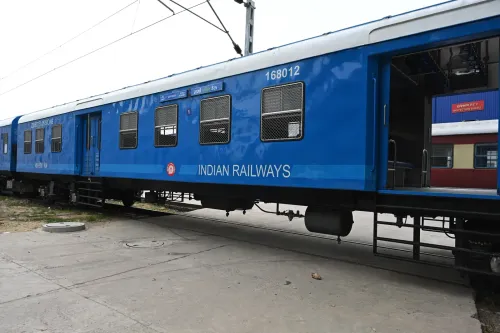
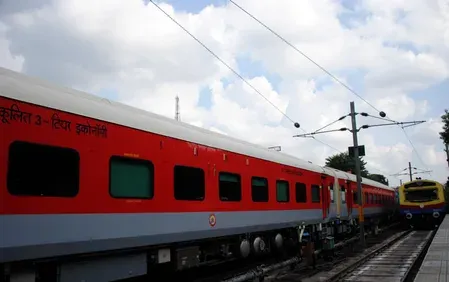
On the rolling stock front, conventional ICF design coaches are being progressively replaced with safer LHB design coaches. Preventive maintenance of coaches and wagons is carried out to ensure safe train operations. Newly manufactured Power Cars and Pantry Cars are now fitted with fire detection and suppression systems, while newly manufactured coaches include fire and smoke detection systems. Phased retrofitting of existing coaches is underway across Zonal Railways. Statutory fire notices have also been displayed across all coaches for passenger awareness.
What Comes Next
With Kavach implementation continuing across nearly 22,000 route kilometres and interlocking coverage expanding, Indian Railways is on course to significantly broaden its automated safety net. The pace of LHB coach replacement and fire-safety retrofitting will be closely watched as the network scales up capacity ahead of future demand.
Point of View
So the figure, while encouraging, does not capture the full safety picture. The real test of Kavach 4.0 lies not in its commissioned kilometres but in its performance under operational stress on congested corridors. With rollout still covering a fraction of the total network, the gap between what is protected and what is not remains substantial. Parliament deserves granular data on near-misses, signal failures, and track-defect detections — metrics that would give a more complete picture of where Indian Railways actually stands on safety.
NationPress
28 Oct 2026
Frequently Asked Questions
How many train accidents has Indian Railways recorded in 2026-27?
Indian Railways has recorded only two consequential train accidents so far in 2026-27, according to Railway Minister Ashwini Vaishnaw's written reply in the Lok Sabha on 29 July 2026. The government attributes this decline to technology deployment, infrastructure upgrades, and improved maintenance.
What is Kavach 4.0 and how does it improve rail safety?
Kavach 4.0 is an indigenously developed Automatic Train Protection System that automatically applies brakes if a loco pilot fails to maintain specified speed limits or respond to signals, and enables safe operations in poor weather. It has been commissioned on 2,490 route kilometres covering the Delhi–Mumbai and Delhi–Howrah corridors, with rollout underway on an additional 21,937 route kilometres.
How many stations have interlocking systems installed?
Electrical/Electronic Interlocking Systems with centralised control of points and signals have been provided at 6,671 stations as of 30 June 2026. The same number of stations also have complete track circuiting for electrical verification of track occupancy.
What has been done to make level crossings safer?
Interlocking has been provided at 10,395 level crossing gates across the network. All unmanned level crossings on the Broad Gauge route were eliminated by January 2019, removing one of the historically most dangerous points of rail accidents.
What fire safety measures are being added to railway coaches?
Newly manufactured Power Cars and Pantry Cars are equipped with fire detection and suppression systems, while newly manufactured coaches include fire and smoke detection systems. Existing coaches are being retrofitted in a phased manner by Zonal Railways, and statutory fire notices are displayed in all coaches.