Indian Railways spends ₹1.14 lakh crore, 39% of FY27 capex by July
Synopsis
Indian Railways has burned through ₹1.14 lakh crore — 39% of its FY27 budget — in just four months, while rolling out Kavach collision-avoidance tech across 2,633 route km and lifting 81% of the network to 110 kmph-plus capability. With ₹1.78 lakh crore still to spend before March, the second-half execution test begins now.
Key Takeaways
Indian Railways spent ₹1,14,973 crore — 39% of its ₹2,93,030 crore FY27 budget — by July 2026 .
Kavach Version 4.0 is live over 2,633 route km on the Delhi-Mumbai and Delhi-Howrah corridors; trackside rollout covers 21,794 route km .
6,290 locomotives are equipped with Kavach; work is underway for 7,190 more and 1,200 EMU/MEMU rakes .
Tracks capable of 130 kmph or above have grown from 5,036 km (2014) to 24,173 km (2026); 81% of the network supports 110 kmph+ .
Safety spending has risen from ₹39,200 crore in 2013-14 to ₹1,20,389 crore in 2026-27.
514 infrastructure projects covering ~ 40,000 km worth ₹8.31 lakh crore are under implementation.
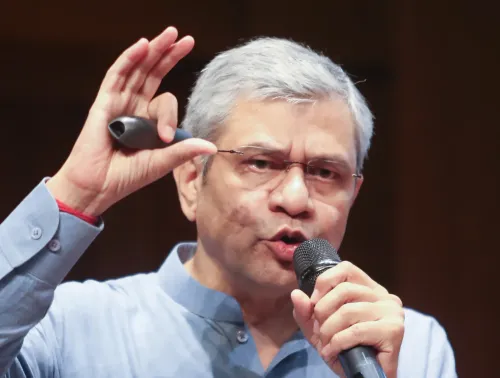
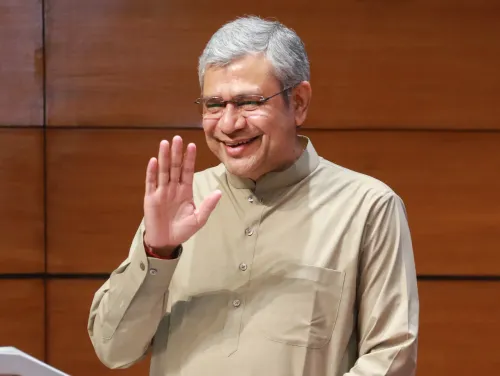
Indian Railways had deployed ₹1,14,973 crore — roughly 39 per cent of its total budgetary allocation of ₹2,93,030 crore for 2026-27 — by the end of July 2026, Union Minister for Railways Ashwini Vaishnaw informed the Lok Sabha on Wednesday, 5 August. The expenditure has been channelled into safety upgrades, the rollout of the indigenous collision-avoidance system Kavach, and a large-scale push to raise permissible train speeds across the network.
Kavach Rollout and Upgrades
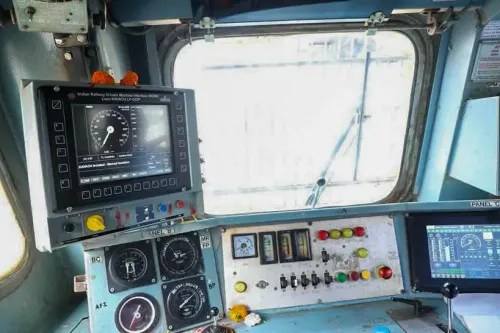
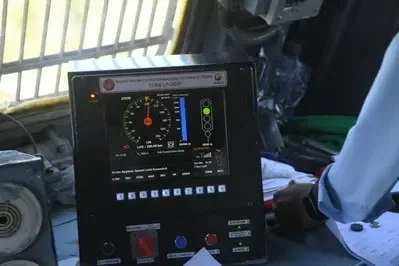
Version 4.0 of Kavach — the Automatic Train Protection (ATP) system developed indigenously — has been commissioned over 2,633 route kilometres as of 31 July, covering critical stretches of the Delhi-Mumbai and Delhi-Howrah high-density corridors. The latest version brings higher location accuracy, improved signal relay in larger yards, optical fibre-based station-to-station interfaces, and direct integration with electronic interlocking systems — features designed to enable faster, wider deployment.
Trackside Kavach implementation now spans 21,794 route km, covering the Golden Quadrilateral, the Golden Diagonal, and other high-density sections. The system has been fitted in 6,290 locomotives, with work underway to equip an additional 7,190 locomotives and 1,200 EMU/MEMU rakes. Total spending on Kavach works stood at ₹3,875 crore till June, against a 2026-27 allocation of ₹2,066 crore.
Speed Upgrades Across the Network
The length of tracks capable of supporting speeds of 130 kmph or above has grown from 5,036 km in 2014 to 24,173 km in 2026 — a nearly fivefold increase. Approximately 81 per cent of the entire railway network can now handle speeds of 110 kmph or higher, up sharply from about 40 per cent in 2014. Under Mission Raftaar, the New Delhi-Mumbai and New Delhi-Howrah corridors are being upgraded for operations at up to 160 kmph.
Safety Spending and Infrastructure
Expenditure on safety-related activities has risen from ₹39,200 crore in 2013-14 to ₹1,20,389 crore in 2026-27, according to Vaishnaw. This comes amid sustained public scrutiny of rail safety following a series of high-profile accidents in recent years.
On the infrastructure front, Indian Railways commissioned 36,429 km of new lines between 2014 and 2026, averaging 8.32 km per day — nearly double the 4.2 km per day pace recorded during 2009-14. As of 1 April, 514 projects — comprising 169 new lines, 29 gauge conversion projects, and 316 doubling projects — covering roughly 40,000 km and valued at approximately ₹8.31 lakh crore are under implementation. Of these, 12,583 km have been commissioned at a cumulative expenditure of ₹3.05 lakh crore.
Workforce Training
Indian Railways trains around six lakh employees annually through its network of training institutes, with increasing emphasis on digital technologies, logistics, and modern freight operations, the minister said.
With over 60 per cent of the FY27 capex still to be deployed in the remaining eight months of the financial year, execution pace in the second half will be closely watched by both Parliament and the infrastructure sector.
Point of View
But Indian Railways has a well-documented pattern of back-loading expenditure — and the harder question is whether Kavach's on-ground rollout pace matches its political billing. With 2,633 route km commissioned against a 21,794 km trackside target, the gap between coverage and completion is stark. Safety spending has tripled since 2013-14, yet the frequency of derailments and collisions has kept public confidence fragile. The real accountability test is not the budget utilisation figure Parliament was given, but whether Kavach deployment accelerates enough to cover the highest-risk corridors before the next monsoon season.
NationPress
20 Sept 2026
Frequently Asked Questions
How much has Indian Railways spent from its FY27 budget so far?
Indian Railways had spent ₹1,14,973 crore — about 39% of its total budgetary allocation of ₹2,93,030 crore for 2026-27 — by the end of July 2026. The figure was disclosed by Railways Minister Ashwini Vaishnaw in a written reply to the Lok Sabha on 5 August.
What is Kavach and how widely has it been deployed?
Kavach is India's indigenously developed Automatic Train Protection (ATP) system designed to prevent train collisions. As of 31 July 2026, Version 4.0 has been commissioned over 2,633 route km on the Delhi-Mumbai and Delhi-Howrah corridors, while trackside implementation covers 21,794 route km across the Golden Quadrilateral and high-density network.
How has Indian Railways improved train speeds since 2014?
Tracks capable of 130 kmph or above have expanded from 5,036 km in 2014 to 24,173 km in 2026. About 81% of the entire network can now support speeds of 110 kmph or higher, up from roughly 40% in 2014. The Delhi-Mumbai and Delhi-Howrah corridors are being upgraded to 160 kmph under Mission Raftaar.
How much has safety spending grown on Indian Railways?
Safety-related expenditure has risen from ₹39,200 crore in 2013-14 to ₹1,20,389 crore in 2026-27, according to Minister Ashwini Vaishnaw. The increase reflects sustained investment in collision-avoidance systems, track upgrades, and infrastructure modernisation.
How many new railway lines has India built since 2014?
Indian Railways commissioned 36,429 km of new lines between 2014 and 2026, averaging 8.32 km per day — nearly double the 4.2 km per day recorded during 2009-14. An additional 514 projects covering roughly 40,000 km and valued at ₹8.31 lakh crore are currently under implementation.