Has Indian Railways Really Tripled Its Safety Expenditure to Over Rs 1.17 Lakh Crore in the Last Decade?
Synopsis
In a bold move to enhance passenger safety, Indian Railways has increased its safety expenditure from Rs 39,200 crore to over Rs 1.17 lakh crore in just a decade. Discover how advanced technologies like the Kavach system are revolutionizing train safety and reducing accidents across the network.
Key Takeaways
Increased Investment: Safety expenditure has tripled to over Rs 1.17 lakh crore.
Kavach Technology: Advanced automatic train protection system enhances safety.
CCTV Installation: Over 12,300 coaches and 460 locomotives are now monitored.
Training Initiatives: More than 48,000 personnel trained in Kavach technology.
Future Goals: Continuous improvements and expansions of safety measures planned.
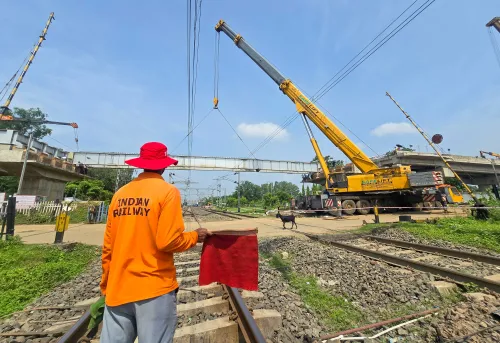
New Delhi, Feb 13 (NationPress) The Indian Railways has significantly increased its investment in safety over the past ten years, raising it from Rs 39,200 crore in 2013-14 to Rs 1,17,693 crore in 2025-26, emphasizing passenger safety during its modernization efforts, as reported in Parliament on Friday.
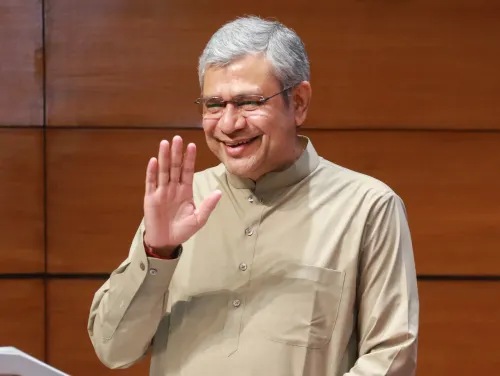
“Safety is the utmost priority for Indian Railways. Due to various safety initiatives implemented over the years, there has been a major reduction in the number of accidents,” stated Minister for Railways Ashwini Vaishnaw in a written response to queries in the Rajya Sabha.
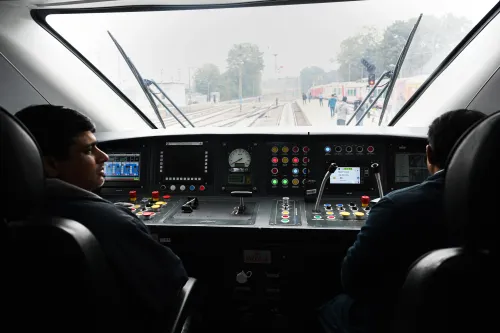
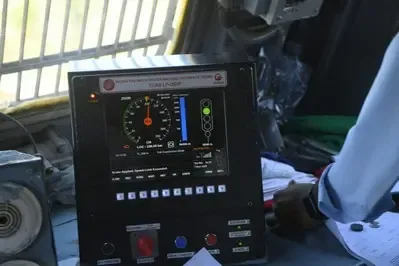
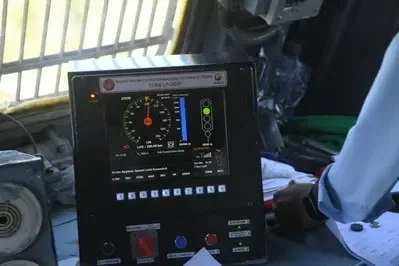
The indigenous, advanced Kavach Automatic Train Protection (ATP) system, which requires the highest safety certification (SIL-4), has been deployed across extensive sections of the Indian Railways network following successful field trials in 2016. Kavach assists train operators in adhering to speed limits by automatically applying brakes if necessary, thereby ensuring safe operations even during adverse weather conditions.
As of December 2025, Rs 2,573.36 crore has been allocated to Kavach initiatives, with an additional allocation of Rs 1,673.19 crore for the year 2025-26. The required funds are provided according to the progress of the projects, the minister noted.
Based on the implementation of Kavach version 3.2 on 1465 route km within the South Central Railway and lessons learned, enhancements have been made leading to the approval of Kavach specification version 4.0 by RDSO in July 2024.
This updated version integrates key features necessary for the diverse railway network, marking a substantial achievement in safety for Indian Railways. The Minister highlighted that in a brief timeframe, IR has developed, tested, and commenced deployment of the Automatic Train Protection System.
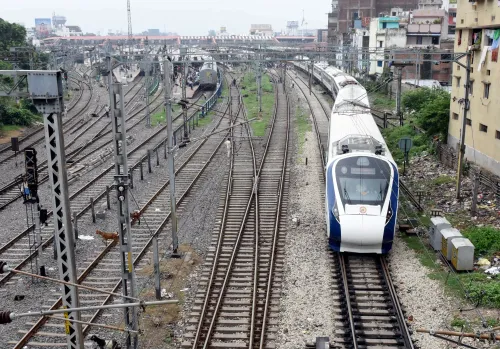
After thorough and comprehensive trials, Kavach Version 4.0 has been successfully implemented on 1297 route kilometres, encompassing the heavily-trafficked Delhi-Mumbai and Delhi-Howrah routes. On the Delhi-Mumbai segment, Kavach version 4.0 has been integrated on the junction cabin–Palwal–Mathura–Nagda section (667 Rkm) & Ahmedabad–Vadodara–Virar section (432 Rkm), as well as on the Delhi–Howrah route covering Gaya–Saramatanr (93 Rkm) and Bardhaman-Howrah section (105 Rkm).
Additionally, implementation of trackside Kavach systems is in progress across 23,360 route km, covering all crucial railway sections.
Specialized training initiatives on Kavach are being held at centralized training institutes of Indian Railways, aiming to educate relevant officials. To date, over 48,000 technicians, operators, and engineers have been trained on Kavach technology, including approximately 45,000 Loco Pilots and Assistant Loco Pilots. The courses have been developed in collaboration with IRISET.
The estimated cost for providing Track Side, including Station equipment for Kavach, is about Rs 50 lakh/Km, while the cost for outfitting locomotives with Kavach equipment is around Rs 80 lakh/loco.
Indian Railways is also working on installing CCTV cameras in coaches and locomotives to enhance passenger safety and security. The inclusion of CCTV cameras is anticipated to deter unlawful activities, vandalism, and thefts, while also aiding in the investigation of incidents. Consequently, Zonal Railways and Production Units have begun the procurement and installation of CCTV systems in coaches and locomotives.
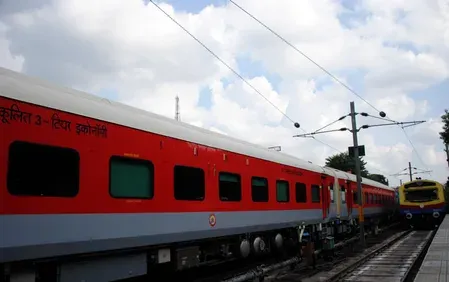
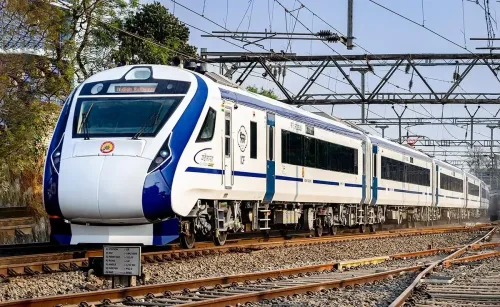
So far, around 12,300 coaches (including all operational units of Vande Bharat and Amrit Bharat trains) and 460 locomotives operating on the Indian Railways network are now equipped with CCTV cameras, the minister concluded.
Point of View
It is imperative to recognize that the Indian Railways' prioritization of safety through substantial financial investment reflects a progressive approach towards modernization. The implementation of advanced safety systems like Kavach not only enhances passenger security but also sets a precedent for future infrastructural developments in the country. Overall, this initiative aligns with the national goal of providing a safe and efficient transportation network.
NationPress
13 Oct 2026
Frequently Asked Questions
What is the Kavach system?
Kavach is an Automatic Train Protection system developed by Indian Railways that automatically applies brakes to prevent accidents when train operators fail to respond.
How much has Indian Railways spent on safety in the last decade?
Indian Railways has increased its safety expenditure from Rs 39,200 crore in 2013-14 to Rs 1,17,693 crore in 2025-26.
How many coaches and locomotives are equipped with CCTV cameras?
Approximately 12,300 coaches and 460 locomotives are currently equipped with CCTV cameras across the Indian Railways network.
What are the costs associated with implementing Kavach?
The estimated cost for Track Side implementation of Kavach is around Rs 50 lakh per kilometer, while the cost for locomotives is approximately Rs 80 lakh each.
What is the significance of the Kavach Version 4.0?
Kavach Version 4.0 integrates essential safety features for diverse railway networks and has been successfully commissioned on major routes, marking a key milestone in safety.