Rail accidents down 88% in a decade: 16 incidents in 2025-26 vs 135 in 2014-15

Synopsis
Indian Railways has cut train accidents by 88% over a decade — from 135 in 2014-15 to just 16 in 2025-26 — while tripling safety expenditure to ₹1,20,389 crore. With only two incidents recorded so far this year and the Kavach ATP system being rolled out, the numbers mark the safest period in modern Indian rail history.
Key Takeaways
Train accidents on Indian Railways dropped 88% — from 135 in 2014–15 to 16 in 2025–26 .
Only two accidents recorded in the current year up to June 2025 .
The Consequential Accident Index fell 91% , from 0.11 to 0.01 per million train-kilometres.
Safety expenditure rose from ₹39,200 crore in 2013–14 to ₹1,20,389 crore in 2026–27 .
Electronic interlocking installed at 6,671 stations ; LC Gate interlocking at 10,395 gates .
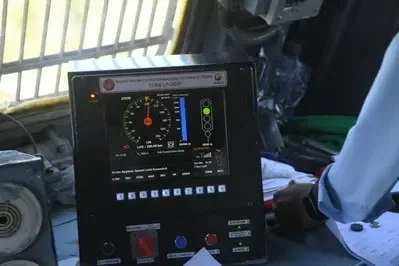
Kavach , the indigenously developed Automatic Train Protection system, is being deployed to prevent overspeeding and collisions.
Indian Railways recorded a dramatic improvement in safety over the past decade, with train accidents falling 88% to just 16 incidents in 2025–26 from 135 in 2014–15. Only two accidents have been reported in the current year up to June 2025, Union Minister for Railways Ashwini Vaishnaw informed Lok Sabha on Wednesday, 29 July.
Key Safety Metrics
The Consequential Accident Index — which measures accidents per million train-kilometres — fell to 0.01 in 2025–26 from 0.11 in 2014–15, a reduction of approximately 91%. The index is regarded as the most reliable benchmark for network-wide safety performance, as it normalises for the sheer scale of train operations across the country.
Expenditure on safety-related activities has more than tripled over this period, rising from ₹39,200 crore in 2013–14 to ₹1,20,389 crore in 2026–27, according to the Ministry of Railways statement placed before Parliament.
Infrastructure and Technology Upgrades
Electrical and electronic interlocking systems with centralised operation have been installed at 6,671 stations, with complete track circuiting provided at all these locations. Interlocking of Level Crossing (LC) Gates has been extended to 10,395 LC Gates to prevent unmanned crossing accidents — historically one of the leading causes of fatalities on the network.
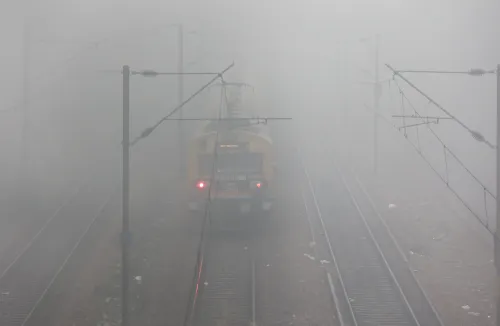
All locomotives are now equipped with vigilance control devices. In fog-prone regions, loco pilots have been provided GPS-based fog safety devices, while retro-reflective sigma boards placed two overhead equipment masts prior to signals help crew identify signals ahead under low-visibility conditions.
Rail integrity is being maintained through Ultrasonic Flaw Detection (USFD) testing, timely replacement of defective rails, laying of longer rails, and the adoption of superior welding technology — all aimed at reducing track-related failures.
Kavach: The Indigenously Developed Safety Net
Minister Vaishnaw also highlighted the rollout of Kavach, an indigenously developed Automatic Train Protection (ATP) system. Kavach assists loco pilots in maintaining prescribed speed limits by automatically applying brakes when a breach is detected, providing a critical last line of defence against collisions and overspeeding incidents.
This comes amid sustained public and parliamentary scrutiny of railway safety following high-profile accidents in recent years, making the government's data on declining incident rates politically significant as well as operationally important.
What This Means Going Forward
Regular staff inspections and safety-practice audits continue to complement the technological investments. With safety expenditure at an all-time high and incident counts at a historic low, the focus is expected to shift toward accelerating Kavach coverage across the broader network and eliminating remaining unmanned level crossings. The pace of that rollout will determine whether the downward trend in accidents is sustained through the next decade.
Point of View
But the numbers require context. The Consequential Accident Index counts only 'consequential' incidents — those involving casualties or significant disruption — meaning near-misses and minor derailments may not be fully captured. The real test of the decade's safety investment is the Kavach rollout: the ATP system remains far from full network coverage, and the corridors still without it carry the highest collision risk. Safety expenditure tripling is welcome, but the share going to Kavach deployment versus legacy maintenance deserves closer parliamentary scrutiny than Wednesday's statement invited.
NationPress
13 Sept 2026
Frequently Asked Questions
How much have train accidents fallen in India over the last decade?
Train accidents on Indian Railways fell 88% over the past decade, dropping from 135 incidents in 2014–15 to just 16 in 2025–26. Only two accidents have been reported in the current financial year up to June 2025.
What is the Consequential Accident Index and how has it changed?
The Consequential Accident Index measures accidents per million train-kilometres and is the standard benchmark for railway safety performance. It fell 91% — from 0.11 in 2014–15 to 0.01 in 2025–26 — reflecting a significant improvement in network-wide safety.
How much has the government spent on railway safety?
Safety-related expenditure has more than tripled, rising from ₹39,200 crore in 2013–14 to ₹1,20,389 crore in 2026–27, according to the Ministry of Railways statement presented to Parliament.
What is Kavach and how does it improve rail safety?
Kavach is an indigenously developed Automatic Train Protection (ATP) system that helps loco pilots stay within prescribed speed limits by automatically applying brakes when needed. It serves as a critical safeguard against collisions and overspeeding incidents and is currently being rolled out across the Indian Railways network.
What other safety measures has Indian Railways implemented?
Key measures include electronic interlocking at 6,671 stations, LC Gate interlocking at 10,395 level crossings, GPS-based fog safety devices for loco pilots, Ultrasonic Flaw Detection testing of rails, and the fitting of vigilance control devices on all locomotives.