Indian Railways accidents drop to 16 in 2025-26; safety budget tripled to ₹1.2 lakh crore
Synopsis
Indian Railways has cut consequential train accidents by nearly 88% in 12 years — from 135 in 2014-15 to just 16 in 2025-26 — while tripling its safety budget to ₹1.2 lakh crore. With Kavach 4.0 live on only 2,490 of roughly 67,000 route kilometres, the harder part of the safety transformation is still ahead.
Key Takeaways
Consequential train accidents fell from 135 in 2014-15 to 16 in 2025-26 ; only 2 accidents reported in 2026-27 up to June.
Annual railway safety budget tripled from ₹39,200 crore (2013-14) to ₹1,20,389 crore (2026-27) .
6,671 stations equipped with electronic interlocking; 10,395 level crossing gates brought under the interlocking system.
Kavach 4.0 commissioned on 2,490 route kilometres ; rollout underway on 21,937 more route kilometres .
LHB coach production rose more than 21 times to 49,366 coaches during 2014–26; weld failures down 93% .
Recruitment against 1,61,889 vacancies underway; panels for over 3,300 candidates finalised in 2026-27 so far.
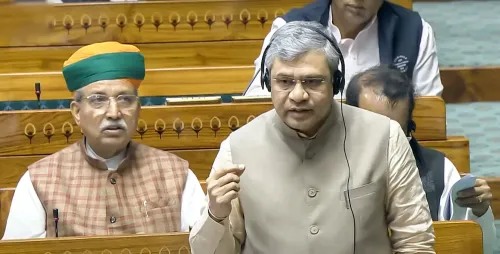
Indian Railways recorded a dramatic fall in train accidents over the past 12 years, with Railway Minister Ashwini Vaishnaw informing Parliament on 22 July 2026 that 'consequential accidents' dropped from 135 in 2014-15 to just 16 in 2025-26. The annual safety budget has been tripled — from ₹39,200 crore in 2013-14 to ₹1,20,389 crore in 2026-27 — as the Centre accelerates its rail modernisation drive.
Accident Numbers at a Glance
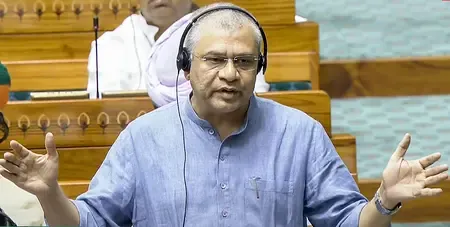
In a written reply to a query in the Lok Sabha, Minister Vaishnaw disclosed that only two accidents have been reported in 2026-27 up to June, continuing the steep downward trend. The causes of accidents on Indian Railways broadly include track defects, locomotive or coach defects, equipment failures, and human errors, according to Vaishnaw's statement.
This is the lowest accident count in the network's recorded history for a comparable period, and marks a near 88% reduction in consequential accidents since 2014-15.
Technology and Infrastructure Push
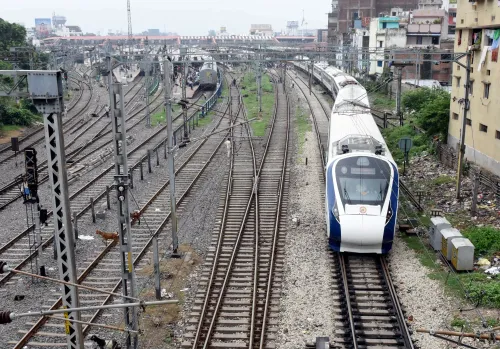
The Centre attributed the safety gains to a multi-pronged modernisation effort. As many as 6,671 stations have been equipped with electronic interlocking and complete track circuiting, while 10,395 level crossing gates have been brought under the interlocking system to minimise human error. Complete track circuiting enables verification of track occupancy by electrical means, reducing the risk of signal failures.
Indian Railways added 36,429 track kilometres between 2014 and 2026 — more than 2.5 times the track added during the preceding decade from 2004 to 2014. Production of LHB coaches, which are considered safer than older ICF designs, rose more than 21 times to 49,366 coaches during the same period. Weld failures have been reduced by 93%.
Kavach 4.0: The Automatic Train Protection System
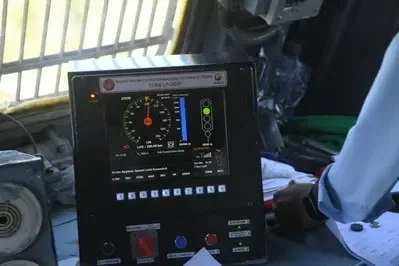
The indigenously developed Kavach 4.0 automatic train protection system has been commissioned on 2,490 route kilometres, covering the high-density Delhi–Mumbai and Delhi–Howrah corridors. Implementation work is underway on an additional 21,937 route kilometres, with installation being extended to 7,435 locomotives and 1,200 EMU/MEMU trains.
The total expenditure on Kavach works up to June 2026 stands at ₹3,874.9 crore, with a budgetary allocation of ₹2,066.24 crore earmarked for 2026-27. Funds are released in line with on-ground progress, officials indicated.
Railway Recruitment: 1.6 Lakh Vacancies Being Filled
In response to a separate query in the Lok Sabha, Minister Vaishnaw said recruitment is underway against 1,61,889 vacancies of non-gazetted personnel as per the annual calendar for 2024, 2025, and 2026. During January to December 2024, ten Centralised Employment Notifications covering 92,116 vacancies were issued across categories including Assistant Loco Pilots, Technicians, Sub-Inspectors, Constables in the Railway Protection Force (RPF), Junior Engineers, and others.
Computer-based tests for all 92,116 posts have been completed. Between April and June 2026, panels for more than 3,300 candidates across Technician, Junior Engineer, Paramedical, and Assistant Loco Pilot categories have been finalised — the majority falling under safety-critical roles, Vaishnaw noted.
What Comes Next
With Kavach deployment covering less than 15% of the total network even after the current rollout phase, the pace of expansion will be a key metric to watch. The recruitment pipeline, particularly for safety-category posts, will also determine whether the operational gains in accident reduction can be sustained as the network continues to expand.
Point of View
874.9 crore spent to cover 2,490 route kilometres means the system is live on a fraction of a network that spans over 67,000 route kilometres. At the current pace and allocation, full Kavach coverage remains a decade-plus project. The recruitment drive for 1.6 lakh vacancies — with a majority in safety categories — is the right instinct, but the speed of panel finalisation (3,300 in three months) suggests the pipeline is moving slower than the network's growth demands. Parliament was told what has improved; the more useful question is whether the investment trajectory is steep enough to match the ambition.
NationPress
21 Oct 2026
Frequently Asked Questions
How many train accidents occurred in India in 2025-26?
Consequential train accidents on Indian Railways fell to 16 in 2025-26, down from 135 in 2014-15, according to Railway Minister Ashwini Vaishnaw's statement in the Lok Sabha on 22 July 2026. Only two accidents have been reported in 2026-27 up to June.
By how much has the Indian Railways safety budget increased?
The annual safety budget for Indian Railways has more than tripled, rising from ₹39,200 crore in 2013-14 to ₹1,20,389 crore in 2026-27, as disclosed by the Centre in Parliament.
What is Kavach 4.0 and how widely has it been deployed?
Kavach 4.0 is an indigenously developed automatic train protection system designed to prevent collisions by overriding human error. It has been commissioned on 2,490 route kilometres covering the Delhi–Mumbai and Delhi–Howrah corridors, with implementation underway on a further 21,937 route kilometres.
How many railway vacancies are currently being filled?
Recruitment is underway against 1,61,889 non-gazetted vacancies across the 2024, 2025, and 2026 annual calendars. Computer-based tests for 92,116 posts notified in 2024 have been completed, and panels for over 3,300 candidates were finalised between April and June 2026.
What technology improvements have reduced train accidents in India?
Indian Railways has deployed electronic interlocking at 6,671 stations, brought 10,395 level crossing gates under the interlocking system, added 36,429 track kilometres since 2014, and ramped up LHB coach production by more than 21 times. Weld failures have been reduced by 93%, and the Kavach 4.0 collision-prevention system is being progressively rolled out across the network.