Kavach to cover 631 km of ECoR network in Odisha at ₹270 crore

Synopsis
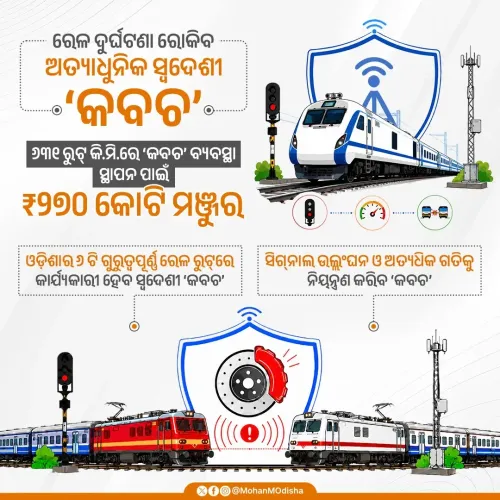
Indian Railways has greenlit Kavach deployment across 631 route kilometres of East Coast Railway at ₹270 crore — covering six critical sections in Odisha. The indigenously developed collision-avoidance system, which auto-applies brakes to prevent accidents, now moves closer to protecting one of India's busiest eastern freight and passenger corridors.
Key Takeaways
Indian Railways has approved Kavach deployment across 631 route km of the East Coast Railway (ECoR) network at ₹270 crore .
The project covers six sections : Baghuapal–Budhapank, Haridaspur–Paradeep, Khurda Road–Balangir, Naupada–Gunupur, Lanjigarh Road–Junagarh, and Bobbili–Salur.
Kavach is India's indigenously developed Automatic Train Protection (ATP) system that prevents collisions, over-speeding, and signal violations.
Odisha CM Mohan Charan Majhi welcomed the approval on 23 June , calling it a milestone for the state's rail infrastructure.
The project uses an LTE-based communication backbone and will benefit both passenger and freight operations, including during dense fog.
Odisha Chief Minister Mohan Charan Majhi on Tuesday, 23 June welcomed the Indian Railways' approval to deploy the Kavach automatic train protection system across 631 route kilometres (RKm) of the East Coast Railway (ECoR) network at a cost of ₹270 crore, calling it a major milestone for the state's rail infrastructure.
What the Approval Covers
The sanctioned project spans six key railway sections under ECoR: Baghuapal–Budhapank, Haridaspur–Paradeep, Khurda Road (KUR)–Balangir, Naupada–Gunupur, Lanjigarh Road–Junagarh, and Bobbili–Salur. The work forms part of Indian Railways' broader programme to roll out Kavach with an LTE-based communication backbone across its network.
What Kavach Does
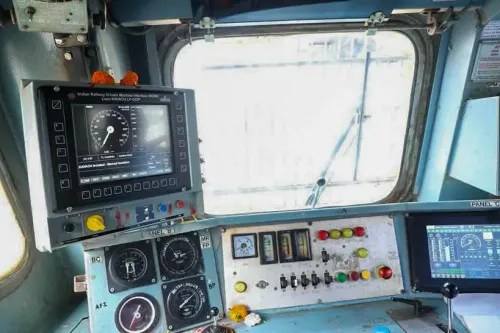
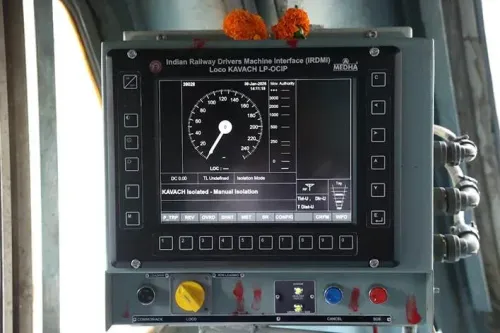
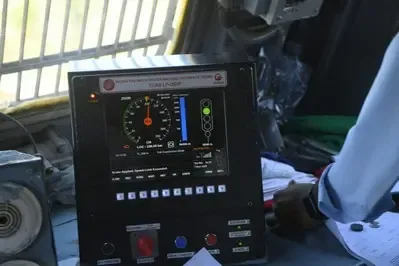
Kavach is India's indigenously developed Automatic Train Protection (ATP) system, engineered to prevent signal passing at danger (SPAD), over-speeding, and train collisions. According to officials, the system continuously monitors train movement and automatically applies brakes whenever required, significantly improving operational safety. Notably, Kavach also enables safer train operations during adverse weather conditions such as dense fog, improving punctuality and service reliability.
What the Chief Minister Said
Taking to his account on X, Chief Minister Majhi wrote: 'The approval of Kavach deployment over 631 route km of East Coast Railway marks a major milestone for our rail infrastructure.' He added that Odisha, as a key part of the ECoR network, stands to gain from enhanced passenger safety, reduced accident risk, and improved train operations. 'This modern, indigenously developed technology will further strengthen connectivity, support economic growth, and contribute to building a safer and more efficient railway system for the people of Odisha,' he stated.
Broader Impact on Odisha and the Region
The project is expected to benefit both passenger and freight train operations across strategically important corridors in Odisha and neighbouring regions served by ECoR. This comes amid Indian Railways' ongoing mission to expand Kavach coverage across high-density routes nationwide — a push that gained renewed urgency following high-profile rail accidents in recent years. The ₹270 crore outlay reinforces the Centre's commitment to safety-first modernisation of India's rail network.
Point of View
But the real measure of progress is pace of installation, not approval. India's Kavach rollout has been repeatedly cited as moving too slowly relative to the scale of the network — only a few thousand kilometres are covered against a total route length exceeding 68,000 km. Odisha's corridors include high-density freight routes linking ports and mines, where a collision or derailment carries outsized economic and human cost. The political welcome from the Chief Minister is warranted, but the harder question — when trains on these six sections will actually run under Kavach protection — remains unanswered in the approval order.
NationPress
22 Sept 2026
Frequently Asked Questions
What is the Kavach system approved for East Coast Railway in Odisha?
Kavach is India's indigenously developed Automatic Train Protection (ATP) system approved for deployment across 631 route kilometres of the East Coast Railway at a cost of ₹270 crore. It automatically applies brakes to prevent signal violations, over-speeding, and train collisions.
Which railway sections in Odisha will get Kavach under this approval?
The six sections covered are Baghuapal–Budhapank, Haridaspur–Paradeep, Khurda Road (KUR)–Balangir, Naupada–Gunupur, Lanjigarh Road–Junagarh, and Bobbili–Salur, all under the East Coast Railway zone.
How much will the Kavach deployment on ECoR cost?
The approved cost is ₹270 crore for covering 631 route kilometres of the ECoR network across six sections in and around Odisha.
Why does Kavach matter for passenger safety?
Kavach continuously monitors train movement and automatically applies brakes when needed, preventing accidents caused by signal passing at danger (SPAD), over-speeding, or collision risk. It also improves operations during poor visibility conditions such as dense fog.
How does this fit into Indian Railways' larger Kavach programme?
This ECoR sanction is part of Indian Railways' nationwide plan to deploy Kavach with an LTE-based communication backbone across high-density and strategically important routes, with the goal of significantly reducing train accidents across the network.