CM Majhi backs Kavach rollout on 631 km East Coast Railway
Synopsis
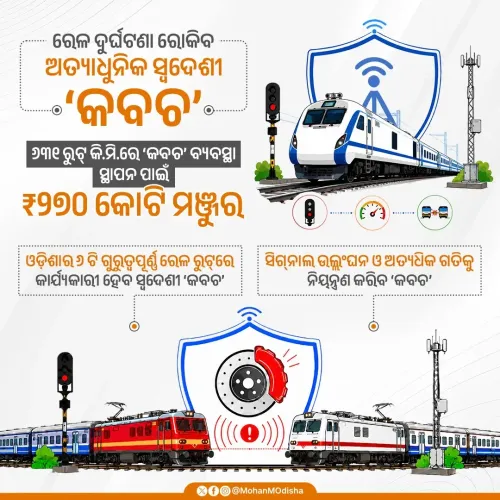
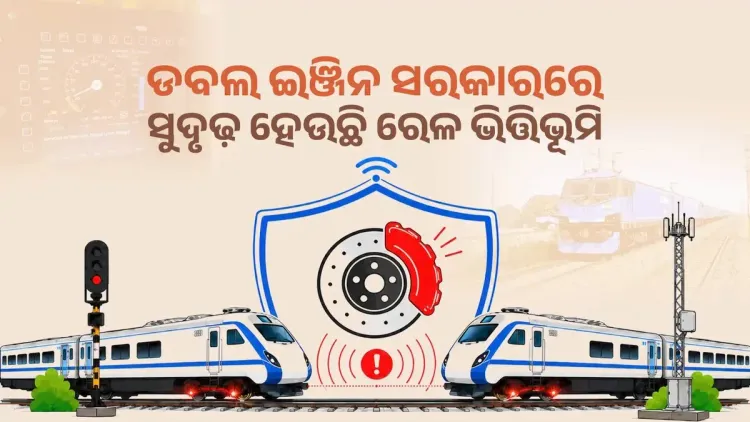
Odisha Chief Minister Mohan Charan Majhi has championed the expansion of the indigenous Kavach automatic train protection system across 631 route kilometres of East Coast Railway, framing it as a landmark safety and connectivity push under the BJP's double engine government model.
Key Takeaways
CM Mohan Charan Majhi publicly backed Kavach deployment on East Coast Railway on 24 June 2026 .
The rollout covers 631 route kilometres on the East Coast Railway network, which serves Odisha, Chhattisgarh, and parts of Andhra Pradesh and West Bengal.
Kavach is an indigenously developed automatic collision-avoidance system built under the Atmanirbhar Bharat programme.
The initiative is framed under the 'double engine government' concept, citing simultaneous BJP rule at the Centre and in Odisha for faster execution.
The deployment is linked to the state's Viksit Odisha and the Centre's Viksit Bharat development goals.
Rail passengers and freight operators on one of eastern India's busiest corridors stand to benefit from reduced collision risk and more reliable services.
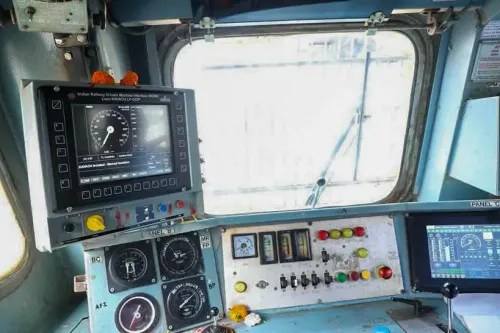
Odisha Chief Minister Mohan Charan Majhi on Wednesday, 24 June 2026, highlighted the expansion of the indigenous Kavach automatic train protection system across 631 route kilometres of the East Coast Railway, calling it a decisive step toward safer and more modern rail infrastructure in the state under the 'double engine government' framework.
Context
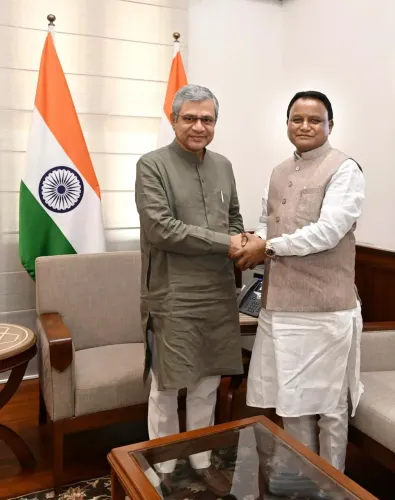
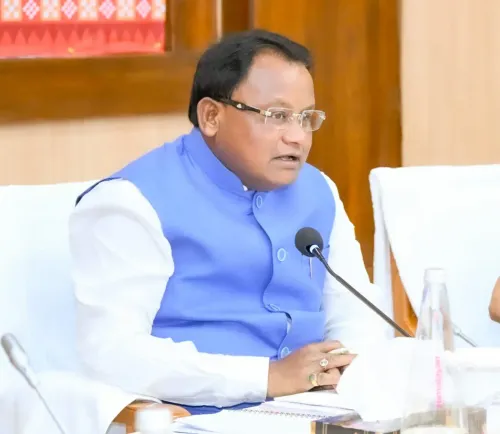
Writing in Odia on X, CM Majhi stated that the deployment of Kavach on the East Coast Railway network would reduce train accidents, ensure safer movement, and deliver more reliable rail services. He framed the rollout as a 'visionary step' — ଦୂରଦର୍ଶୀ ପଦକ୍ଷେପ ('far-sighted initiative') — that would strengthen Odisha's rail connectivity while giving fresh momentum to the state's economic growth and overall development. The post tagged Rail Minister Ashwini Vaishnaw, the Prime Minister's Office, and Prime Minister Narendra Modi, signalling coordinated messaging between the Odisha government and the Centre.
Policy Backdrop
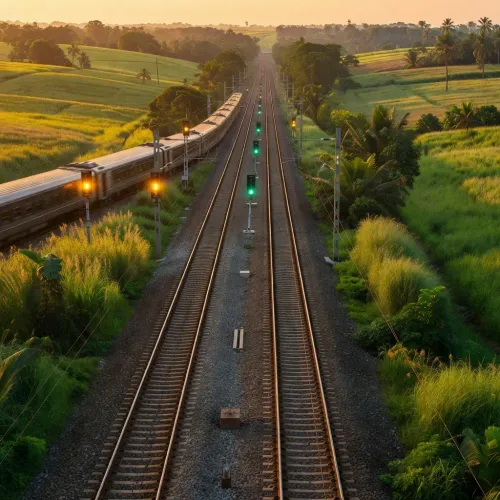
Kavach — developed by the Indian Railways Research Designs and Standards Organisation — is an indigenously built collision-avoidance system that automatically applies brakes when a risk of collision or signal-passing-at-danger is detected. Trials began on South Central Railway as early as 2016–17, and the Union Budget 2022–23 sanctioned phased deployment across high-density corridors including the eastern and east-coast networks. The push sits squarely within the Atmanirbhar Bharat programme's goal of replacing imported signalling technology with domestic alternatives.
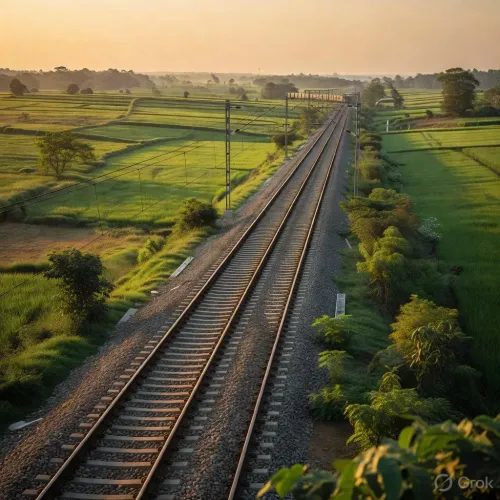
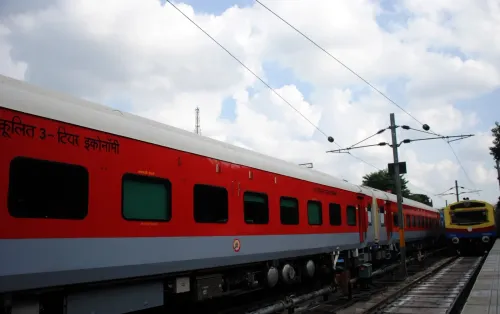
The East Coast Railway zone, headquartered in Bhubaneswar, serves Odisha, Chhattisgarh, and parts of Andhra Pradesh and West Bengal — corridors that carry some of India's heaviest freight, particularly coal and steel. Bringing Kavach to these routes addresses both passenger safety and the reliability demands of industrial freight movement.
Stakeholders and Impact
CM Majhi invoked the 'double engine government' argument — simultaneous BJP administrations at the Centre and in Odisha — to suggest that policy alignment between Rail Bhavan and Bhubaneswar is accelerating project execution. For Odisha's rail passengers and freight operators, Kavach on 631 route kilometres would mean a measurable reduction in collision risk on one of eastern India's busiest networks. The state government has positioned the deployment as integral to its Viksit Odisha agenda, mirroring the Centre's broader Viksit Bharat goals for 2047.
The move also carries political weight: Odisha was the site of the Balasore triple-train collision in June 2023, one of India's deadliest rail accidents in decades, which intensified public and parliamentary scrutiny of railway safety systems. Kavach's expansion in the state therefore carries both operational and symbolic significance.
What's Next
Attention will now turn to the East Coast Railway's works programme for details on phasing, commissioning milestones, and contractor timelines for the 631 km Kavach corridor. Any supplementary allocations in the 2026–27 Railway Budget for east-coast safety infrastructure will be a key indicator of how quickly the rollout can proceed. If implementation stays on track, the corridor could serve as a template for extending Kavach to the remaining East Coast Railway network and to other BJP-governed states seeking to demonstrate the 'double engine' dividend.
Point of View
Allowing the government to project both policy competence and emotional accountability. The tagging of the Rail Minister and the PMO signals this is coordinated political communication, not merely a state-level announcement. Watched alongside the broader Viksit Bharat push, it suggests BJP-governed states are being mobilised as active showcases for central flagship schemes ahead of the 2029 electoral cycle.
NationPress
23 Sept 2026
Frequently Asked Questions
What is the Kavach train protection system?
Kavach is an indigenously developed Automatic Train Protection system built by Indian Railways' Research Designs and Standards Organisation. It detects collision risks and automatically applies brakes, preventing accidents caused by signal-passing-at-danger or head-on collisions.
How many kilometres of East Coast Railway will get Kavach?
According to CM Mohan Charan Majhi's post on 24 June 2026, Kavach is being implemented across 631 route kilometres of the East Coast Railway network.
What is the 'double engine government' in Odisha?
The 'double engine government' is a BJP political term referring to simultaneous BJP governments at the Centre and in a state — in Odisha's case since June 2024 — which the party argues enables faster coordination and execution of central schemes.
Which areas does East Coast Railway serve?
East Coast Railway, headquartered in Bhubaneswar, serves Odisha, Chhattisgarh, and parts of Andhra Pradesh and West Bengal, covering some of India's busiest freight corridors for coal and steel.
Why is Kavach especially significant for Odisha?
Odisha was the site of the Balasore triple-train collision in June 2023, one of India's deadliest rail accidents in recent decades. Kavach's expansion in the state carries both operational importance for safety and symbolic weight in rebuilding public confidence in rail travel.