Is a New 'Secular' Political Force Emergent in the East?

Synopsis
As West Bengal's political landscape evolves, former IPS officer Humayun Kabir aims to capture the Muslim vote with the launch of his new party. With plans for a 'Babri Masjid' in Murshidabad, will his party succeed where others have failed? Explore the dynamics of religion and politics in this burgeoning political scenario.
Key Takeaways
Humayun Kabir's emergence as a political leader.
Proposed construction of a "Babri Masjid" in Murshidabad .
Importance of the Muslim demographic in West Bengal.
ISF's past electoral performance and alliances.
Potential impact of political fragmentation among minority voters.
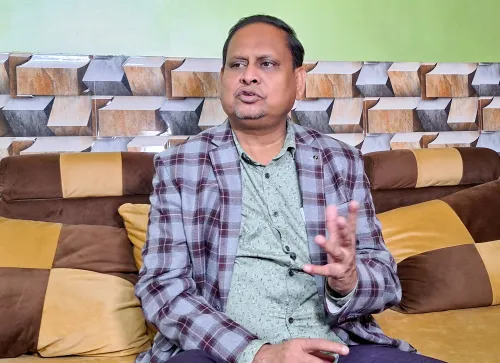
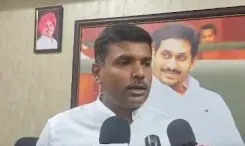
New Delhi, Dec 22 (NationPress) Humayun Kabir, a former IPS officer turned politician from West Bengal, may not be the first to seek support from the state’s over 30 percent Muslim demographic, yet he seems to possess an advantage in resonating with religious sentiments by proposing a "Babri Masjid" in the Murshidabad district.
Political parties in this border state, which shares a connection with Bangladesh, have historically engaged with minority voters, often amidst concerns of undocumented immigration.
As per the 2011 Census of India, West Bengal’s population exceeded nine crores, with Muslims accounting for nearly 27 percent of this figure. Current estimates suggest an increase of approximately nine percent, with Muslims being the predominant demographic in several districts such as Murshidabad, Malda, and Uttar Dinajpur.
Various political entities in the state, including the Congress, the Left Front, and the ruling Trinamool Congress, have publicly shown support for minorities; however, the Bharatiya Janata Party (BJP) has criticized this as "minority appeasement".
The BJP has accused other political parties, including Congress, CPI-M, and Trinamool Congress, of colluding with conservative factions within Muslim communities for electoral advantage, without addressing their genuine upliftment.
Similar to Kabir’s assertion that his newly established Janata Unnayan Party (JUP) is an "anti-BJP, anti-Trinamool" and "secular" political group, the Indian Secular Front (ISF) was created ahead of the 2021 Assembly elections with comparable intentions.
Like JUP, the ISF, founded by Pirzada Abbas Siddiqui of the Furfura Sharif Sufi shrine, declared its aim to ensure "social justice" for Muslims and Dalits in the state.
During the launch of JUP, Kabir echoed sentiments expressed by Abbas Siddiqui regarding ISF, stating that neither the Congress nor the Left or Trinamool Congress has contributed to the advancement of Muslims, Dalits, and Adivasis (tribals) in West Bengal.
JUP plans to participate in the 2026 state Assembly election, while ISF made its political debut in 2021, contesting in alliance with Congress and the Left Front.
Humayun Kabir previously represented the Trinamool Congress in the state Assembly, while Abbas Siddiqui’s uncle, Toha Siddiqui, has maintained close relationships with the ruling party.
In 2021, Asaduddin Owaisi's All India Majlis-e-Ittehadul Muslimeen (AIMIM) sought a poll alliance with ISF to establish its presence in West Bengal; however, this collaboration did not materialize, prompting Owaisi to withdraw from the electoral race.
Fast forward four years, AIMIM's flags were displayed at Humayun Kabir’s party launch event.
Unlike in 2021, the Congress and Left Front are now adopting a wait-and-see approach, given their previous unsuccessful alliance.
While they failed to secure any seats, ISF achieved a single seat in the Muslim-majority Bhangar constituency in South 24 Parganas district near Kolkata.
Since then, ISF has made strides in state politics, securing 325 seats in gram panchayats, 10 in panchayat samitis, and one in zila parishad amid a contentious political landscape dominated by the ruling Trinamool Congress.
In the recent three-tier panchayat polls, the Congress-Left alliance again collaborated with ISF; however, ISF later severed ties with its allies ahead of the 2024 Lok Sabha elections, fielding candidates independently in multiple constituencies.
Now, some of Humayun Kabir’s supporters suggest that JUP may propose an "anti-BJP, anti-Trinamool" coalition before the 2026 state elections, although it remains uncertain how others will respond, but AIMIM seems to be on board.
A fractured mandate among minority voters could significantly impact the ruling party in West Bengal.
Point of View
It's vital to observe the emergence of new political entities like JUP and ISF within the context of West Bengal's complex social dynamics. While the intentions to address minority issues are evident, the effectiveness of these parties in delivering real change remains to be seen. It’s crucial for all political movements to prioritize genuine upliftment over mere electoral gains.
NationPress
20 Sept 2026
Frequently Asked Questions
Who is Humayun Kabir?
Humayun Kabir is a former IPS officer who has transitioned into a political leader in West Bengal, recently launching his party, Janata Unnayan Party (JUP).
What is the significance of the Muslim population in West Bengal?
The Muslim population in West Bengal constitutes over 30 percent, making it a crucial demographic for political parties seeking electoral success.
What are the objectives of the Janata Unnayan Party?
The Janata Unnayan Party aims to address the concerns of minority communities, positioning itself as an 'anti-BJP, anti-Trinamool' political force.
How did ISF perform in past elections?
The Indian Secular Front (ISF) secured a single seat in the 2021 Assembly elections and has made further inroads in local politics since then.
What are the potential implications of a fractured mandate?
A fractured mandate among minority voters could significantly impact the ruling party, potentially leading to a loss of seats in future elections.