NHRC issues notice over 60 students falling ill in Nalanda mid-day meal case
Synopsis
The NHRC has stepped in after around 60 students fell ill from a mid-day meal at a Nalanda government school — the second such incident at the same district in three months, and the third in Bihar this year alone. The commission's suo motu notice signals that repeated protocol failures are now drawing national human rights scrutiny.
Key Takeaways
The NHRC took suo motu cognisance of a media report on 60 students falling ill after consuming a mid-day meal at a government school in Nalanda, Bihar .
The incident occurred on 21 May 2025 ; affected students were admitted to nearby hospitals.
The meal was reportedly served without the mandatory teacher taste-test; a teacher who later consumed the food also fell ill and was hospitalised.
The NHRC has issued a notice to the Nalanda District Magistrate , seeking a detailed report within two weeks .
In February 2025 , at least 60 students at Shri Chandpur Primary School in Nalanda's Harnaut block had similarly fallen ill from a mid-day meal.
In May 2025 , over 250 children fell ill after a mid-day meal at a government school in Saharsa district , Bihar.
The National Human Rights Commission (NHRC) has taken suo motu cognisance of a media report stating that around 60 students fell ill after consuming a mid-day meal at a government school in Bihar's Nalanda district. The apex human rights body has issued a notice to the Nalanda District Magistrate, seeking a detailed report within two weeks.
What Happened on 21 May
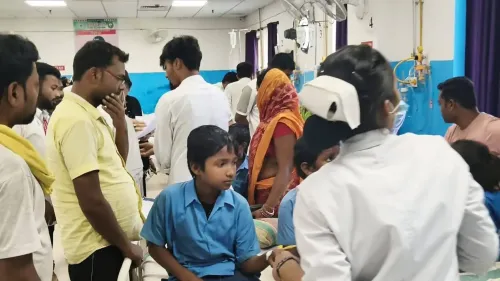
According to reports, the incident took place on 21 May when students at the government-run school allegedly began complaining of vomiting, stomach ache, nausea, and loose motion shortly after consuming the mid-day meal. The affected students were subsequently admitted to nearby hospitals for treatment.
Notably, the meal was reportedly served without being tasted by teachers beforehand — a step mandated under prescribed safety protocols. After several students fell ill, a teacher consumed the food and also fell sick, requiring hospitalisation.
NHRC's Position
The NHRC observed that the contents of the media report, if true, raise a serious concern over the violation of human rights of the students. Established under the Protection of Human Rights Act, 1993, the NHRC is an autonomous statutory body empowered to take suo motu action based on media reports or public knowledge, without a formal complaint being filed. Its mandate covers rights relating to life, liberty, equality, and the dignity of individuals as guaranteed by the Constitution and enforceable by courts in India.
A Recurring Pattern in Bihar
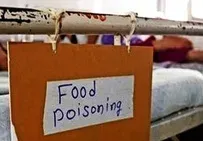
This is not an isolated incident. In February 2025, at least 60 students at Shri Chandpur Primary School in Nalanda's Harnaut block had fallen ill after consuming a mid-day meal, with complaints of stomach ache and vomiting. Separately, in May 2025, over 250 children fell ill after consuming a mid-day meal at a government school in Saharsa district, complaining of stomach pain, vomiting, and dizziness — prompting admission to local health facilities. Officials later confirmed all affected students were stable and said an investigation had been launched to determine the cause of the suspected food poisoning.
Impact on Students and the Mid-Day Meal Scheme
The repeated incidents have intensified scrutiny of food safety and hygiene standards in government schools operating under Bihar's mid-day meal scheme. The scheme, designed to improve nutrition and school attendance among children from economically weaker sections, has faced persistent questions over implementation quality. The NHRC's intervention signals that institutional accountability is now being sought at the highest level of India's human rights oversight architecture.
The Nalanda District Magistrate is expected to submit a detailed response to the NHRC within the stipulated two-week window, after which the commission will determine further action.
Point of View
Not an aberration. The prescribed teacher taste-test protocol exists precisely to catch contamination before it reaches children; its repeated non-observance suggests either poor enforcement or a culture of impunity at the school level. The NHRC's suo motu intervention is significant, but notices alone have not historically translated into lasting corrective action in similar cases. Bihar's administration needs to answer not just what went wrong on 21 May, but why the same failure recurred after the February 2025 Nalanda incident went uninvestigated at scale.
NationPress
20 Sept 2026
Frequently Asked Questions
Why did the NHRC issue a notice over the Nalanda mid-day meal incident?
The NHRC issued a notice to the Nalanda District Magistrate after a media report stated that around 60 students fell ill following a mid-day meal at a government school on 21 May 2025. The commission observed that the incident, if confirmed, constitutes a serious violation of the students' human rights and has sought a detailed report within two weeks.
What symptoms did the affected students report?
The students allegedly complained of vomiting, stomach ache, nausea, and loose motion after consuming the mid-day meal. They were admitted to nearby hospitals for treatment; officials later said all affected students were stable.
Was the mid-day meal safety protocol followed?
According to reports, the meal was served without being tasted by teachers first — a step required under prescribed safety protocols. A teacher who consumed the food after students fell ill also fell sick and had to be hospitalised.
How many similar incidents have occurred in Bihar recently?
At least three incidents have been reported in Bihar since early 2025. In February 2025, around 60 students at Shri Chandpur Primary School in Nalanda's Harnaut block fell ill. In May 2025, over 250 children at a government school in Saharsa district fell ill from a mid-day meal. The Nalanda incident on 21 May is the most recent.
What powers does the NHRC have in this case?
The NHRC, established under the Protection of Human Rights Act, 1993, can take suo motu action based on media reports without a formal complaint. It has directed the Nalanda District Magistrate to submit a detailed report within two weeks, after which it may recommend further action or remedies.