NIA targets drug cartels and money laundering in drug-free India drive
Synopsis
India's anti-narcotics push has moved well beyond border seizures — the NIA and ED are now jointly targeting the financial backbone of cartels linked to the ISI, the Dawood Ibrahim syndicate, and operatives in Italy, Australia, and the UAE. The operation's template mirrors the successful financial dismantling of J&K separatist networks, and signals that narco-terror funding is now treated as a national security threat on par with cross-border terrorism.
Key Takeaways
The NIA has launched a major multi-agency offensive against narcotic syndicates and money laundering networks as part of the drug-free India mission.
Home Minister Amit Shah is directly overseeing the operations and has directed all central agencies to deploy full resources.
Drug trafficking routes have been mapped across Iran , Pakistan , Australia , UAE , Italy , and Thailand .
Agencies have identified Simranjit Singh (Italy) and Tanveer Bedi (Australia) as key operatives allegedly linked to the Dawood Ibrahim syndicate; a handler known as Tarqie is identified as an ISI asset.
Drug proceeds are allegedly funnelled back to Pakistan to fund Lashkar-e-Taiba and Jaish-e-Mohammed .
The Enforcement Directorate is targeting the financial networks of cartels, mirroring its earlier strategy against Jammu and Kashmir separatist funding.
The National Investigation Agency (NIA) has launched a sweeping, multi-agency offensive against narcotic syndicates and their money laundering networks across India, operating under the direct oversight of Union Home Minister Amit Shah. The crackdown, which spans international borders and financial trails, is central to the Narendra Modi government's stated mission of making India completely drug-free.
Scope of the Operation
According to officials, all central security and intelligence agencies are working in close coordination to dismantle these networks. Prime Minister Narendra Modi has, during interactions with global leaders, reportedly stressed the importance of international cooperation in targeting narcotic syndicates. Officials underline that domestic action alone is insufficient — cross-border collaboration is essential to neutralise these groups.
Agencies have mapped international drug trafficking routes spanning Iran, Pakistan, Australia, the United Arab Emirates (UAE), Italy, and Thailand. These syndicates, according to officials, do not operate in isolation — they function as an interconnected network, sharing routes and resources to smuggle narcotics into India.
Key Suspects and ISI Links
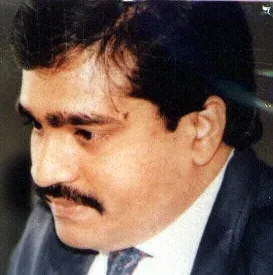
An Intelligence Bureau (IB) official said agencies have identified one Simranjit Singh, who reportedly operates from Italy, working in close coordination with one Tanveer Bedi, said to be running operations from Australia. Both individuals are alleged to be in contact with the Dawood Ibrahim syndicate based in Pakistan. Agencies have also identified a key handler in Pakistan known as Tarqie, described as a major asset of Pakistan's Inter-Services Intelligence (ISI) overseeing India-directed operations.
Officials say the ISI has embedded key assets in Punjab, who are tasked not only with drug smuggling but also with routing drug proceeds back to Pakistan. According to officials, these funds are allegedly used by the ISI to finance terror groups including Lashkar-e-Taiba (LeT) and Jaish-e-Mohammed (JeM).
Role of the Enforcement Directorate
The Enforcement Directorate (ED) is playing a parallel and critical role in the operation, focused on tracing and dismantling the financial infrastructure of these cartels. Officials drew a comparison to the ED's earlier action against separatist networks in Jammu and Kashmir, where the NIA established terror links while the ED severed the money trail — effectively collapsing the operational capacity of those groups.
Officials said a similar two-pronged approach — law enforcement disruption combined with financial strangulation — is being applied to narcotic networks this time.
Why This Escalation, and What It Signals
Officials indicated that the ISI's scaling up of narco-terror operations reflects its need to rebuild funding for proxy groups — particularly LeT and JeM — which are also reportedly under pressure from rival militant formations such as the Tehreek-e-Taliban Pakistan (TTP) and the Balochistan Liberation Army (BLA) within Pakistan itself.
Notably, while the Pakistan border has historically been the primary source of drug inflows, officials say syndicates have diversified routes and now operate through multiple nations, making the threat more complex than in previous years.
What Comes Next
Officials say dismantling these networks serves not just India's national security interests but also those of the countries from which these operators function. Formal coordination requests with partner nations are reportedly part of the broader strategy. The operation is expected to intensify, with the NIA and ED jointly pursuing both the criminal and financial dimensions of the cartels.
Point of View
The government is elevating the issue from a policing problem to a national security doctrine. The comparison to the J&K separatist financial dismantling is telling: that operation succeeded because the ED cut off money before the NIA finished its legal cases. Whether the same sequencing works against more diffuse, multi-country cartels is the real test. The identification of named operatives in Italy and Australia also raises the question of whether extradition requests or Interpol notices are being filed — details conspicuously absent from official briefings so far.
NationPress
26 Sept 2026
Frequently Asked Questions
What is the NIA's drug-free India operation?
It is a coordinated, multi-agency crackdown on narcotic syndicates and their money laundering networks, overseen by Home Minister Amit Shah. The NIA is targeting criminal networks, while the Enforcement Directorate pursues the financial trails of drug cartels operating across multiple countries.
Which countries are involved in the drug networks being targeted?
Agencies have mapped syndicate routes spanning Iran, Pakistan, Australia, the United Arab Emirates, Italy, and Thailand. Officials say these networks are interconnected and share smuggling routes into India, making international coordination essential.
What is the ISI's alleged role in drug trafficking into India?
According to officials, Pakistan's ISI has embedded assets in Punjab who smuggle drugs into India and route the proceeds back to Pakistan. These funds are allegedly used to finance terror groups including Lashkar-e-Taiba and Jaish-e-Mohammed.
Who are Simranjit Singh and Tanveer Bedi?
According to Intelligence Bureau officials, Simranjit Singh is an operative based in Italy and Tanveer Bedi runs operations from Australia. Both are allegedly in contact with the Dawood Ibrahim syndicate in Pakistan and are involved in smuggling drugs into India.
What role does the Enforcement Directorate play in this operation?
The ED is responsible for tracing and dismantling the money laundering infrastructure of drug cartels. Officials say this mirrors the strategy used against Jammu and Kashmir separatist networks, where severing the financial trail proved as effective as criminal prosecution.