NID Ahmedabad designs ergonomic parcel trolley for Indian Railways platforms
Synopsis
NID Ahmedabad's Railway Design Centre has built a parcel trolley that porters actually want to use — lightweight, ergonomic, and already trialled at Kalupur Station. With one final test pending, it could soon reshape how parcels move across Indian railway platforms, backed by a Railways-NID partnership running until 2035.
Key Takeaways
Students at NID Ahmedabad's Railway Design Centre developed a lightweight, ergonomic parcel trolley for Indian Railways .
The trolley was successfully trialled at Kalupur Railway Station , Ahmedabad , with porters praising its ease of handling.
The initiative is part of an Indian Railways–NID collaboration running until 2035 , focused on station modernisation.
DRM Ved Prakash confirmed one final trial remains before the trolley is deployed at stations across the network.
Future improvements include adding rollers to the structure to enhance movement and loading efficiency.
The design prioritises ergonomics and aims to reduce physical strain on railway porters.
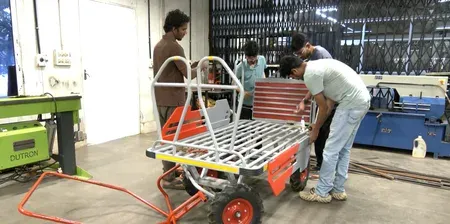
Students at the Railway Design Centre of the National Institute of Design (NID) in Ahmedabad, Gujarat, have developed a lightweight, ergonomic parcel trolley for Indian Railways, designed to make platform-level parcel handling faster, less physically demanding, and more operationally efficient. The innovation has already cleared initial trials at Kalupur Railway Station in Ahmedabad, where it drew positive feedback from the porter community.
Background and Collaboration
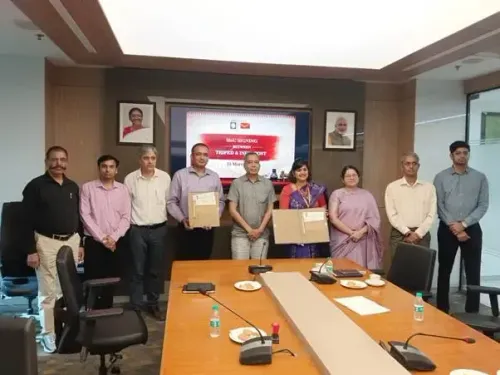
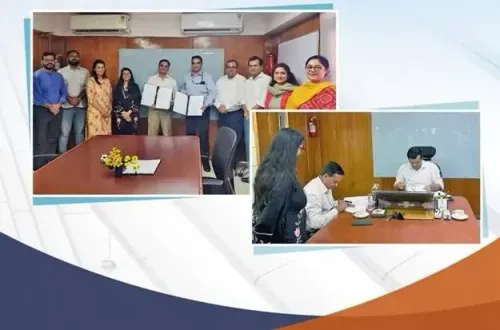
The trolley emerges from a long-term partnership between Indian Railways and NID that is set to run until 2035, with a broader mandate to modernise railway stations and upgrade passenger and operational amenities. Divisional Railway Manager (DRM) Ved Prakash said NID students have conducted several experiments tied to railway operations, with the parcel trolley standing out as one of the most successful outcomes to date.
Design Focus and Porter Feedback
Namit Sharma, Head of Transportation and Automobile Design at NID, said feedback from porters was central to the trial process. Porters responded positively, particularly appreciating how light and manoeuvrable the trolley felt during use. 'Our aim was to ensure the trolley is not heavy while also improving functionality and efficiency,' Sharma said. According to railway officials, the design places strong emphasis on ergonomics and porter convenience, with the goal of reducing physical strain on workers and ensuring smoother parcel movement even on crowded platforms.
Modifications and Upcoming Improvements
Following the initial trials, several design modifications are being incorporated. DRM Prakash said further innovations are being explored, including the addition of rollers to the trolley structure to improve movement and loading efficiency. Efforts are also underway to make parcel loading into trains quicker and more seamless. One final trial remains pending before the trolley is cleared for wider deployment.
What Happens Next
Railway officials said the upgraded trolley is expected to be introduced at stations soon for regular parcel transportation, and will be deployed wherever required following the completion of the pending trial. This comes amid a wider push by Indian Railways to modernise ground-level infrastructure, with the NID collaboration serving as a design-led approach to solving everyday operational challenges that have long been overlooked.
Point of View
Chronic problem — the physical toll on railway porters has never been a headline issue, yet it directly affects the speed and reliability of last-mile logistics on Indian platforms. What is notable here is the method: bringing design students into an operational railway environment, running real-world trials with actual porters, and iterating on feedback. That process is more rigorous than most government procurement cycles. The Railways-NID partnership running to 2035 is the more consequential story — if it scales beyond trolleys to platform furniture, signage, and accessibility infrastructure, it could set a replicable model for design-led public infrastructure reform in India.
NationPress
21 Sept 2026
Frequently Asked Questions
What is the NID Ahmedabad parcel trolley for Indian Railways?
It is a lightweight, ergonomic parcel trolley developed by students at the Railway Design Centre of the National Institute of Design (NID) in Ahmedabad, designed to make parcel handling on railway platforms faster and less physically taxing for porters. It has already been trialled at Kalupur Railway Station in Ahmedabad.
Where was the parcel trolley tested?
The trolley was tested at Kalupur Railway Station in Ahmedabad, Gujarat. Porters who participated in the trial responded positively, particularly noting the trolley's lightweight build and ease of manoeuvre.
When will the trolley be deployed at Indian Railways stations?
Railway officials said one final trial remains pending, after which the trolley will be deployed at stations wherever required. The upgraded version, incorporating design modifications from the initial trial, is expected to enter regular use soon.
What is the Indian Railways and NID collaboration about?
Indian Railways and NID have a long-term design partnership set to continue until 2035, aimed at modernising railway stations and improving both passenger amenities and operational infrastructure. The parcel trolley is one of several innovations to emerge from this collaboration.
What further improvements are planned for the trolley?
Divisional Railway Manager Ved Prakash said the addition of rollers to the trolley structure is being explored to improve movement and loading efficiency. Efforts are also underway to make the process of loading parcels into trains quicker and more seamless.