How is Indian Railways under PM Modi’s leadership driving infrastructure-led growth in Eastern and Northeast India?
Synopsis
Discover how Prime Minister Narendra Modi's leadership is transforming Indian Railways into a powerhouse for infrastructure-led growth in Eastern and Northeastern India, enhancing connectivity and economic development. This article delves into the revolutionary Amrit Bharat Station Scheme and its impact on regional progress.
Key Takeaways
Significant transformation of Indian Railways under PM Modi's leadership.
The Amrit Bharat Station Scheme targets modernization of over 1,300 stations.
Focus on passenger amenities and regional economic growth.
West Bengal leads with 101 Amrit Bharat stations .
Upgrades enhance accessibility and operational efficiency.
Guwahati, Jan 15 (NationPress) Under the guidance of Prime Minister Narendra Modi, Indian Railways has become a pivotal force in driving infrastructure-led growth in Eastern and Northeastern India, enhancing connectivity and fostering economic advancement, according to officials on Thursday.
The Chief Public Relations Officer (CPRO) of Northeast Frontier Railway (NFR), Kapinjal Kishore Sharma, noted that in the past decade, the railways in West Bengal have seen a significant transformation.
Previously hindered by geographical constraints, outdated infrastructure, and inconsistent access, these regions are now experiencing a remarkable transition towards a cohesive and future-ready railway system.
At the forefront of this change is the Amrit Bharat Station Scheme, recognized as the world's largest railway station redevelopment initiative, marking a new chapter in public infrastructure. Sharma explained that this scheme is not merely about modernizing stations; it embodies a visionary rethinking of how railway infrastructure can serve the nation.
With more than 1,300 stations earmarked for redevelopment nationwide, the scheme illustrates a leadership approach that emphasizes tangible results and infrastructure over inertia.
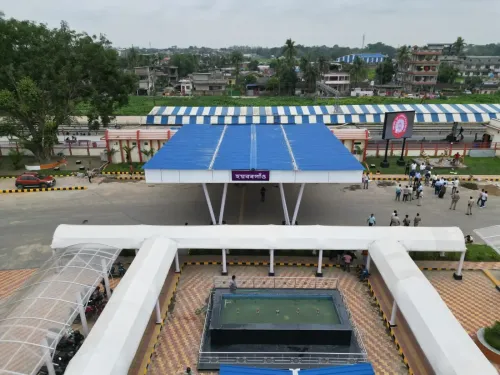
These upgrades extend beyond superficial enhancements, introducing modern passenger amenities, facilities for Divyangjan, improved traffic flow, contemporary waiting areas, digital information systems, and architecture reflective of local heritage, ensuring that stations evolve into modern, accessible, and regionally significant hubs of growth.
Designed as a holistic and future-oriented initiative, the Amrit Bharat Station Scheme actualizes a people-focused vision of infrastructure.
The CPRO also mentioned that by converting stations into dynamic public spaces and economic catalysts, the scheme boosts regional commerce and enhances the overall passenger experience.
West Bengal is swiftly becoming a benchmark for passenger-oriented rail modernization. Substantial improvements in safety, accessibility, and mobility are redefining the rail travel experience throughout the state.
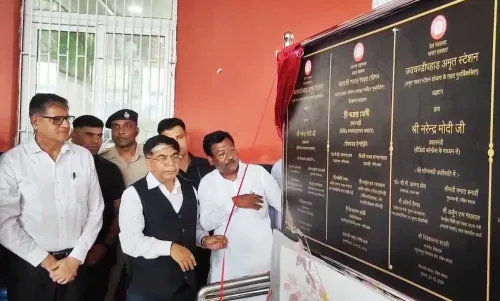
Within the Amrit Bharat Station Scheme, West Bengal features 101 Amrit Bharat stations with an investment close to Rs 3,600 crore.
Covering metropolitan areas, border towns, and pilgrimage sites, these upgrades are facilitating balanced and inclusive regional development. Key stations such as Howrah, Sealdah, New Jalpaiguri, Kharagpur, Asansol, Bandel, Malda Town, Siliguri, Alipurduar, Shalimar, and Santragachi are being modernized under a cohesive vision.
New Jalpaiguri is being upgraded into a modern gateway to the Northeast at a cost of approximately Rs 335 crore, featuring new terminals, an air concourse, and improved passenger facilities.
Meanwhile, Santragachi, with an investment around Rs 380 crore, is evolving into a crucial multi-modal hub aimed at alleviating congestion on the Howrah-Kolkata corridor. Asansol and Shalimar are also receiving extensive upgrades to enhance long-distance connectivity and stimulate regional economic growth.
Passenger facilities have significantly expanded, with the installation of 250 lifts, more than 400 escalators, and Wi-Fi access at 510 stations, highlighting the emphasis on accessibility and operational effectiveness.
The Northeast Frontier Railway (NFR), headquartered in Maligaon, operates throughout the Northeastern states and extends into seven districts of West Bengal and five districts of North Bihar.
Point of View
It is essential to acknowledge the transformative initiatives undertaken by the government, particularly in the realm of infrastructure. Indian Railways, under the guidance of Prime Minister Modi, is setting a benchmark for regional development and connectivity, particularly in Eastern and Northeastern India. The focus on modernizing stations to serve the community reflects a commitment to enhancing the passenger experience and fostering economic growth.
NationPress
9 Oct 2026
Frequently Asked Questions
What is the Amrit Bharat Station Scheme?
The Amrit Bharat Station Scheme is the world's largest railway station redevelopment program aimed at modernizing over 1,300 stations across India, focusing on improving passenger amenities and infrastructure.
How many Amrit Bharat stations are in West Bengal?
West Bengal has 101 Amrit Bharat stations that are being upgraded as part of the scheme, with a total investment of around Rs 3,600 crore.
What are the key features of the station upgrades?
The upgrades include modern passenger amenities, accessibility for Divyangjan, improved circulation, contemporary waiting areas, digital information systems, and architecture inspired by local heritage.
How is the Amrit Bharat Scheme impacting regional development?
The scheme is facilitating balanced and inclusive regional development by improving connectivity in metropolitan hubs, border towns, and pilgrimage centers.
What improvements can passengers expect from the railway modernization?
Passengers can expect enhanced safety, accessibility, and mobility, along with better amenities such as lifts, escalators, and Wi-Fi connectivity at many stations.