PLI scheme overhaul: NITI Aayog targets weak sectors, ACC battery lags badly
Synopsis
India's PLI flagship is delivering unevenly — solar capacity has surged 14-fold, white goods value addition has nearly tripled, but the ACC battery scheme has produced zero commercial output against a 50 GWh target. NITI Aayog's candid November 2026 assessment and the inter-ministerial tweak process signal that financial incentives, without technology readiness and supply chain depth, can stall even well-funded industrial programmes.
Key Takeaways
NITI Aayog CEO Anurag Jain confirmed inter-ministerial consultations are under way to revamp PLI schemes targeting weaker sectors on 12 November 2026 .
PLI schemes have attracted ₹2.40 lakh crore in investments and generated production worth ₹22.66 lakh crore as of 31 March 2026 .
The government has disbursed ₹35,354 crore in incentives — only 18.5% of total allocated outlay — and created 8.49 lakh jobs .
The ACC battery scheme is the worst performer: only 1.4 GWh developed against a 50 GWh target, with zero commercial production and zero incentives disbursed.
Electronics, pharmaceuticals, solar (8 GW to 116 GW capacity), and white goods (domestic value addition up from 20% to 55%) are the strongest performers.
NITI Aayog's assessment warns that incentives alone are insufficient without technology readiness, domestic supply chains, and execution discipline.
NITI Aayog is in active consultations with multiple ministries to revamp the Production Linked Incentive (PLI) schemes, aiming to plug sectoral gaps and reduce India's continued dependence on imports, its CEO Anurag Jain said on Thursday, 12 November 2026. The overhaul comes as the government's own impact assessment reveals a starkly uneven performance record — with electronics and pharmaceuticals outpacing targets while the advanced chemistry cell (ACC) battery programme has yet to produce a single unit commercially.
Where the PLI Stands Today
According to NITI Aayog's November 2026 impact assessment, the PLI schemes have collectively attracted investments of ₹2.40 lakh crore and generated production and sales worth ₹22.66 lakh crore as of 31 March 2026. The government has disbursed ₹35,354 crore in incentives — just 18.5% of the total allocated outlay. The schemes have also created 8.49 lakh jobs so far, while nearly 70% of targeted segments are broadly on track.
NITI Aayog Vice-Chairman Ashok Lahiri acknowledged that despite the headline numbers, significant ground remains to be covered. 'On the whole, we still have dependence on imports. We are trying to tweak the PLIs,' CEO Jain said, underscoring the urgency behind the ongoing inter-ministerial consultations.
The Outperformers: Electronics, Pharma and Solar
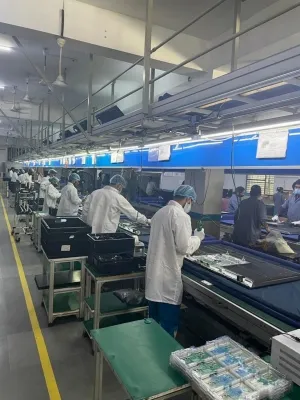
Large-scale electronics manufacturing stands out as the strongest performer, recording substantial gains across production, exports, sales, and employment. The pharmaceuticals and food processing schemes have delivered encouraging results on investment, output, and job creation.
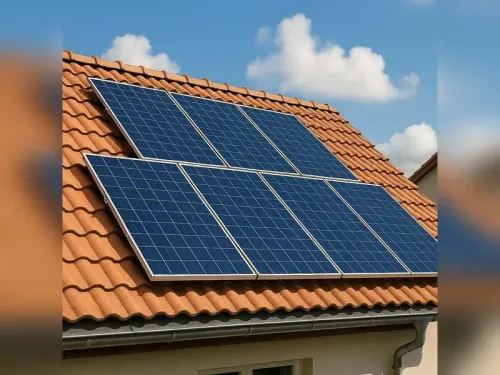
The white goods scheme has attracted ₹6,409 crore in investments and generated ₹43,150 crore in production. Notably, domestic value addition in the sector has surged from 20% to 55% — a structural shift that reduces dependence on imported components. The solar PLI programme has enabled domestic manufacturing capacity to expand from 8 GW to nearly 116 GW, a dramatic scale-up. The drone scheme has also made progress, with 77.5% of its allocated funds disbursed.
The Weak Links: ACC Battery, IT Hardware, and Telecom
The ACC battery scheme remains the most glaring underperformer. Against a targeted manufacturing capacity of 50 GWh, only 1.4 GWh has been developed, no commercial production has begun, and no incentives have been disbursed. NITI Aayog attributed the stall to technology gaps, dependence on imported machinery, and project delays.
The IT hardware PLI remains at an early stage, while telecom manufacturing continues to rely heavily on imported high-value components. The auto scheme has attracted investment and boosted production, but employment figures remain below target — highlighting that production gains do not automatically translate into jobs.
What the Assessment Flags
The November 2026 review draws a pointed conclusion: financial incentives alone cannot guarantee manufacturing success. Technology readiness, the depth of domestic supply chains, and execution timelines will ultimately determine whether PLI investments build durable industrial capacity or remain largely subsidy flows. This comes amid broader pressure on the government to demonstrate that its flagship industrial policy is narrowing — not just measuring — the import dependence it was designed to cure.
What Happens Next
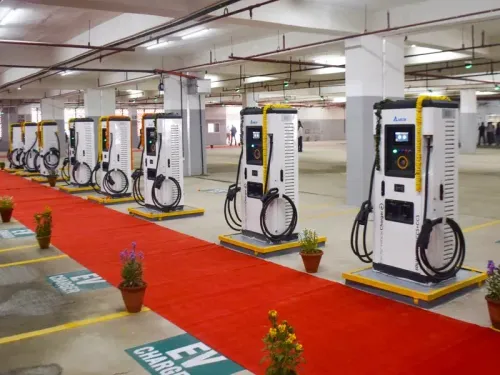
The inter-ministerial consultation process led by NITI Aayog is expected to produce targeted scheme modifications for weaker sectors. The ACC battery gap, in particular, is likely to draw focused attention, given its centrality to India's EV and energy storage ambitions. How the government structures revised incentives — and whether it introduces performance conditionalities beyond production milestones — will shape the next phase of India's manufacturing push.
Point of View
Or that large parts of the programme are stuck in pre-production limbo. The ACC battery gap — zero commercial output against a 50 GWh target — is not a minor lag; it is a structural failure at the heart of India's EV ambitions. What the November 2026 assessment does not answer is whether 'tweaking' incentive structures is sufficient, or whether some sectors require a fundamentally different intervention model — one built around technology transfer and anchor investments rather than output-linked subsidy.
NationPress
12 Nov 2026
Frequently Asked Questions
Why is NITI Aayog revamping the PLI schemes?
NITI Aayog is tweaking PLI schemes because performance has varied sharply across sectors, and India still remains dependent on imports despite significant investments. The inter-ministerial consultation process aims to address gaps, particularly in underperforming sectors like ACC batteries, IT hardware, and telecom manufacturing.
What has the PLI scheme achieved so far?
As of 31 March 2026, PLI schemes have attracted ₹2.40 lakh crore in investments, generated ₹22.66 lakh crore in production and sales, and created 8.49 lakh jobs. The government has disbursed ₹35,354 crore in incentives, representing 18.5% of the total allocated outlay.
Which PLI sectors are performing well?
Large-scale electronics manufacturing, pharmaceuticals, food processing, solar modules, and white goods are the top performers. The solar PLI has expanded domestic capacity from 8 GW to nearly 116 GW, while the white goods sector has raised domestic value addition from 20% to 55%.
Why is the ACC battery PLI scheme failing?
The ACC battery scheme has developed only 1.4 GWh against a target of 50 GWh, with no commercial production and no incentives disbursed. NITI Aayog attributed the failure to technology gaps, dependence on imported machinery, and project delays.
What changes are expected in the revised PLI framework?
NITI Aayog's inter-ministerial consultations are expected to produce targeted modifications for weaker sectors, with particular focus on the ACC battery programme. The assessment also signals a push for stronger performance conditionalities, recognising that financial incentives alone cannot guarantee manufacturing success without technology readiness and supply chain depth.