Nitish Kumar Hails ITBP Women Climbers Who Scaled Everest
Synopsis
Former Bihar CM Nitish Kumar praised 11 women mountaineers of the ITBP for hoisting India's tricolour atop Mount Everest, calling their courage and determination praiseworthy. The feat reflects the ITBP's decades-long tradition of high-altitude expeditions and a growing institutional focus on women's participation in paramilitary adventure missions.
Key Takeaways
Former Bihar Chief Minister Nitish Kumar publicly congratulated the ITBP women's Everest team on 22 May 2026 .
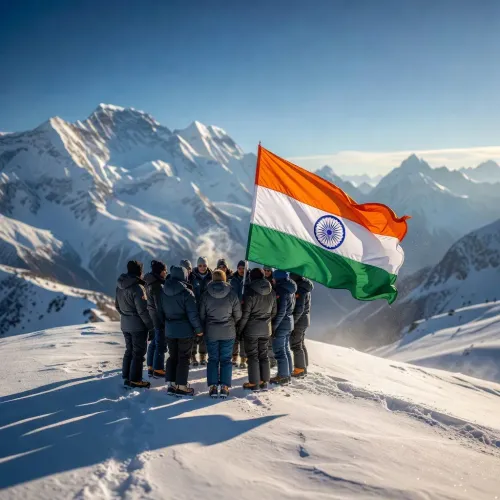
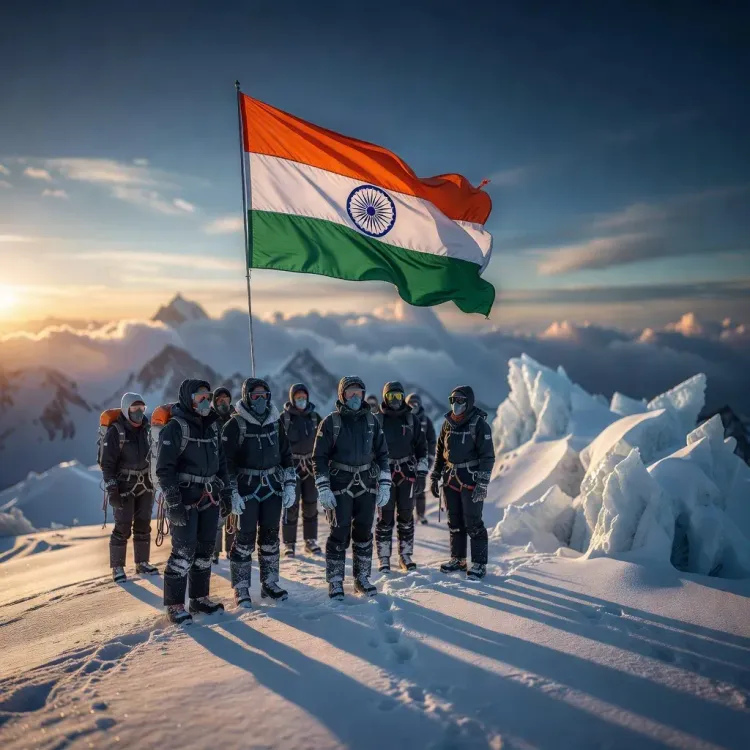
All 11 women mountaineers of the ITBP successfully hoisted the Indian tricolour atop Mount Everest .
The ITBP is a Central Armed Police Force under the Ministry of Home Affairs with a structured mountaineering programme dating to the 1980s .
The expedition is part of a broader institutional effort to increase women's participation in high-altitude adventure missions within India's paramilitary forces.
Kumar described the achievement as a 'matter of pride' and praised the climbers' 'courage and determination.'
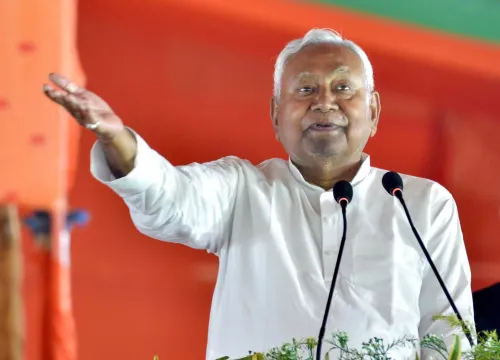
Former Bihar Chief Minister and Janata Dal (United) national president Nitish Kumar on Friday, 22 May 2026, congratulated all 11 women mountaineers of the Indo-Tibetan Border Police (ITBP) for hoisting the Indian tricolour atop Mount Everest, calling the achievement a matter of immense national pride.
In his post on X, Kumar wrote: 'ITBP ki veer mahila parvtarohiyon dwara Mount Everest par tiranga fahrana gaurav ka vishay hai' — 'It is a matter of pride that the brave women mountaineers of ITBP have hoisted the tricolour on Mount Everest.' He extended heartfelt congratulations and best wishes to all 11 women climbers of the expedition, adding that their courage and determination were 'praiseworthy.'
Context
The ITBP, a Central Armed Police Force under the Ministry of Home Affairs, is responsible for guarding India's borders with Tibet and has a long institutional tradition of high-altitude mountaineering. The force has conducted Everest expeditions for decades as part of its mandate to maintain operational fitness and demonstrate endurance in extreme conditions. Hoisting the national flag at the summit is regarded as a symbol of both institutional capability and national prestige.
Policy Backdrop
Central Armed Police Forces, including the ITBP, have run structured mountaineering training and expedition programmes since the 1980s, designed to build operational readiness and promote adventure sports within the forces. In recent years, a deliberate emphasis has been placed on increasing women's participation in such high-profile expeditions. This Everest climb by an all-women ITBP team fits squarely within that broader institutional push to showcase the physical capability and leadership of women in uniform.
Stakeholders and Impact
The 11 women mountaineers of the ITBP who completed the Everest expedition represent a significant milestone for gender participation within India's paramilitary forces. Their achievement carries symbolic weight well beyond the ITBP, serving as a visible demonstration that women personnel in border-guarding organisations can meet the most demanding physical challenges. Political acknowledgements of this kind from senior leaders such as Nitish Kumar amplify the public visibility of such accomplishments and reinforce institutional morale.
The expedition also underscores the ITBP's dual identity — as both a border security force and a standard-bearer for adventure and endurance in India's high-altitude terrain. Tributes from across the political spectrum reflect a broad national consensus around honouring the achievements of armed forces personnel.
What's Next
The ITBP is expected to formally document and recognise the achievements of the 11 women climbers, with the Ministry of Home Affairs likely to follow up on adventure training quotas and expedition planning for women personnel in Central Armed Police Forces. Subsequent expeditions to other major Himalayan peaks by ITBP and other CAPFs will be watched as indicators of how the institutional commitment to women's participation in adventure missions is being sustained and expanded.
Point of View
Fitting into a wider political narrative around women's empowerment in uniform that cuts across party lines. For Kumar, whose political identity is built around Bihar's development and governance record, such posts also serve to maintain a national profile beyond state boundaries. The expedition itself is part of a deliberate CAPF strategy to use high-visibility adventure achievements to strengthen public support and institutional recruitment.
NationPress
7 Oct 2026
Frequently Asked Questions
Which ITBP women climbers scaled Mount Everest in 2026?
The ITBP expedition comprised 11 women mountaineers from the Indo-Tibetan Border Police who successfully hoisted the Indian tricolour on Mount Everest . Their individual names have not been officially confirmed in public records as of this report.
What is the ITBP and why does it conduct Everest expeditions?
The Indo-Tibetan Border Police (ITBP) is a Central Armed Police Force under India's Ministry of Home Affairs , primarily tasked with guarding the border with Tibet. It has run high-altitude mountaineering expeditions since the 1980s to build operational fitness, institutional morale, and national prestige.
Why did Nitish Kumar congratulate the ITBP Everest team?
Nitish Kumar , former Bihar Chief Minister and JD(U) national president, posted on X to congratulate the 11 women mountaineers of ITBP, describing the tricolour hoisting on Everest as a 'matter of pride' and praising their courage and determination.
What is the significance of an all-women ITBP team climbing Everest?
An all-women ITBP Everest expedition is a landmark in India's paramilitary forces, reflecting a deliberate institutional push to promote gender participation in high-profile adventure missions within Central Armed Police Forces and to showcase women's capability in extreme conditions.
Has ITBP climbed Everest before?
Yes, the ITBP has a decades-long tradition of mountaineering expeditions, including to Mount Everest , as part of its high-altitude training mandate. The organisation has regularly used such expeditions to demonstrate operational readiness and build public visibility since the 1980s .