Nitish Kumar Hails BSF All-Women Team's Everest Summit
Synopsis
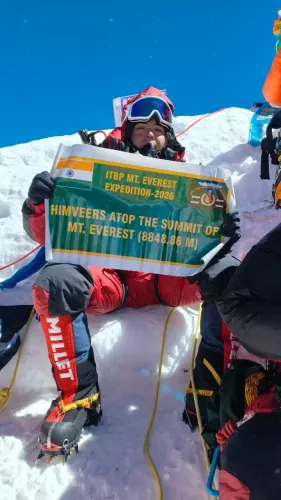
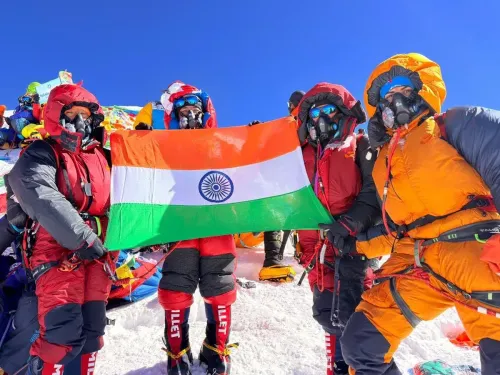
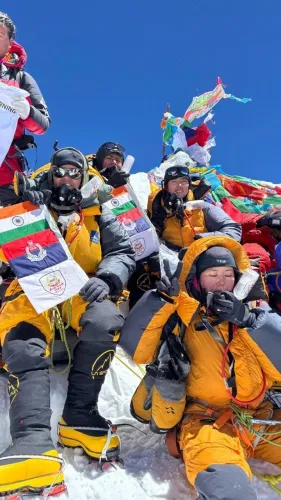
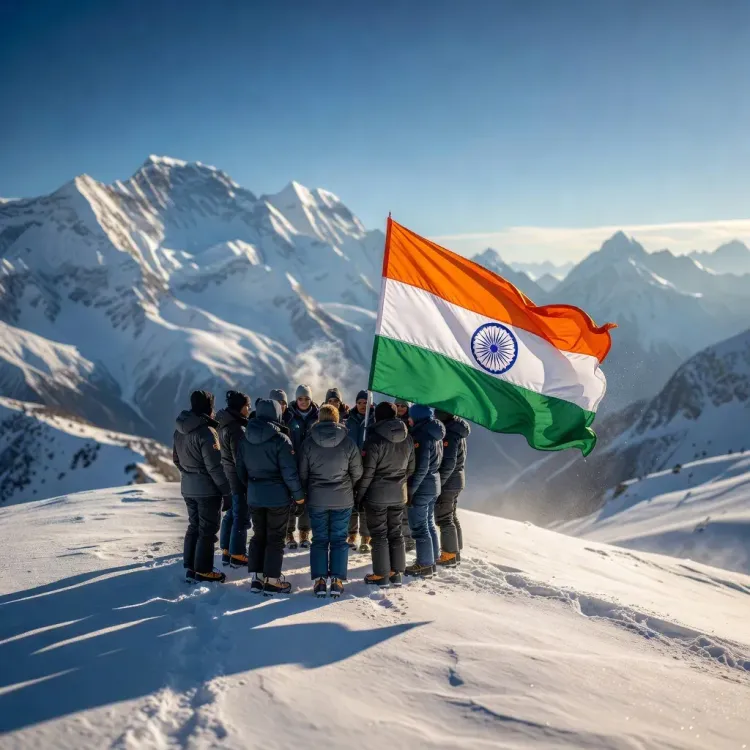
Former Bihar CM Nitish Kumar hailed the BSF's first all-women team for hoisting the tricolour atop Mount Everest under Mission Vande Mataram on 22 May 2026, calling the feat a symbol of indomitable courage and proof that no summit is beyond the spirit of India's daughters.
Key Takeaways
Former Bihar Chief Minister Nitish Kumar posted a tribute on 22 May 2026 congratulating the BSF's first all-women Everest team.
The team summited Mount Everest under Mission Vande Mataram , a BSF initiative spotlighting women border guards.
This is the first all-women BSF team to plant the Indian tricolour on the world's highest peak.
The achievement continues a tradition dating to 1984 , when Bachendri Pal became the first Indian woman to summit Everest.
India has been expanding women's roles in central armed police forces since the 1990s through recruitment and adventure training programmes.
Kumar called the women 'the pride of the entire nation,' invoking the broader Nari Shakti narrative.
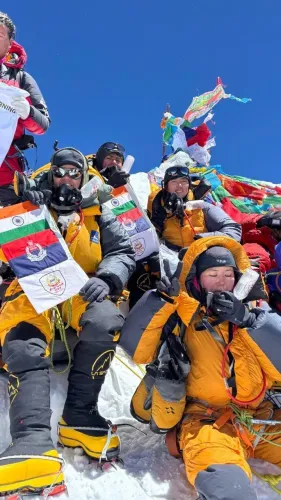
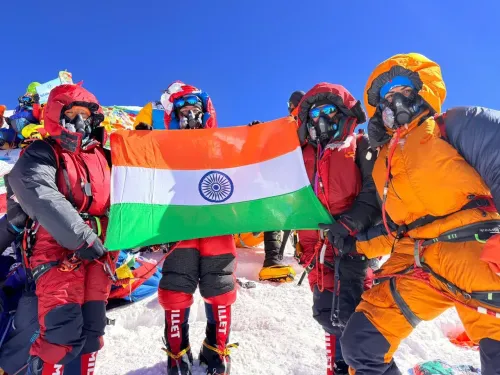
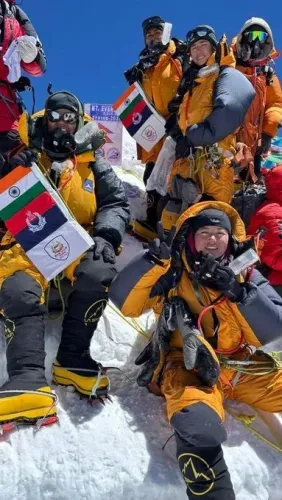
Former Bihar Chief Minister and Janata Dal (United) national president Nitish Kumar on Friday, 22 May 2026, congratulated the first all-women team of the Border Security Force (BSF) for planting the Indian tricolour atop Mount Everest under Mission Vande Mataram, calling the feat a symbol of indomitable courage and unbreakable resolve.
Posting on X, Kumar wrote: 'Mission Vande Mataram ke antargat BSF ki pahli all-women team ki mahila seema prahariyon ne Mount Everest ki choti par tiranga lahrakar adamya sahas aur atoot sankalp ki misal kayam ki hai' — meaning, 'Under Mission Vande Mataram, the women border guards of BSF's first all-women team have set an example of indomitable courage and unbreakable resolve by hoisting the tricolour atop Mount Everest.' He added: 'They have proved that no peak is higher than the spirit of our daughters. You are the pride of the entire nation.'
Context
The achievement marks a significant milestone for @BSF_India, India's primary border-guarding force established in 1965. The expedition, conducted under the banner of Mission Vande Mataram, fielded an exclusively female team of BSF personnel — a first for the organisation. By reaching the summit of the world's highest peak, the team has added a high-profile chapter to the history of women in India's central armed police forces.
The feat draws a direct line from Bachendri Pal's landmark ascent in 1984, when she became the first Indian woman to summit Mount Everest, opening the door for subsequent all-women expeditions from security and defence institutions.
Policy Backdrop
India has progressively expanded the role of women in its central armed police forces and military since the 1990s, through increased recruitment quotas, leadership pathways, and structured adventure training programmes. Paramilitary organisations, including the BSF, periodically organise high-altitude and endurance expeditions to raise physical standards, build unit morale, and enhance the public visibility of female personnel.
These expeditions are aligned with the broader governmental messaging on Nari Shakti — women's empowerment — a theme that has cut across multiple administrations at both the central and state levels. Mission Vande Mataram appears to be one such structured initiative within the BSF to spotlight the capabilities of its women border guards.
Stakeholders and Impact
The summit directly elevates the profile of women serving in India's paramilitary forces, demonstrating their capacity for elite physical and mental endurance. For the BSF, the all-women Everest team serves as a powerful recruitment and morale signal, particularly as the force continues to expand women's roles in frontline and specialised functions.
Political leaders across the spectrum have historically used such moments to reinforce narratives around national pride and gender progress. Kumar's tribute, coming from a former chief minister with a long record of women-focused governance initiatives in Bihar, amplifies the symbolic weight of the achievement at the national level.
What's Next
The BSF's all-women Everest summit under Mission Vande Mataram is likely to prompt further high-altitude and adventure expeditions by central armed police forces keen to build on this visibility. Formal policy updates on women's induction targets, specialised training curricula, and leadership roles within border forces may follow as institutional momentum builds around this achievement.
Point of View
The gesture reinforces a consistent brand identity around gender empowerment. The BSF expedition itself reflects a deliberate institutional strategy: high-visibility adventure milestones serve as proof-points for the expanding role of women in India's security architecture. Together, the expedition and the political response signal that women's representation in paramilitary forces is now a mainstream political and policy asset, not merely a symbolic gesture.
NationPress
7 Oct 2026
Frequently Asked Questions
What is Mission Vande Mataram BSF?
Mission Vande Mataram is a BSF initiative under which the force's first all-women team summited Mount Everest in May 2026, hoisting the Indian tricolour at the world's highest peak as a demonstration of courage and national pride.
Did BSF women's team climb Mount Everest in 2026?
Yes, the Border Security Force's first all-women team climbed Mount Everest in 2026 under Mission Vande Mataram, planting the Indian tricolour on the summit.
Why did Nitish Kumar congratulate BSF women?
Nitish Kumar congratulated the BSF all-women Everest team because they achieved a historic first for the force by summiting Mount Everest under Mission Vande Mataram, calling them a symbol of indomitable courage and the pride of the nation.
Who was the first Indian woman to climb Mount Everest?
Bachendri Pal became the first Indian woman to summit Mount Everest in 1984, paving the way for subsequent all-women expeditions from Indian security and defence institutions.
What is the role of women in BSF and Indian paramilitary forces?
India has been expanding women's roles in central armed police forces, including the BSF, since the 1990s through greater recruitment, leadership opportunities, and structured adventure training — efforts aligned with the broader Nari Shakti policy narrative.