Amit Shah at Hindi Diwas: Gujarat Gujarati, yet Hindi opened doors nationwide
Synopsis
Amit Shah, a Gujarati by birth, told the nation's biggest Hindi Diwas gathering that Hindi never held him back — it propelled him forward. Behind the personal anecdote lies a sharper policy signal: the Centre is doubling down on Hindi as a unifying force while using NEP's mother-tongue push to deflect the perennial charge of linguistic imposition.
Key Takeaways
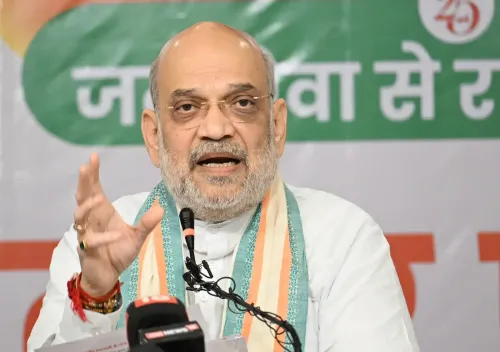
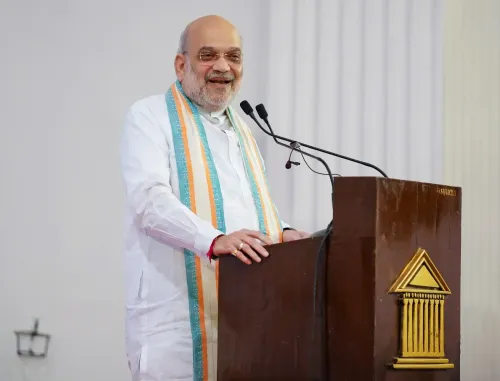
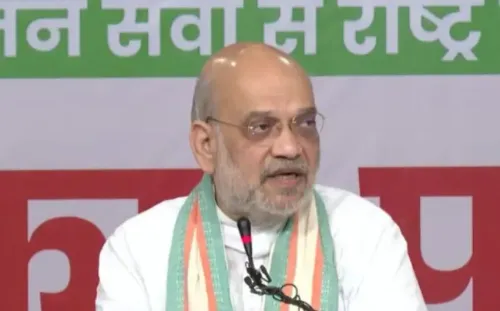
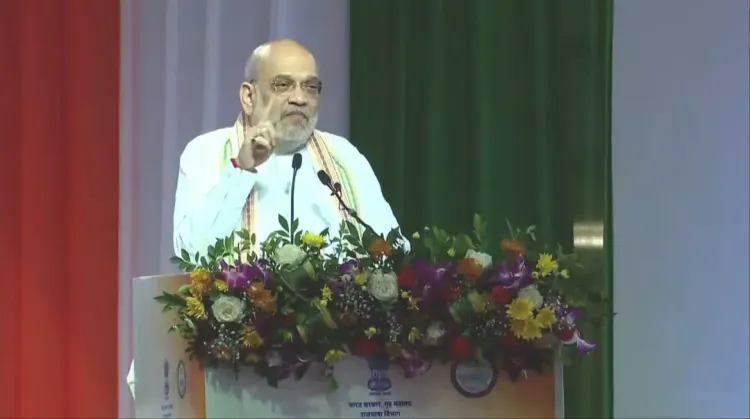
Amit Shah addressed the 6th Akhil Bharatiya Rajbhasha Sammelan in Navi Mumbai on 14 September 2026 , on the occasion of Hindi Diwas .
Shah said Hindi enabled him — a native Gujarati speaker — to discharge national responsibilities without difficulty.
Savarkar as 'one of the most learned linguists of his time' and highlighted the Shabd Sindhu initiative honouring his linguistic legacy.
PM Modi has granted classical language (Abhijat Bhasha) status to Marathi , Shah noted, calling the recognition long overdue.
Shah cited the National Education Policy (NEP) as structural support for mother-tongue primary education alongside Hindi's official role.
He launched training programmes for Hindi shorthand and typing and presented the Rajbhasha Kirti and Rajbhasha Gaurav awards at the event.
Union Home Minister Amit Shah on Monday, 14 September 2026 delivered a sweeping address on the unifying power of Hindi at the 6th Akhil Bharatiya Rajbhasha Sammelan in Navi Mumbai, coinciding with Hindi Diwas. Shah paid tribute to V.D. Savarkar and Bal Gangadhar Tilak, praised Maharashtra's multilingual heritage, and launched fresh training initiatives for Hindi language resources, shorthand, and typing.
Shah's Personal Account: A Gujarati Who Found His Voice in Hindi
Drawing on his own journey, Shah made a candid disclosure: Gujarat, his home state, is predominantly a Gujarati-speaking region, not a Hindi-speaking one. Yet, he said, this was never a handicap. 'I come from Gujarat, where Hindi is not spoken; Gujarati is spoken. However, when my party assigned me responsibilities at the national level, I faced no difficulty working across the country because I could understand and speak Hindi. The official language provided me with an immense opportunity to serve nationwide,' he said.
The statement, delivered in a city that is itself a mosaic of languages, underscored Shah's central argument: that Hindi functions as a bridge rather than a barrier, enabling citizens from non-Hindi-speaking states to participate fully in national public life.
Maharashtra, Savarkar, and the Linguistic Legacy
Shah described Maharashtra as the 'land of Savarkar', calling Vinayak Damodar Savarkar not just a freedom fighter and social reformer but 'one of the most learned linguists of his time.' He noted that the Ministry of Home Affairs had honoured Savarkar's linguistic contributions through the 'Shabd Sindhu' initiative, which seeks to enrich Hindi vocabulary by drawing on his coinage of words that were previously absent in Indian languages.
Shah also built on Bal Gangadhar Tilak's call for the purification of Marathi, noting that Tilak had coined numerous terms that found natural acceptance across Marathi and other Indian languages. He credited Tilak further for mobilising cultural nationalism by launching Ganesh Utsav in 1893 and the Chhatrapati Shivaji Maharaj Jayanti celebrations to forge national unity.
Multilingual Maharashtra and Classical Status for Marathi
Shah asserted that no Indian state is as linguistically diverse as Maharashtra, where Marathi, Konkani, Gujarati, Hindi, Sindhi, and Warli co-exist and flourish together. He said Marathi deserves 'immense respect' and noted that Prime Minister Narendra Modi had granted classical language status (Abhijat Bhasha) to Marathi — a recognition advocates of the language had sought for years.
He also remembered Chhatrapati Shivaji Maharaj for expanding the concept of Swarajya (self-rule) to include Swadharma (duty/faith) and Swabhasha (native language) as its core pillars, and for promoting Marathi in administration centuries before the modern language movement.
Vinoba Bhave, Vande Mataram, and the NEP Connection
Citing freedom fighter Vinoba Bhave, Shah recalled how Hindi enabled Bhave to carry the message of the Bhoodan and Gramdan movements to every village across Kashmir, Assam, and Kerala — regions with vastly different mother tongues. He also highlighted the historical role of Vande Mataram in awakening national consciousness during colonial rule.
Shah pointed to the National Education Policy (NEP), introduced under Prime Minister Modi, as a structural step in the right direction, noting its emphasis on primary education in a child's mother tongue — a principle he argued complements rather than competes with Hindi's role as the official language.
Awards, Training, and What Comes Next
During the event, Shah launched training programmes covering Hindi language resources, shorthand, and typing, and felicitated the winners of the Rajbhasha Kirti and Rajbhasha Gaurav awards. The sammelan, held on the occasion of Ganesh Utsav, also drew Shah's greetings to the nation, with the Home Minister noting that Lord Ganesha, the 'Vighnaharta (remover of obstacles)', would clear any hurdles in the path of developing Indian languages.
The event signals that the Centre's push to promote Hindi as a unifying national language — while formally protecting mother tongues under NEP — will continue to be a prominent theme in official policy discourse.
Point of View
Yet implementation of that very policy remains uneven. The sammelan's timing — Hindi Diwas, Ganesh Utsav, a Maharashtrian audience — was carefully chosen to frame linguistic nationalism as cultural celebration rather than imposition.
NationPress
14 Sept 2026
Frequently Asked Questions
What did Amit Shah say about Hindi at the Rajbhasha Sammelan 2026?
Shah said Hindi, despite not being his mother tongue, enabled him to serve across the country without difficulty. He called Hindi the official language that provided him an 'immense opportunity to serve nationwide', speaking at the 6th Akhil Bharatiya Rajbhasha Sammelan in Navi Mumbai on Hindi Diwas, 14 September 2026.
What is the Shabd Sindhu initiative mentioned by Amit Shah?
Shabd Sindhu is a Ministry of Home Affairs initiative that honours V.D. Savarkar's linguistic contributions by incorporating words he coined into the Hindi lexicon. Shah noted that Savarkar had created numerous terms previously absent in Indian languages, which subsequently found acceptance in Marathi and other national languages.
Which classical language status did PM Modi grant to Marathi?
Prime Minister Narendra Modi granted Marathi the status of a classical language, known as Abhijat Bhasha. Shah highlighted this at the sammelan, saying Marathi deserves 'immense respect' and that the recognition was a significant acknowledgement of its ancient literary heritage.
What training initiatives were launched at the Hindi Diwas event?
Shah launched programmes covering Hindi language resources, shorthand, and typing at the 6th Akhil Bharatiya Rajbhasha Sammelan. He also felicitated winners of the Rajbhasha Kirti and Rajbhasha Gaurav awards during the event.
How does the National Education Policy relate to Hindi promotion?
Shah cited the NEP, introduced under PM Modi, as a complementary policy that prioritises primary education in a child's mother tongue. He argued this approach supports linguistic diversity while Hindi continues to function as the country's official and unifying language.