Chirag Paswan on train cancellations: 'No one can stop India's youth'

Synopsis
With trains cancelled, 57 metro stations shut, and 23,000 security personnel deployed, Delhi braced for a CJP protest the police had refused to permit — until the Supreme Court stepped in to stop a blanket Metro shutdown. Against that backdrop, Union Minister Chirag Paswan drew a sharp political line: no amount of disruption, he declared, can stop India's youth.
Key Takeaways
Union Minister Chirag Paswan stated on 9 October that train cancellations cannot prevent India's youth from mobilising, amid disruptions ahead of a CJP protest in New Delhi on 10 October .
Indian Railways cancelled and rescheduled trains arriving at New Delhi and Hazrat Nizamuddin stations between 4 a.m. and 2 p.m. on Saturday .
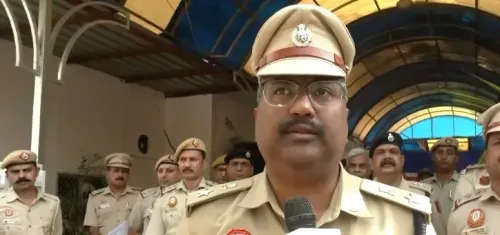
More than 23,000 security personnel are expected to be deployed across the national capital for the protest.
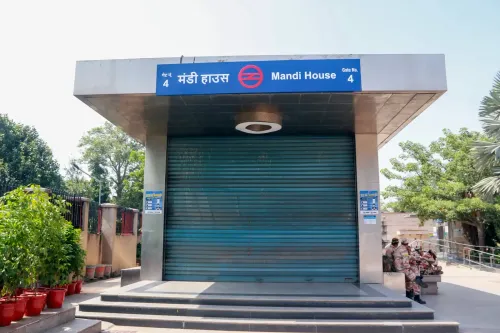
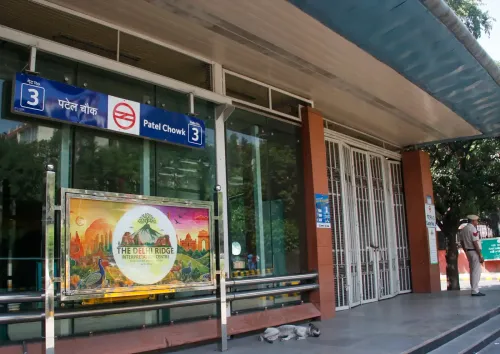
Delhi Police denied the CJP permission to protest; the DMRC announced closure of entry and exit at 57 metro stations from 9 p.m.
The Supreme Court ordered that Metro services must not be completely stopped and directed the Centre to allow regulated operation to minimise public inconvenience.
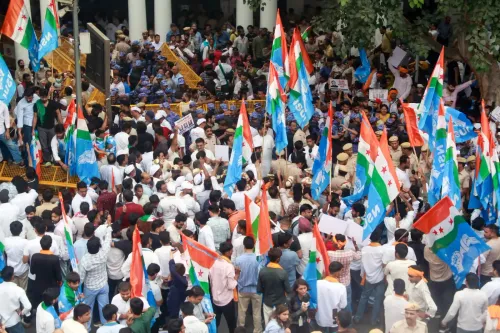
Union Minister and Lok Janshakti Party-Ram Vilas (LJP-RV) chief Chirag Paswan on Friday, 9 October declared that no number of train cancellations or connectivity disruptions could prevent India's youth from mobilising, hours after Indian Railways cancelled and rescheduled several trains bound for New Delhi and Hazrat Nizamuddin railway stations ahead of a planned protest by the Cockroach Janata Party (CJP) in the national capital on 10 October.
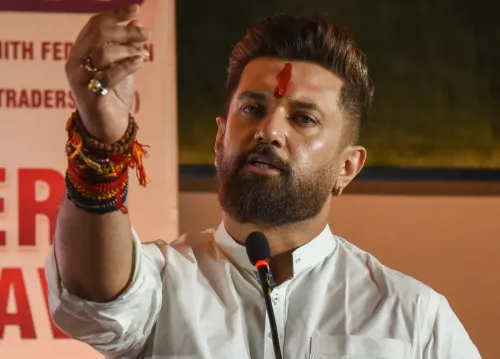
Paswan made the remarks while speaking to reporters after addressing the seventh Convocation ceremony of the National Institute of Food Technology Entrepreneurship and Management (NIFTEM) in Kundli, Sonipat.
What Chirag Paswan Said
'These are the youth of India; no one can stop them,' Paswan said, responding to questions about the railway disruptions. 'Those who try to spread such misconceptions...how many trains can anyone stop? How much connectivity can anyone halt? How many roads can anyone block? These are the youth of India; they possess the capability to show the world the way forward, and generations before them have done so as well. So, in such a situation, no one can stop them,' the Union Minister added.
Scale of Disruptions and Security Deployment
Train services scheduled to arrive at New Delhi and Hazrat Nizamuddin stations between 4 a.m. and 2 p.m. on Saturday are affected by the cancellations. The disruptions were ordered in anticipation of severe road traffic congestion around the stations due to the proposed CJP demonstration. The national capital has been turned into a virtual fortress, with more than 23,000 security personnel expected to be deployed on duty.
Permission Denied, Metro Stations Shut
Delhi Police denied permission for the CJP protest, citing the organisers' failure to comply with legal directions and their own undertakings made during an earlier protest. Authorities also sought the closure of 57 metro stations. Acting on this proposal, the Delhi Metro Rail Corporation (DMRC) announced on Friday that entry and exit at those 57 stations would be closed from 9 p.m. on Friday until further orders.
Supreme Court Steps In
The Supreme Court intervened, ordering that there should be no complete stoppage of Metro train services ahead of the protest. The court directed the Centre to ensure that Metro and other railway services are allowed to operate in a suitably regulated manner to minimise inconvenience to the public. The directive effectively walked back a blanket shutdown of metro access, requiring authorities to balance security concerns with the public's right to mobility.
The situation remains fluid, with security arrangements, judicial directions, and political statements all converging ahead of Saturday's planned protest in New Delhi.
Point of View
A 57-station metro shutdown, and a 23,000-strong security deployment signals an administrative response that critics could argue is disproportionate to a protest that had not yet occurred — and the Supreme Court appeared to share that unease, stepping in to prevent a blanket metro shutdown. Paswan's remarks, though politically pointed, tap into a genuine public discomfort with pre-emptive restrictions on mobility. The deeper question is whether denying protest permission and disrupting transport infrastructure sets a precedent that will be applied selectively. How the Centre responds to the Supreme Court's directive on 'suitably regulated' services will be the real indicator of intent.
NationPress
9 Oct 2026
Frequently Asked Questions
Why were trains to Delhi cancelled on 10 October?
Indian Railways cancelled and rescheduled trains arriving at New Delhi and Hazrat Nizamuddin stations between 4 a.m. and 2 p.m. on 10 October due to anticipated severe road traffic congestion around those stations ahead of a planned CJP protest in the national capital.
What did Chirag Paswan say about the train cancellations?
Union Minister Chirag Paswan said no amount of train cancellations or connectivity disruptions could stop India's youth, asserting that 'no one can stop them.' He made the remarks after addressing the NIFTEM convocation ceremony in Kundli, Sonipat on 9 October.
Why did Delhi Police deny permission for the CJP protest?
Delhi Police cited the organisers' failure to comply with legal directions and with undertakings they had given during an earlier protest as reasons for denying permission for the CJP demonstration planned for 10 October.
What did the Supreme Court order regarding the Delhi Metro?
The Supreme Court ordered that there should be no complete stoppage of Metro train services ahead of the protest, and directed the Centre to ensure Metro and other railway services operate in a suitably regulated manner to minimise inconvenience to the public.
How many metro stations were closed ahead of the CJP protest?
The Delhi Metro Rail Corporation announced the closure of entry and exit at 57 metro stations from 9 p.m. on Friday, 9 October, until further orders, following a proposal from Delhi Police. The Supreme Court's subsequent intervention required that services not be completely halted.