Jhiram Ghati massacre: No security deployed on day of attack, says T.S. Singh Deo
Synopsis
More than a decade after 29 people were killed in the Jhiram Ghati Maoist ambush, former Chhattisgarh Deputy CM T.S. Singh Deo has claimed that security — robust for the first two days of the Congress programme — was completely absent on the day of the attack. His account, coming immediately after an NIA court sentenced 10 convicts to death, reignites the unresolved question: why was a senior political convoy left unguarded in one of India's most insurgency-hit corridors?
Key Takeaways
Former Chhattisgarh Deputy CM T.S.
Singh Deo alleged zero security personnel were deployed on the day of the Jhiram Ghati attack on 25 May 2013 .
An NIA special court in Jagdalpur recently sentenced 10 convicts to death for the massacre, in which 29 people were killed.
Singh Deo said security was 'full and without a single lapse' on the first two days of the Congress programme in Bijapur and Jagdalpur.
He alleged no officer was deployed at Vakavanghati and that the road to Sukma was completely unguarded on the day of the attack.
Singh Deo said the question of wider Maoist involvement 'is a matter of investigation' and stopped short of directly naming those responsible for the security failure.
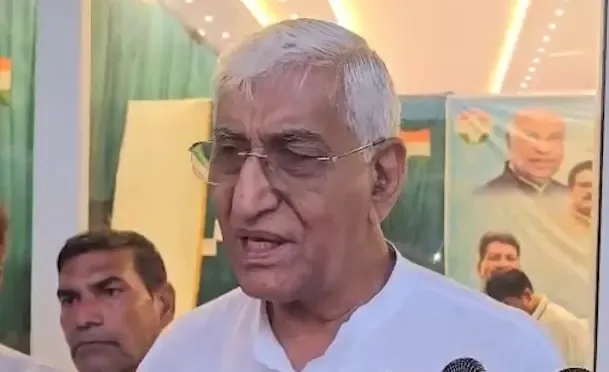
Congress leader and former Chhattisgarh Deputy Chief Minister T.S. Singh Deo on Wednesday, 16 September 2026, claimed that not a single security personnel was deployed on the route taken by party leaders on the day of the 2013 Jhiram Ghati Maoist attack in Sukma, Chhattisgarh. His remarks came a day after an NIA special court in Jagdalpur sentenced 10 convicts to death for their role in the massacre.
The Verdict That Reignited Memories
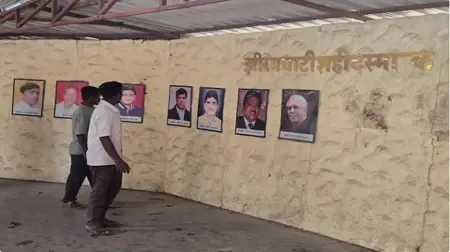
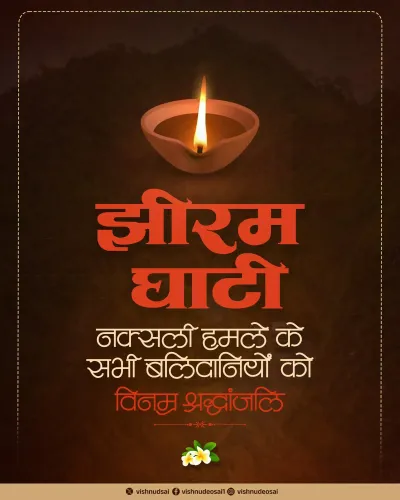
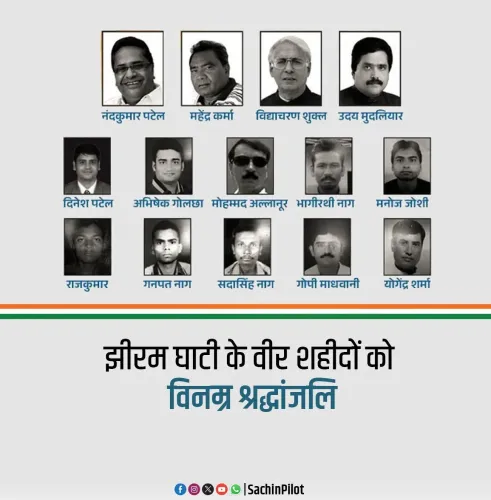
The Jhiram Ghati massacre of 25 May 2013 left 29 people dead when Maoists ambushed a Congress party convoy in the forested corridors of Sukma district. Among the dead were senior Congress leaders, making it one of the deadliest targeted political attacks in independent India. The NIA special court's death sentence for 10 convicts has brought the tragedy back into sharp public focus, prompting fresh scrutiny of the security arrangements — or the alleged absence of them — on that day.
What Singh Deo Claimed
Speaking to reporters in Ambikapur, Singh Deo, who was in charge of the Congress party's programme at the time, made a pointed allegation about a sudden and inexplicable withdrawal of security. 'I had made written arrangements — communicating with offices ranging from that of the DGP to the IGs and others — regarding the five- or six-day event,' he said. He recalled that for the first two days of the programme — held in Bijapur and Jagdalpur — security was comprehensive and without a single lapse.
'On the first day of the event in Bijapur and even on the second day in Jagdalpur, there wasn't a single lapse — not even the slightest shortcoming that one could imagine,' he stated. The situation, he alleged, changed drastically on the third day.
The Third Day: A Road Left Unguarded
Singh Deo recounted departing half an hour early for the programme in Sukma — a programme presided over by late Congress president Nand Kumar Patel. 'I noticed that there wasn't a single person on the road; no police personnel were deployed… There was no one stopping us, nor were there any other people visible on the road,' he claimed. He further alleged that at Vakavanghati, near a police camp, there was 'not a single officer deployed.'
After the programme concluded in Sukma, Singh Deo said he took leave of Nand Kumar Patel to proceed to the next scheduled event. 'Still, there was not a single security personnel deployed,' he asserted. Nand Kumar Patel was among those killed in the subsequent attack.
Questions of Accountability
Singh Deo's account raises pointed questions about the chain of command on that day. 'The same system that provided us security for the first two days of the scheduled programme, giving us a sense of security, suddenly failed to do so on the third day, and then this tragedy took place,' he said. He stopped short of directly attributing blame to any individual, noting that the question of which other Maoists were involved 'is a completely separate issue' and 'a matter of investigation.'
On the death penalty awarded by the NIA court, he said: 'There is no greater punishment than the death penalty.' Notably, this is the first major judicial conclusion in the over-decade-long legal process following the attack.
What Comes Next
The sentencing of 10 convicts is likely to be challenged at the Chhattisgarh High Court, as is standard procedure in capital punishment cases, which require confirmation by a higher court. Singh Deo's fresh claims about the absence of security cover may also renew political pressure for a deeper inquiry into the administrative failures on 25 May 2013. The case has long carried political overtones in Chhattisgarh, and the renewed scrutiny comes at a sensitive juncture in the state's political landscape.
Point of View
Delivered the day after a death-sentence verdict, gives it renewed political weight. The central unresolved contradiction remains: a security apparatus that functioned flawlessly for two days simply ceased to function on the third, in one of India's most dangerous Maoist corridors. That is not an operational oversight; it demands an explanation of institutional failure or, more troublingly, deliberate withdrawal. No government — at the Centre or in Chhattisgarh — has yet produced a credible public accounting for that gap.
NationPress
16 Sept 2026
Frequently Asked Questions
What is the Jhiram Ghati massacre?
The Jhiram Ghati massacre occurred on 25 May 2013, when Maoists ambushed a Congress party convoy in Sukma district, Chhattisgarh, killing 29 people, including senior party leaders. It remains one of the deadliest targeted political attacks in India's post-independence history.
What did T.S. Singh Deo claim about security on the day of the attack?
Singh Deo claimed that while full security was provided for the first two days of the Congress programme, not a single police officer was deployed on the route or at key locations like Vakavanghati on the day of the attack, 25 May 2013. He said he noticed the absence personally when he departed early for the Sukma programme.
What verdict did the NIA special court deliver in the Jhiram Ghati case?
An NIA special court in Jagdalpur, Chhattisgarh, sentenced 10 convicts to death for their role in the Jhiram Ghati massacre. The verdict is the first major judicial conclusion in the case, more than a decade after the attack.
What happens after the death sentence in the Jhiram Ghati case?
Under Indian law, death sentences awarded by a sessions or special court must be confirmed by the respective High Court before they can be executed. The convicts are also entitled to appeal the verdict, meaning the legal process is likely to continue at the Chhattisgarh High Court.
Who was Nand Kumar Patel and what was his role in the Jhiram Ghati convoy?
Nand Kumar Patel was the Chhattisgarh Congress president at the time of the attack and was among those killed in the massacre on 25 May 2013. Singh Deo stated that it was Patel's programme in Sukma that the convoy was travelling to when the Maoist ambush occurred.