Northeast India Achieves 89 GI-Tagged Products; Nagaland Identifies 24 Traditional Items for Registration
Synopsis
The Northeastern region of India has made significant strides by registering 89 Geographical Indication (GI) products. A recent meeting highlighted 24 traditional items from Nagaland poised for registration, emphasizing the importance of protecting cultural heritage and economic growth.
Key Takeaways
89 GI products registered in Northeast India.
Handicrafts lead with 48 items.
24 Nagaland products identified for GI registration.
GI registration aids in protecting cultural heritage .
Collaborative efforts are essential for market opportunities .
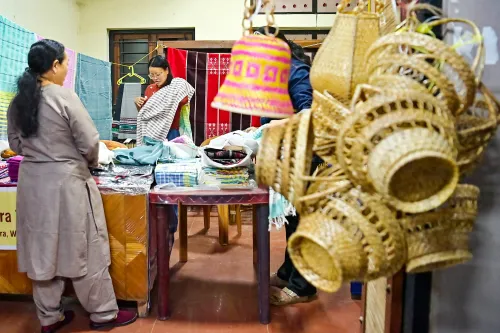
Kohima, March 5 (NationPress) The Northeastern region of India, made up of eight states, boasts 89 officially recognized Geographical Indication (GI) products. Handicrafts dominate the list with 48 entries, trailed by 28 agricultural products, eight manufactured items, and five food items, as reported by officials on Thursday.
A stakeholder conference focused on GI initiatives for traditional crafts and handloom products from Nagaland took place on Thursday at the Conference Hall of the Nagaland Handloom and Handicraft Development Corporation in Dimapur.
During the conference, Monmayuri Saikai, Senior Executive at the North Eastern Handicrafts and Handlooms Development Corporation Limited (NEHHDC), presented a PowerPoint outlining the Geographical Indication concept, its advantages, and the registration procedure.
Data shared by Saikai indicated that the Northeastern region currently holds 89 registered GI products, with handicrafts representing the largest portion at 48 products, followed by 28 agricultural items, eight manufactured goods, and five food items.
She announced that 24 products from Nagaland have been earmarked for GI registration. The significance of GI tagging was stressed, not only for economic benefits but also for preserving and showcasing the rich cultural heritage of local communities.
The presentation emphasized that the Government of India is committed to safeguarding the Northeast's heritage, as many traditional crafts and products are invaluable cultural assets.
Obtaining GI registration will protect these cultural identities and ensure that ownership remains with the respective communities. Saikai elaborated that a Geographical Indication (GI) refers to products linked to a specific geographical area, possessing qualities, reputation, or characteristics associated with that location.
GI tagging aids in protecting traditional knowledge, promoting genuine products, and increasing the economic value of indigenous offerings, according to the official.
She also detailed the GI registration process, which involves application submission, preliminary review and examination, publication in the GI Journal, registration, and entry into the GI register, with provisions for objections and verification before final approval.
This meeting was convened by the North Eastern Handicrafts and Handlooms Development Corporation Limited (NEHHDC) in collaboration with the Ministry of Development of North Eastern Region (MDoNER).
The objective was to identify, document, and streamline the filing of GI applications for Nagaland's traditional crafts and handloom products.
The session was led by Y. Lipongse Thongtsar, Managing Director of the Nagaland Handloom and Handicrafts Development Corporation (NHHDC). Also present were Som Kamie, Planning Advisor from the North Eastern Council (NEC), and Mara Kocho, Managing Director of NEHHDC's Head Office in Guwahati.
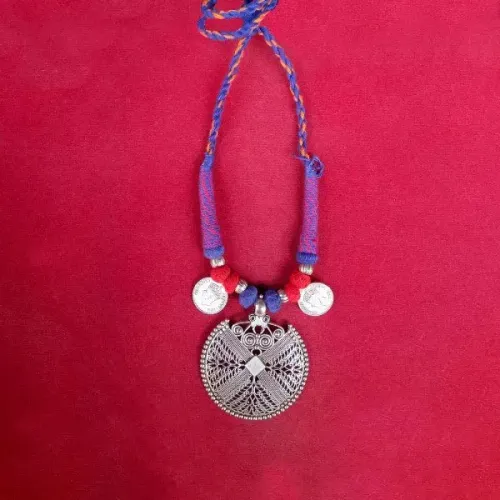
Several potential GI products from various tribes in Nagaland were showcased during the meeting, including Pochury Textile, Pochury Shawl, Zeliang Textile, Sumi Shawl, Sumi Textile, Ao Textile, Tikhir Jewellery, and Tikhir Textile.
The responsible applicant bodies for these products include Pochury Hoho, Zeliang People’s Organization, Sumi Hoho, Ao Senden, and the Tikhir Council.
Officials also conveyed that other tribal groups such as Angami, Chakhesang, Chang, Khiamniungan, Konyak, Lotha, Phom, Rengma, Sangtam, and Yimkhiung are in the process of identifying suitable traditional products for GI registration through their respective tribal organizations.
Awareness campaigns are set to be launched throughout the state to educate communities and artisans on the importance and benefits of GI registration.
Officials emphasized that GI tagging is applicable not only to textiles and handicrafts but also to traditional jewelry and other indigenous products.
The meeting highlighted the necessity of collaborative efforts among tribal organizations, government bodies, and stakeholders to protect traditional knowledge and promote indigenous products via GI registration, thereby enhancing market opportunities for artisans and weavers in the state.
Point of View
Ensuring that local communities benefit economically while preserving their traditional crafts. It's a vital step toward safeguarding indigenous knowledge and promoting authenticity in products.
NationPress
24 Sept 2026
Frequently Asked Questions
What are Geographical Indication products?
Geographical Indication (GI) products are items that originate from a specific geographical location and possess qualities or a reputation linked to that area.
How does GI registration benefit local communities?
GI registration helps protect cultural identities, ensures product ownership stays with local communities, and enhances economic opportunities by promoting authentic products.
What was discussed in the recent stakeholder meeting?
The meeting focused on GI initiatives for Nagaland's traditional crafts, with presentations on the registration process and identification of 24 products for GI tagging.
Who is responsible for GI applications in Nagaland?
Various tribal organizations, including Pochury Hoho and Zeliang People’s Organization, are responsible for filing GI applications for their respective products.
Are awareness campaigns planned for GI registration?
Yes, awareness campaigns will be conducted to educate communities and artisans about the significance and benefits of GI registration.