Dengue cases in West Bengal cross 5,000 in 2026, over 2,500 added in one month
Synopsis
West Bengal's dengue count crossed 5,000 in less than two weeks of September alone — after sitting under 2,500 for the entire preceding year. The doubling reflects both a genuine outbreak surge and a new SOP that has ended years of suspected underreporting, raising questions about how bad past seasons truly were.
Key Takeaways
West Bengal dengue cases reached 5,002 as of 11 September 2026 , crossing the 5,000 mark for the year.
More than 2,500 new cases were recorded in a single month, after total cases stayed below 2,500 through the end of August.
Murshidabad is the worst-hit district at 1,072 cases, followed by Kolkata ( 500 ) and North 24 Parganas ( 450 ).
A Standard Operating Procedure (SOP) issued on 2 September 2026 mandated door-to-door screening and rapid blood testing.
Officials say the spike partly reflects improved detection and an end to years of underreporting of dengue as 'unknown disease'.
A state-wide testing campaign is underway until 15 October 2026 , with mandatory daily fever and testing reports from districts.
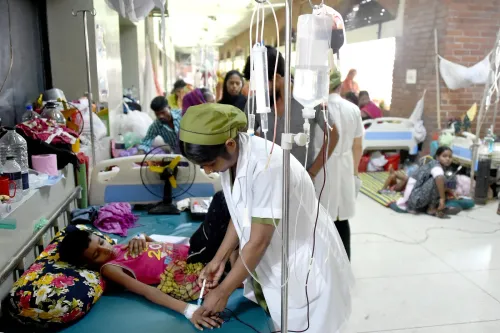
The total number of dengue-affected individuals in West Bengal during the current calendar year has surpassed the 5,000 mark, according to the latest bulletin issued by the state Health Department. As of 11 September 2026, the cumulative count stands at 5,002, with the sharpest surge recorded in just the past month.
A Month of Rapid Spread
The pace of the outbreak is what has alarmed public health officials. Until the end of August 2026, total dengue cases in the state were under 2,500. That figure more than doubled within the following two weeks, meaning over 2,500 fresh cases were recorded in roughly 30 days.
'The alarming factor is that the total number of dengue-affected people till the same date in August was less than 2,500. This means that over the last month, over 2,500 additional individuals have been freshly affected by dengue,' a senior Health Department official said.
Districts Worst Affected
Murshidabad district leads the tally with 1,072 cases, followed by Kolkata at 500 and North 24 Parganas at 450. Officials noted that this geographic pattern is consistent with previous years.
'This is as per the trend every year, since in almost all the last few years these three districts have witnessed the maximum number of dengue-affected people,' the official added. The recurring concentration in these districts points to structural challenges — drainage patterns, population density, and stagnant water bodies — that have not been fully addressed despite repeated seasonal warnings.
The SOP Effect: More Testing, Not Just More Cases
Health Department officials are cautiously interpreting the spike as, in part, a product of more rigorous surveillance. On 2 September 2026, the department issued a Standard Operating Procedure (SOP) on dengue monitoring and prevention, mandating door-to-door screening and immediate blood testing of anyone presenting dengue symptoms.
'The sudden rise in the number of newly affected people proves that the SOP guidelines have been followed diligently,' the official said. Officials also stressed that the numbers reflect a sharp reduction in underreporting — a practice, they acknowledged, that had been 'rampant during the last few years', when dengue cases were often logged as 'unknown disease'.
Government Response and the Road Ahead
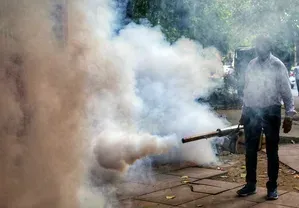
The Health Department has directed all district authorities to run a sustained public awareness and testing campaign through 15 October 2026. District administrations have been asked to submit daily reports tracking the number of fever cases detected and patients tested for dengue.
The directive aims to prevent a further exponential rise as the post-monsoon season — historically West Bengal's peak dengue window — continues. With cases still climbing and six weeks remaining in the campaign period, whether the SOP can flatten the curve will be closely watched.
Point of View
But the Health Department's admission that past years saw rampant underreporting is equally significant. If cases were routinely misclassified as 'unknown disease', the true historical burden was far higher than official records showed — a systemic failure of surveillance that the new SOP is only now beginning to correct. The recurring dominance of Murshidabad, Kolkata, and North 24 Parganas season after season suggests that reactive campaigns are not substituting for the infrastructural fixes — drainage, waste management, stagnant water elimination — that would reduce vector breeding at source. The 15 October campaign deadline also means the state has a narrow window before the post-monsoon peak passes; if case growth is not contained by then, the final 2026 tally could far exceed any prior year on record.
NationPress
13 Sept 2026
Frequently Asked Questions
How many dengue cases have been reported in West Bengal in 2026?
As of 11 September 2026, West Bengal has recorded 5,002 dengue cases in the current calendar year, according to the state Health Department bulletin.
Why did dengue cases in West Bengal double so sharply in one month?
Over 2,500 new dengue cases were recorded in roughly 30 days after September began, compared to fewer than 2,500 total cases through the end of August. Officials attribute the surge to a genuine outbreak acceleration as well as more rigorous detection following a new SOP issued on 2 September 2026.
Which districts in West Bengal have the most dengue cases in 2026?
Murshidabad leads with 1,072 cases, followed by Kolkata at 500 and North 24 Parganas at 450. Officials note this pattern has remained consistent across multiple previous years.
What is the West Bengal Health Department SOP on dengue?
The SOP, issued on 2 September 2026, mandates door-to-door monitoring and immediate blood testing for anyone showing dengue symptoms. It also requires district administrations to submit daily reports on fever cases detected and patients tested.
Has underreporting of dengue been a problem in West Bengal?
Yes, according to Health Department officials. In previous years, dengue cases were reportedly recorded as 'unknown disease', masking the true scale of outbreaks. Officials say the higher case count in 2026 reflects both the actual outbreak and improved, more transparent reporting.