Odisha CM Majhi Cabinet Amends Thermal Power Policy 2008
Synopsis
The Odisha cabinet, chaired by CM Mohan Charan Majhi, has approved an amendment to the Odisha Thermal Power Policy 2008, reducing mandatory power allocation obligations for Independent Power Producers to improve ease of doing business and attract fresh investment in the state's energy sector.
Key Takeaways
The Odisha Cabinet chaired by CM Mohan Charan Majhi approved an amendment to the Odisha Thermal Power Policy, 2008 on 25 May 2026 .
The amendment reduces mandatory power allocation obligations for Independent Power Producers (IPPs) operating in Odisha.
The stated objectives are to improve Ease of Doing Business (EoDB) and strengthen investment in the state's energy sector.
The original 2008 policy required IPPs to supply a fixed quantum of electricity to the state grid as a project condition.
The exact quantum of reduction in mandatory allocation is yet to be disclosed; the amended policy must be notified in the Odisha Official Gazette to take effect.
The move follows a national pattern of coal-rich states easing IPP norms to attract private capital amid rising industrial power demand.
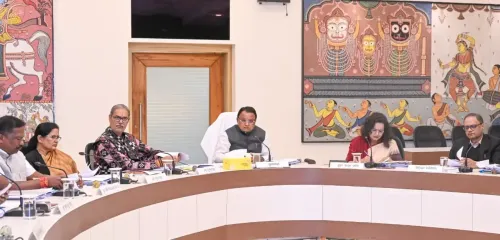
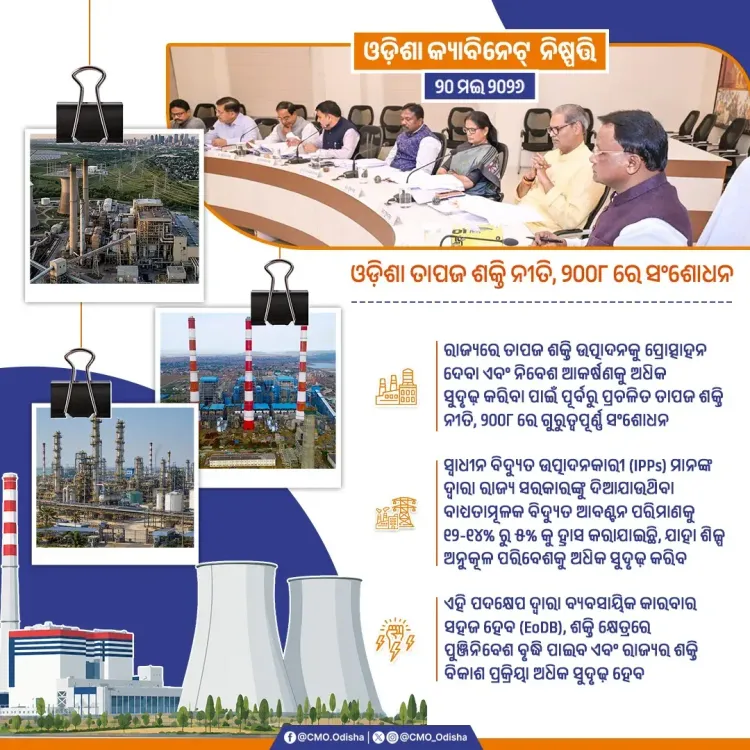
The Chief Minister's Office of Odisha announced on Monday, 25 May 2026 that the state cabinet, chaired by Chief Minister Mohan Charan Majhi, has approved an amendment to the Odisha Thermal Power Policy, 2008, reducing mandatory power allocation obligations for Independent Power Producers (IPPs) to boost ease of doing business and attract fresh investment in the state's energy sector.
The official post, in Odia, states: 'ଓଡ଼ିଶା ତାପଜ ଶକ୍ତି ନୀତି, ୨୦୦୮' — the 'Odisha Thermal Power Policy, 2008' — has received cabinet approval for amendment, adding that the move will reduce mandatory power allocation quantities for IPPs, thereby easing commercial transactions and strengthening investment in the state's energy sector.
Context
The Odisha Thermal Power Policy, 2008 was the foundational framework governing thermal power projects in the state. It imposed mandatory power allocation requirements on Independent Power Producers — private entities that develop and operate power plants — obligating them to supply a fixed quantum of electricity to the state grid as a condition for project approval. While this mechanism was designed to guarantee state energy security, it has over time been cited by investors as a commercial risk that complicates project financing and viability.Policy Backdrop
Odisha's cabinet decision aligns with a broader national trend in which coal-rich states have periodically revised mandatory offtake or allocation norms in their thermal power policies to reduce project risk and attract private capital. The Majhi government, which assumed office in June 2024, has positioned ease of doing business as a central plank of its economic agenda. Reducing mandatory allocation burdens on IPPs is seen as a direct lever to improve Odisha's ranking on investment climate indicators, particularly in the power sector where industrial demand is rising sharply. The amendment does not scrap the 2008 policy outright but modifies a specific obligation within it. The exact quantum of reduction in the mandatory allocation has not been officially disclosed in the post and remains to be detailed in the gazette notification of the amended policy.Stakeholders and Impact
Independent Power Producers are the most immediate beneficiaries. Lower mandatory allocation requirements reduce the volume of below-market-rate power they must supply to the state grid, improving the commercial returns on new projects and making debt financing easier to secure. For Odisha — a state with significant coal reserves and an expanding industrial base — the change is intended to accelerate thermal capacity addition at a time when power demand from manufacturing and mining activity is growing. Existing IPPs operating under the 2008 framework may also see improved project economics, depending on how the amendment is applied to ongoing operations. The state government, on the other hand, will need to ensure that any reduction in mandatory IPP supply does not create supply gaps for the state grid, particularly during peak demand seasons. Balancing investor-friendly norms with energy security obligations will be the central policy tension going forward.What's Next
The cabinet approval is the first step; the amended policy must now be formally notified in the Odisha Official Gazette before it takes legal effect. Industry observers will watch for the gazette notification to assess the precise extent of the reduction in mandatory allocation and any conditions attached. New investment proposals and bidding rounds for thermal projects in Odisha are expected to follow once the revised framework is in place, serving as the real test of whether the amendment succeeds in drawing private capital into the state's power sector.Point of View
Rather than fiscal incentives alone, to improve the investment climate. However, the real measure of success will be whether the gazette notification translates into concrete new capacity additions, or whether other structural barriers — land acquisition, grid connectivity, fuel linkages — continue to deter IPPs. The tension between investor-friendly norms and state energy security will define how this amendment is ultimately judged.
NationPress
10 Oct 2026
Frequently Asked Questions
What is the Odisha Thermal Power Policy 2008 amendment about?
The Odisha cabinet approved an amendment to the Odisha Thermal Power Policy 2008 that reduces the mandatory power allocation obligations imposed on Independent Power Producers, making it easier for private power companies to operate commercially in the state.
Who chaired the Odisha cabinet meeting that approved this amendment?
Chief Minister Mohan Charan Majhi chaired the cabinet meeting in which the amendment to the Odisha Thermal Power Policy 2008 was approved.
What are Independent Power Producers and how does this affect them?
Independent Power Producers (IPPs) are private entities that build and operate power plants and sell electricity. The amendment reduces the mandatory volume of power they must supply to the state grid, improving their commercial returns and making project financing easier.
How does this amendment help ease of doing business in Odisha?
By reducing mandatory power allocation requirements, the amendment lowers a key commercial burden on private power investors, reducing project risk and making Odisha a more attractive destination for energy sector investment.
When will the amended Odisha Thermal Power Policy come into effect?
The amendment requires formal notification in the Odisha Official Gazette before it takes legal effect. The exact date of gazette notification had not been announced at the time of the cabinet approval on 25 May 2026.