Odisha CM Majhi meets JSL, IOCL, JSW, Tata Steel in Delhi
Synopsis
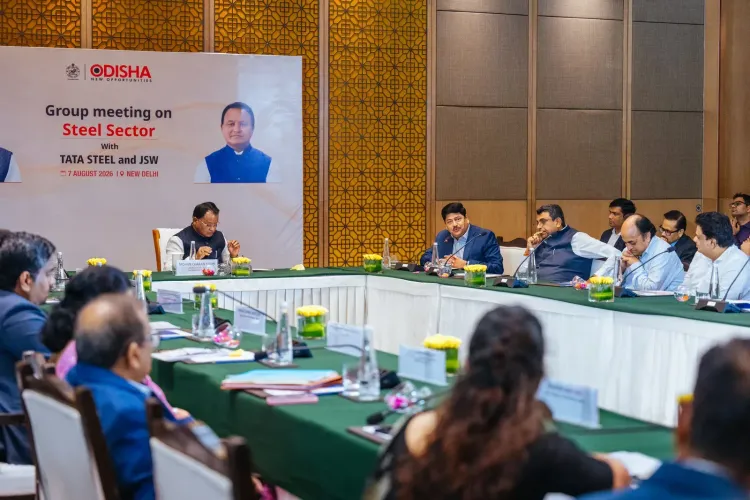
Odisha Chief Minister Mohan Charan Majhi held back-to-back meetings with industry leaders from JSL, IOCL, JSW Steel and Tata Steel in New Delhi on August 8, 2026, focusing on value-added manufacturing and new investment in the state's metals and petrochemicals sectors.
Key Takeaways
CM Mohan Charan Majhi met industry heads from JSL, IOCL, JSW Steel and Tata Steel in New Delhi on August 8, 2026 .
Discussions targeted Odisha's metal downstream and chemicals and petrochemicals sectors .
Key themes: value-added manufacturing, deeper industry collaboration, and new investment opportunities.
Tata Steel's Kalinganagar plant and JSW Steel's expansion plans make Odisha a natural anchor for these companies.
The state's policy push builds on the Odisha Industrial Policy Resolution of 2015 , which prioritised downstream industries.
No specific investment figures or MoUs were confirmed; follow-up announcements will be the real indicator of outcomes.
Odisha is done waiting at the raw-material end of the value chain. Chief Minister Mohan Charan Majhi arrived in New Delhi on Saturday, August 8, 2026, and sat across the table with the top brass of four industrial giants — Jindal Stainless Limited (JSL), Indian Oil Corporation Limited (IOCL), JSW Steel and Tata Steel — in a back-to-back series of meetings aimed at pulling the state deeper into value-added manufacturing.
The Chief Minister's Office confirmed that discussions centred on expanding Odisha's metal downstream and chemicals and petrochemicals sectors, with a specific push for value-added manufacturing, deeper industry collaboration, and fresh investment commitments. The state government framed the outreach as part of its broader drive toward a 'sustainable industrial growth' model and a 'globally competitive industrial ecosystem.'
Why these four companies, and why now
The choice of interlocutors is not incidental. Tata Steel runs one of India's largest integrated steel plants at Kalinganagar in Odisha's Jajpur district. JSW Steel has active expansion plans in the state. JSL — Jindal Stainless Limited — is already a significant stainless steel producer with a footprint in Odisha. And IOCL, India's largest refiner, brings petrochemical ambitions that dovetail with the state's chemical sector push. Taken together, the four companies map almost perfectly onto the two sectors Majhi's government is prioritising.
Odisha sits atop some of India's richest reserves of iron ore, bauxite and coal — assets that have historically made it a raw-material supplier rather than a finished-goods producer. That asymmetry is precisely what successive state governments have tried to correct, and what CM Majhi, in office since June 2024, is now pressing harder on.
The downstream push Odisha has been building toward
The policy groundwork stretches back to the Odisha Industrial Policy Resolution of 2015, which explicitly promoted value addition and downstream industries in metals and petrochemicals. What has changed is the scale of corporate interest and the state's negotiating leverage — a combination of mineral wealth, improving logistics infrastructure, and a BJP government in Bhubaneswar aligned with the national manufacturing push in New Delhi.
The meetings' tag to @PMOIndia signals that the state is positioning this industrial outreach within the broader 'Make in India' and Atmanirbhar Bharat frameworks, seeking central government visibility — and potentially support — for the investments it hopes to attract.
What follows the handshakes
No specific investment figures or project announcements have been confirmed from the August 8 meetings. The concrete test will come in the weeks ahead: follow-up memoranda of understanding, project ground-breakings, or capital-expenditure commitments from any of the four companies would signal that Saturday's conversations moved beyond intent. Odisha's industrial calendar — including future investor summits — will be the scoreboard.
Four boardrooms, one state government, and a clear signal: Odisha wants its minerals to leave as finished products, not ore — and it is making that case at the highest corporate levels.
Point of View
The government is signalling depth over breadth: deepen existing relationships rather than chase new entrants. The tag to PMO India is a deliberate political signal, aligning state industrial ambitions with the Centre's Atmanirbhar Bharat narrative and potentially unlocking faster project clearances. The real measure of success, however, will not be the meetings themselves but whether any of the four companies announce capital expenditure commitments in the months that follow.
NationPress
8 Aug 2026
Frequently Asked Questions
Why did Odisha CM Majhi meet industry leaders in New Delhi?
CM Majhi met executives from JSL, IOCL, JSW Steel and Tata Steel in New Delhi on August 8, 2026, to discuss expanding Odisha's metal downstream and chemicals and petrochemicals sectors through value-added manufacturing and new investment.
Which companies did Odisha CM meet in Delhi on August 8, 2026?
The Chief Minister held meetings with representatives of four major companies: Jindal Stainless Limited (JSL), Indian Oil Corporation Limited (IOCL), JSW Steel and Tata Steel.
What is Odisha's downstream metals and petrochemicals strategy?
Odisha aims to move beyond exporting raw minerals like iron ore and bauxite by encouraging companies to set up value-added manufacturing units — finished steel products, stainless steel, and petrochemical derivatives — within the state.
Does Tata Steel have operations in Odisha?
Yes. Tata Steel operates one of India's largest integrated steel plants at Kalinganagar in Odisha's Jajpur district, making it a key stakeholder in the state's industrial expansion plans.
What outcomes are expected from the Odisha CM's August 2026 industry meetings?
No specific investment figures or MoUs have been confirmed yet. Analysts and observers will watch for follow-up project announcements, ground-breaking events, or capital expenditure commitments from the four companies in the coming weeks.