Odisha CM Majhi Signs Friendship Pact with Japan's Tottori
Synopsis
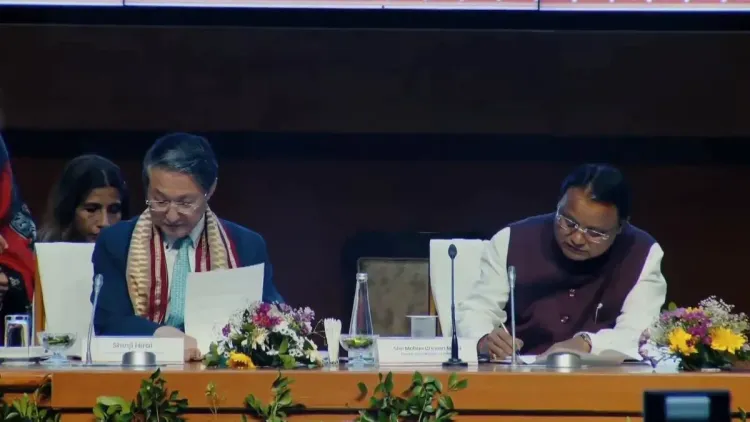
Chief Minister Mohan Charan Majhi and Tottori Governor Shinji Hirai signed the Odisha-Tottori Friendship Agreement on 11 November 2026, deepening sub-national India-Japan ties and reinforcing Odisha's foreign investment push under the Majhi government.
Key Takeaways
Odisha CM Mohan Charan Majhi and Tottori Governor Shinji Hirai signed the Odisha-Tottori Friendship Agreement on 11 November 2026 .
The pact commits both regions to bilateral cooperation in economic and cultural areas.
The agreement builds on the India-Japan Strategic and Global Partnership established in 2006 , which encourages state-prefecture level exchanges.
Tottori Prefecture is a rural region in western Japan focused on regional development; Odisha is a mineral-rich eastern Indian state actively courting foreign investment.
The Majhi government has framed the signing under its #InvestInOdisha and #SamrudhOdisha campaigns, signalling an investment intent beyond cultural exchange.
Potential follow-up steps include sector-specific MoUs and business delegations, though none have been confirmed.
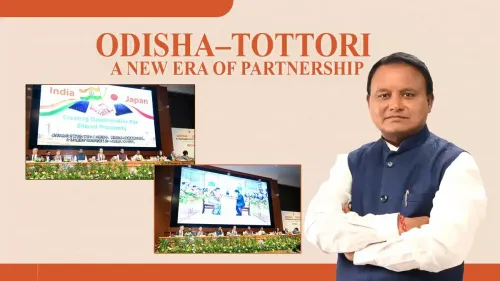
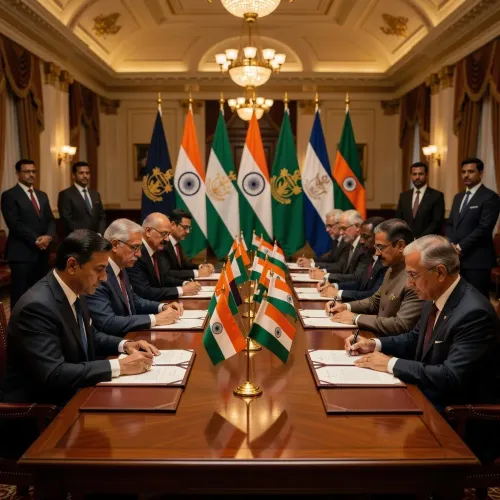
A new diplomatic bridge now connects eastern India to western Japan. On Wednesday, 11 November 2026, Chief Minister Mohan Charan Majhi and Tottori Prefecture Governor Shinji Hirai formally signed the Odisha-Tottori Friendship Agreement, committing both regions to deeper bilateral cooperation in economic and cultural spheres — a move the Chief Minister's Office of Odisha announced on X.
Sub-national diplomacy gets a new chapter
The signing marks one of the more tangible expressions of India's strategy to anchor its national-level ties with Japan all the way down to the state and prefecture level. The India-Japan Strategic and Global Partnership, established in 2006, created the architecture for exactly this kind of sub-national engagement — but bilateral agreements at the state-prefecture tier have remained relatively rare and are growing in relevance.
Tottori, a rural prefecture on Japan's Sea of Japan coast, is known for its emphasis on regional development and cross-border outreach. Odisha, by contrast, is one of India's fastest-industrialising states, sitting atop vast mineral reserves and actively courting foreign investment under the 'SamrudhOdisha' (Prosperous Odisha) banner that the Majhi government has championed since taking office in 2024.
What the pact signals for 'Invest in Odisha'
Chief Minister Majhi, who leads a government with a pronounced focus on industrial growth, has used the hashtags #InvestInOdisha and #InvestInFuture to frame this agreement not merely as a cultural gesture but as an investment signal. For Japanese companies — particularly in advanced manufacturing, robotics, and infrastructure — a formal state-level friendship agreement lowers the first barrier: political visibility and local commitment.
Japan has pursued similar regional partnerships with other Indian states, using them as a pathway to channel investment flows outside of purely central-government corridors. The Odisha-Tottori pact fits squarely into that playbook. Sector-specific MoUs and business delegations are the expected next steps, though none have been confirmed yet.
A quiet but consequential model for Indian federalism
What makes this moment worth watching is the method, not just the outcome. When a state chief minister and a foreign prefecture governor put pen to paper, they signal that economic diplomacy no longer flows exclusively through New Delhi. Odisha's coastline, mineral wealth, and newly upgraded port infrastructure make it a credible partner in that conversation.
The question now is whether the friendship agreement translates into factory floors, technology transfer corridors, and jobs — or remains a handshake on paper. Given the investment focus driving both sides, the pressure to deliver is real.
Point of View
Not just the Centre, can be active nodes in international economic relationships. For CM Majhi, it reinforces a clear post-2024 positioning: Odisha as a first-mover in attracting Japanese capital to eastern India's manufacturing corridor. Japan's consistent strategy of building prefecture-to-state ties across India suggests Tokyo sees sub-national partnerships as a durable hedge against central-government policy cycles. If the pact generates tangible investment, it could become a template other Odisha-class states emulate.
NationPress
11 Nov 2026
Frequently Asked Questions
What is the Odisha-Tottori Friendship Agreement?
The Odisha-Tottori Friendship Agreement is a bilateral pact signed on 11 November 2026 between Odisha Chief Minister Mohan Charan Majhi and Tottori Prefecture Governor Shinji Hirai to promote economic and cultural cooperation between the two regions.
Who is Mohan Charan Majhi?
Mohan Charan Majhi is the Chief Minister of Odisha, elected in 2024, heading a government focused on industrial growth and attracting foreign investment to the state.
What is Tottori Prefecture known for?
Tottori is a rural prefecture in western Japan known for its regional development initiatives and active pursuit of cross-border economic partnerships.
How does this agreement relate to India-Japan relations?
It builds on the India-Japan Strategic and Global Partnership established in 2006, which encourages sub-national exchanges between Indian states and Japanese prefectures to supplement national-level ties.
What comes next after the Odisha-Tottori pact?
Potential follow-up steps include business delegations and sector-specific MoUs in areas like technology transfer or industrial parks, though no specific agreements have been confirmed yet.