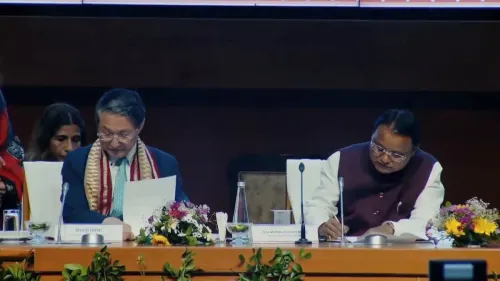
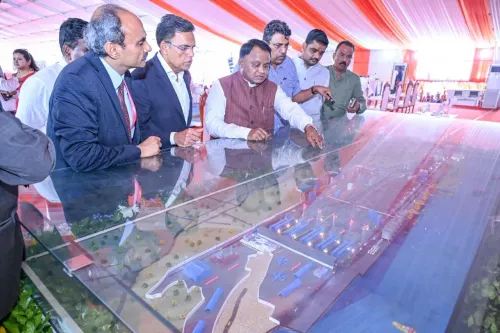
Odisha Forges Economic Partnership with Japan's Tottori Prefecture
Synopsis
Odisha's Chief Minister's Office announced a state-level partnership with Japan's Tottori Prefecture on 11 November 2026, aimed at boosting MSME investment, startup collaboration, skill development, and youth exchange under the broader India–Japan strategic framework.
Key Takeaways
Odisha has forged a new economic partnership with Tottori Prefecture , western Japan, announced on 11 November 2026 .
The four focus areas are economic cooperation, business collaboration, skill development, and youth exchange.
MSMEs, startups, and skilled professionals are the named primary beneficiaries of the tie-up.
The partnership builds on the India–Japan Strategic and Global Partnership (2006) and the India–Japan CEPA framework.
Specific MoUs or business forums between Odisha and Tottori are expected to be announced in coming months.
Odisha's outreach reflects a wider pattern of Indian states pursuing direct Japanese prefecture partnerships to attract FDI and technology.
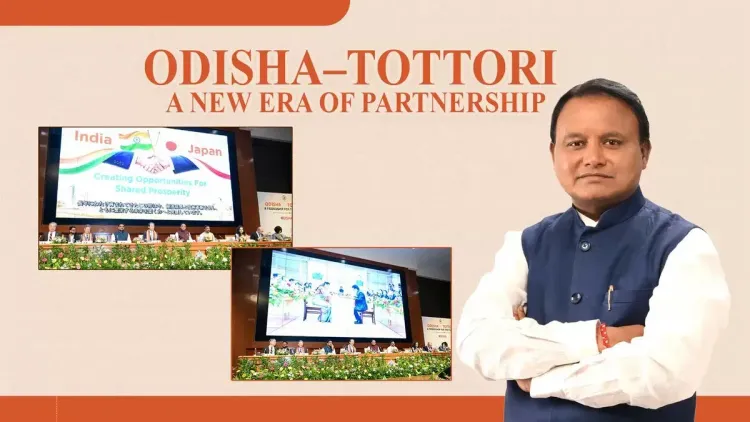
A new sub-national economic axis is taking shape between India and Japan — and Odisha is at its centre. The Chief Minister's Office of Odisha announced on Wednesday, 11 November 2026 that the state has entered a partnership with Tottori Prefecture in western Japan, targeting economic cooperation, business collaboration, skill development, and youth exchange as its four core pillars.
What the Odisha–Tottori partnership covers
The CMO's post frames the tie-up as a natural extension of the broader India–Japan civilisational bond, but its practical focus is squarely economic. MSMEs, startups, and skilled professionals are named as the primary beneficiaries — a signal that the state is positioning this linkage not just as a diplomatic gesture but as a channel for real investment flows and workforce mobility.
Tottori, Japan's least-populous prefecture, has been quietly building international economic linkages, with strengths in agriculture, light manufacturing, and technology. Its scale makes it an accessible partner for Indian states looking to pilot cross-border engagements before scaling up to larger Japanese industrial hubs.
India–Japan sub-national diplomacy: the bigger picture
This partnership fits a well-established playbook. Since the India–Japan Strategic and Global Partnership was declared in 2006, both governments have actively encouraged states and prefectures to build direct economic relationships — bypassing the slower pace of central-level negotiations. The India–Japan Comprehensive Economic Partnership Agreement (CEPA) provides the legal scaffolding; state-level deals provide the execution speed.
Odisha has been among the more aggressive Indian states in courting foreign investment, with a track record of hosting investment summits and signing sector-specific MoUs. Its eastern coastline, mineral wealth, and expanding port infrastructure make it a logical destination for Japanese manufacturers exploring supply-chain diversification beyond China.
What MSMEs and young professionals stand to gain
The explicit call-out of MSMEs and startups alongside 'youth exchange' suggests the partnership is designed with two audiences in mind: smaller enterprises seeking technology partnerships or export markets in Japan, and young Odias who could benefit from skill-transfer programmes or placement pathways in Tottori's manufacturing and services sectors. Youth exchange components in India–Japan sub-national deals have historically seeded longer-term business relationships.
Concrete MoUs, joint business forums, or structured exchange programmes are the logical next steps — and their announcement in the coming months will determine whether this partnership moves from declaration to delivery.
India and Japan have been building this architecture for two decades. Odisha just added a new brick — and the mortar is opportunity.
Point of View
The state is building a more resilient, people-to-people foundation for investment — one that is harder to unwind than a single large MoU. For Japan, deepening ties with eastern Indian states like Odisha serves its own supply-chain diversification imperative. The real test, however, lies in converting this announcement into signed agreements and measurable exchange numbers — a gap that has historically challenged similar state-prefecture partnerships across India.
NationPress
11 Nov 2026
Frequently Asked Questions
What is the Odisha–Tottori Prefecture partnership about?
It is a state-level economic partnership between Odisha and Tottori Prefecture in Japan, focused on economic cooperation, business collaboration, skill development, and youth exchange — with particular benefits for MSMEs, startups, and skilled professionals.
Where is Tottori Prefecture and why is it partnering with Odisha?
Tottori is a prefecture in western Japan known for agriculture, light manufacturing, and international economic linkages. It is building direct ties with Indian states as part of broader India–Japan economic cooperation under the two countries' strategic partnership framework.
How does this fit into India–Japan relations?
India and Japan declared a Strategic and Global Partnership in 2006, which actively encourages sub-national economic engagements between Indian states and Japanese prefectures. This Odisha–Tottori tie-up is part of that wider architecture, also supported by the India–Japan Comprehensive Economic Partnership Agreement.
What will MSMEs and startups gain from the Odisha–Tottori partnership?
MSMEs and startups are expected to gain access to Japanese technology partnerships, potential export market linkages, and business collaboration opportunities with Tottori-based firms, though specific MoUs have not yet been announced.
What is 'Invest in Odisha' and how does this partnership relate to it?
'Invest in Odisha' is the state government's investment promotion initiative aimed at attracting domestic and foreign investment. The Tottori partnership is tagged under this initiative, signalling it is part of Odisha's broader FDI attraction strategy.