What Directives Did Odisha CM Issue Regarding DMF Reports?

Synopsis
Odisha's Chief Minister Mohan Charan Majhi has mandated departmental secretaries to submit detailed annual and audit reports for each District Mineral Foundation. With over Rs 34,052 crore collected, Majhi emphasizes utilizing funds for essential services in mining-affected areas, promising a brighter future for local residents.
Key Takeaways
CM Majhi emphasizes the submission of annual and audit reports for DMFs.
Over Rs 34,052 crore has been collected from DMF districts.
55% of the funds have been utilized for various projects.
Focus on fulfilling basic community needs such as education and health.
Endowment Funds will be established for future livelihood opportunities.
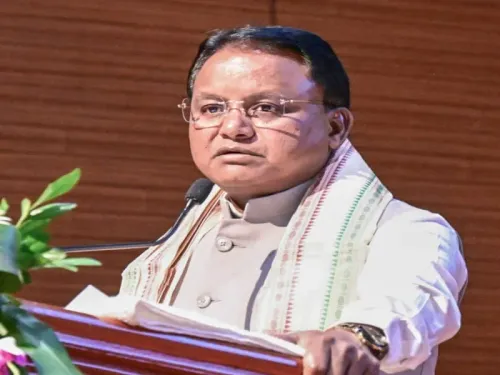
Bhubaneswar, Dec 2 (NationPress) In a crucial meeting held on Tuesday, Odisha Chief Minister Mohan Charan Majhi instructed the secretaries of various departments to present their annual reports alongside the audit reports for each District Mineral Foundation (DMF).
Majhi presided over a significant high-level meeting at Lok Seva Bhawan in Bhubaneswar, focusing on the DMFs.
An official release revealed that by the end of October this year, a total of Rs 34,052 crore had been accumulated from 11 DMF districts within the state, with approximately 55 percent allocated to various projects.
CM Majhi urged officials to enhance spending to guarantee the provision of essential services to the populace. The meeting also highlighted that following the restructuring of the DMFs in 10 districts, Trust Board meetings have already taken place.
During the session, the Chief Minister called upon departmental secretaries to submit the annual and audit reports for each DMF and to utilize the funds sourced from minor minerals under the DMF across the districts.
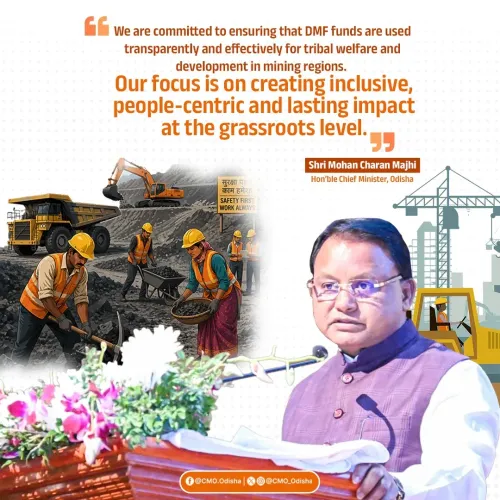
“These funds must be directed towards addressing the fundamental needs of the community, including education, healthcare, water supply, and communication infrastructure, ensuring that all essential services are available to residents in proximity to mining areas,” instructed CM Majhi.
Officials were directed to accelerate the execution of various initiatives by consistently holding DMF Trust Board meetings.
Additionally, villages that are directly and indirectly impacted by mining activities will be identified under the DMF framework. Majhi also emphasized the need for authorities to implement necessary measures to mitigate pollution affecting communities surrounding mining zones.
District administrations where DMF collections exceed Rs 10 crore have been mandated to set up an Endowment Fund, which will be invested in government securities, scheduled bank bonds, or fixed deposits.
The Chief Minister noted that this endowment fund will serve to create future livelihood opportunities in regions where mineral deposits have been depleted or where mining activities have ceased for any reason.
Point of View
CM Majhi's directives highlight a proactive approach to financial transparency and resource allocation in Odisha. The emphasis on addressing basic needs in mining-affected areas reflects a commitment to social responsibility, aligning with national interests for sustainable development and community welfare.
NationPress
2 Oct 2026
Frequently Asked Questions
What is the District Mineral Foundation (DMF)?
The District Mineral Foundation (DMF) is a fund established to utilize the revenues generated from mining activities to provide for the welfare of local communities affected by mining.
How much has been collected from DMF in Odisha?
As of October this year, a total of Rs 34,052 crore has been collected from 11 DMF districts in Odisha.
What will the endowment fund be used for?
The endowment fund will be utilized to create livelihood opportunities for future generations in areas where mineral deposits have been exhausted or mining operations have ceased.
What areas will benefit from the DMF funds?
The DMF funds will be directed towards fulfilling basic needs such as education, health, water supply, and communication infrastructure in mining-affected areas.
Why is pollution control necessary around mining zones?
Pollution control is essential to protect the health and well-being of communities living near mining areas, where environmental degradation can have severe impacts.