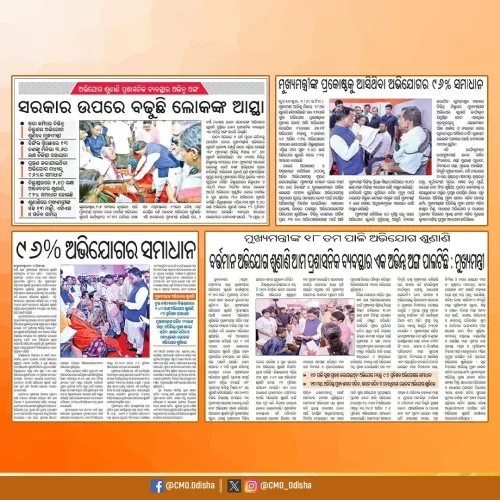
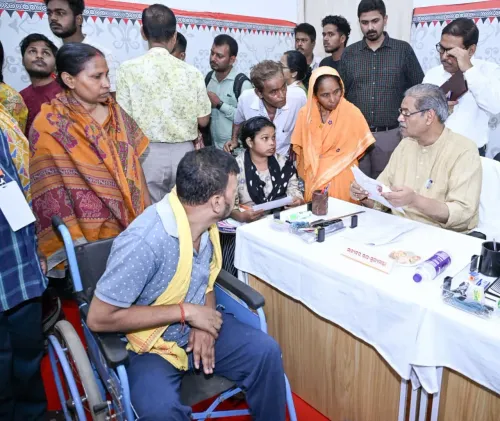
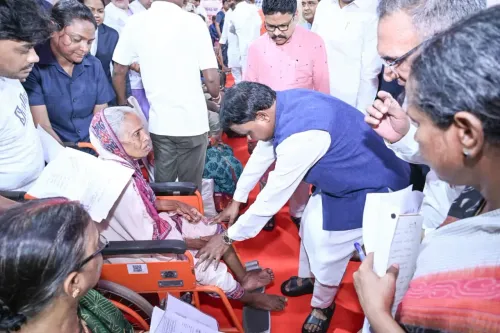
CM Majhi's Office Resolves 96% Grievances, 19th Hearing Gets 700+ Complaints
Synopsis
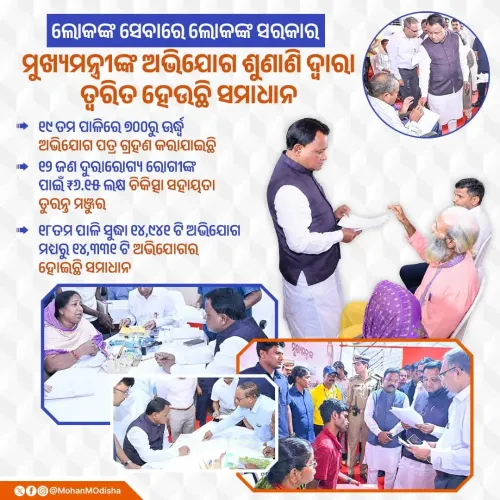
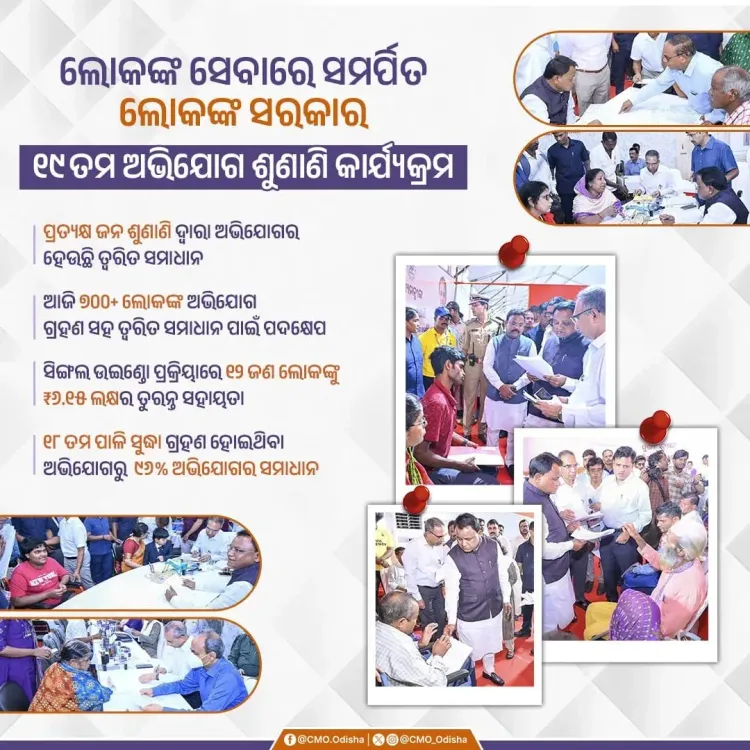
Odisha's Chief Minister's Office reports that the 19th Jan Abhiyog Shunan Karyakram received over 700 complaints, disbursed ₹6.15 lakh to 12 people via Single Window, and achieved a 96% resolution rate across the programme's first 18 editions — underlining CM Mohan Majhi's governance accountability push.
Key Takeaways
The 19th Jan Abhiyog Shunan Karyakram received more than 700 complaints from Odisha citizens.
12 individuals received immediate financial assistance totalling ₹6.15 lakh through the Single Window system during the 19th session.
A cumulative 96 per cent of complaints filed up to the 18th edition have been successfully resolved.
The programme is a recurring initiative of Chief Minister Mohan Charan Majhi 's office, institutionalised since the BJP government took charge in June 2024 .
The Single Window mechanism provides on-the-spot financial or procedural relief, cutting through conventional bureaucratic delays.
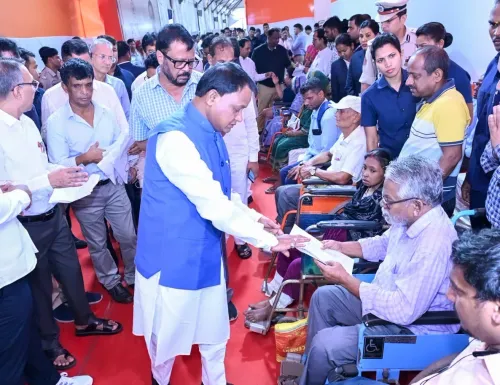
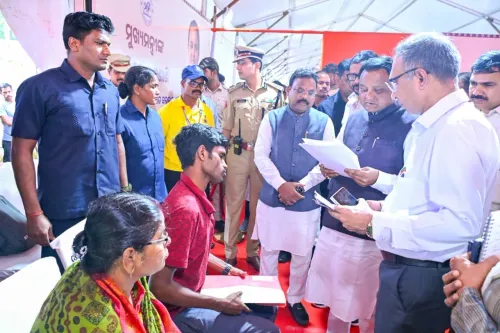
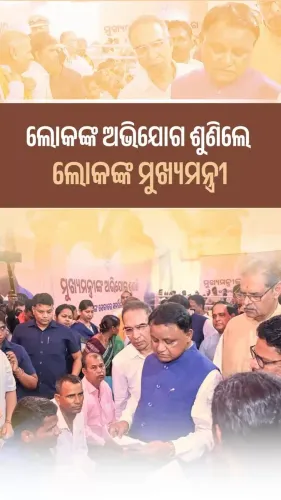
The Chief Minister's Office of Odisha announced on Monday, 27 July 2026 that the 19th Jan Abhiyog Shunan Karyakram (public grievance hearing programme) received more than 700 complaints, with 12 individuals receiving immediate financial assistance of ₹6.15 lakh through the Single Window system. The office also reported that 96 per cent of all complaints received up to the 18th edition of the programme have been successfully resolved.
Context
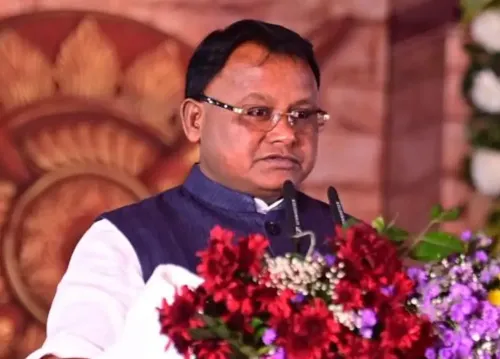
The CMO's post, written in Odia, states that Chief Minister Mohan Charan Majhi — referred to as Manyabar Mukhyamantri (Honourable Chief Minister) — remains 'continuously committed to the swift resolution of public problems.' The 19th edition of the Jan Abhiyog Shunan Karyakram marks another instalment in a periodic series of structured public grievance hearings conducted directly by the Chief Minister's Office.
The programme operates alongside a Single Window mechanism designed to disburse immediate financial or procedural relief to select complainants on the spot, bypassing longer bureaucratic timelines.
Policy Backdrop
Mohan Charan Majhi assumed office as Chief Minister of Odisha in June 2024, leading the BJP-led state government. Structured grievance hearings have since been institutionalised as a recurring accountability exercise, with each edition tracked by complaint volumes and resolution rates.
Across Indian states, periodic public grievance hearings and single-window redressal mechanisms have become a standard tool for projecting responsive governance. Odisha's model combines direct public access to the Chief Minister's Office with quantified outcome reporting — a format that allows the administration to demonstrate accountability through verifiable metrics.
Stakeholders and Impact
The primary beneficiaries are Odisha's ordinary citizens — particularly those whose complaints have historically struggled through conventional bureaucratic channels. The Single Window disbursement of ₹6.15 lakh to 12 individuals in the 19th session alone illustrates the programme's direct financial impact on vulnerable complainants.
A cumulative 96 per cent resolution rate across the first 18 editions is the headline governance metric the administration is highlighting, positioning the programme as evidence of what the CMO's post calls 'lokanka sarkar ra dayitvabodha o sushasana prati pratibaddhata' — 'the people's government's sense of responsibility and commitment to good governance.'
What's Next
Attention will now turn to the 20th edition of the Jan Abhiyog Shunan Karyakram, which will be closely watched for whether complaint volumes and resolution rates hold steady or improve. A consolidated annual report on grievance outcomes and pending cases would provide a fuller picture of the programme's reach across Odisha's districts.
For now, the administration's public reporting of a near-complete resolution rate sets a high benchmark — and any future shortfall will be measured against it.
Point of View
The administration is building a documented performance trail that is harder to contest than qualitative claims. The Single Window disbursement model, which delivers immediate financial relief in the hearing itself, is particularly politically potent because its beneficiaries experience the state's responsiveness directly. Whether the resolution metrics hold up to independent audit will ultimately determine how durable this governance narrative proves to be.
NationPress
26 Oct 2026
Frequently Asked Questions
What is the Jan Abhiyog Shunan Karyakram in Odisha?
The Jan Abhiyog Shunan Karyakram is a periodic public grievance hearing programme run by the Chief Minister's Office of Odisha, where citizens can file complaints directly and receive redressal — including immediate financial assistance through a Single Window system.
How many complaints were received in the 19th Jan Abhiyog Shunan Karyakram?
More than 700 complaints were received during the 19th edition of the Jan Abhiyog Shunan Karyakram, according to the Chief Minister's Office of Odisha.
What is the grievance resolution rate of Odisha's CM grievance programme?
As of the 18th edition of the Jan Abhiyog Shunan Karyakram, 96 per cent of all complaints received have been successfully resolved, according to the Odisha CMO.
What is the Single Window system in Odisha's grievance hearing?
The Single Window system is an administrative mechanism within the Jan Abhiyog Shunan Karyakram that provides immediate financial or procedural assistance to select complainants on the spot, without requiring them to go through longer bureaucratic processes.
Who is Mohan Charan Majhi and when did he become Odisha CM?
Mohan Charan Majhi is the Chief Minister of Odisha, heading the BJP-led state government since June 2024. His office has institutionalised the Jan Abhiyog Shunan Karyakram as a recurring citizen grievance redressal programme.