Odisha CMO Champions JAM Trinity for Welfare Delivery
Synopsis
The Chief Minister's Office of Odisha invoked PM Modi's JAM trinity — Jan Dhan, Aadhaar, and mobile — to argue that genuine good governance means every government rupee reaches its rightful beneficiary directly, with no leakage or corruption.
Key Takeaways
The Chief Minister's Office of Odisha posted on 27 October 2026 championing the JAM trinity as the cornerstone of good governance.
The post defines good governance as ensuring every government rupee reaches the rightful, eligible beneficiary directly.
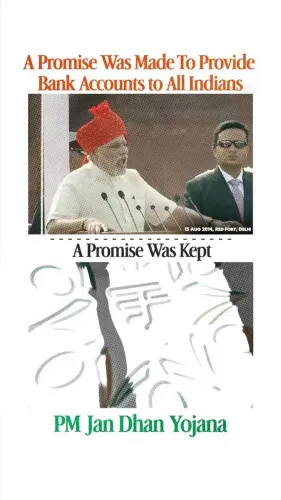
The JAM trinity — Jan Dhan accounts, Aadhaar biometric ID, and mobile phones — has been in national deployment since 2014 under the Direct Benefit Transfer framework.
The framework is credited with curbing corruption , eliminating middlemen, and closing off leakages in welfare spending.
Odisha has integrated central DBT platforms for schemes including pensions, scholarships, and food subsidies .
The CMO's bilingual Odia-English post signals digital welfare delivery as a formal political and rights-based commitment of the state government.
Every rupee of public money that vanishes before reaching a poor family is a failure of governance — and it is precisely this leak that the Chief Minister's Office of Odisha placed at the centre of its message on Tuesday, 27 October 2026, invoking the JAM trinity as the sharpest instrument yet devised to seal it.
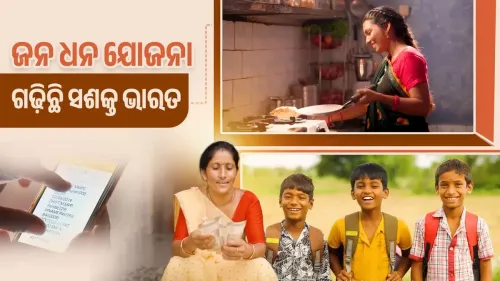
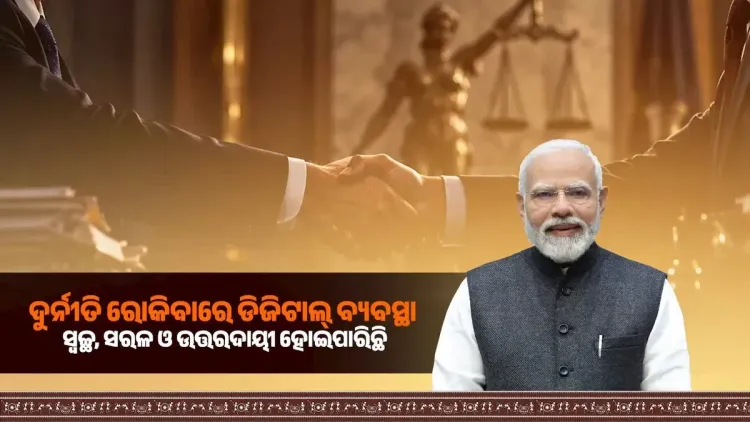
The post, shared in both Odia and English, frames good governance in unambiguous terms: 'ସୁଶାସନର ପ୍ରକୃତ ଅର୍ଥ' — 'the true meaning of good governance' — is ensuring every rupee reaches the rightful beneficiary. It credits Prime Minister Narendra Modi's 'visionary leadership' and the JAM trinity of Jan Dhan accounts, Aadhaar biometric identity, and mobile connectivity for making digital welfare delivery 'more transparent, simpler and accountable.'
What the JAM Trinity Actually Does
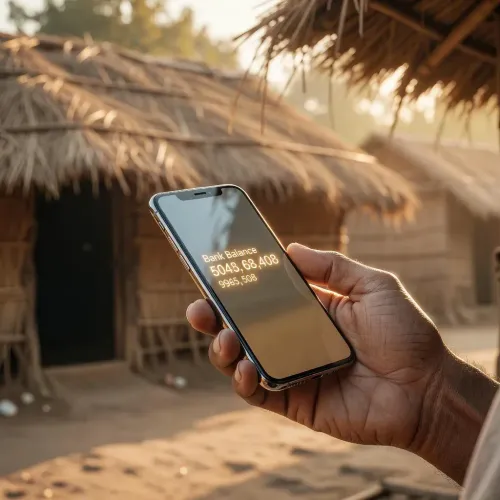
Launched nationally from 2014 onward as part of India's Direct Benefit Transfer (DBT) drive, the JAM framework was designed to break the chain of middlemen, ghost beneficiaries, and diverted funds that had long hollowed out welfare spending. By linking payments directly to an Aadhaar-seeded Jan Dhan bank account and authenticating via mobile, the system collapses the distance between treasury and target household to a single digital transaction.
The logic is stark: a subsidy that once passed through five hands now goes through zero. That structural shortcut is what the Odisha CMO is celebrating — not as a technical footnote, but as a moral proposition about the state's duty to the poor.
Odisha's Integration with the DBT Architecture
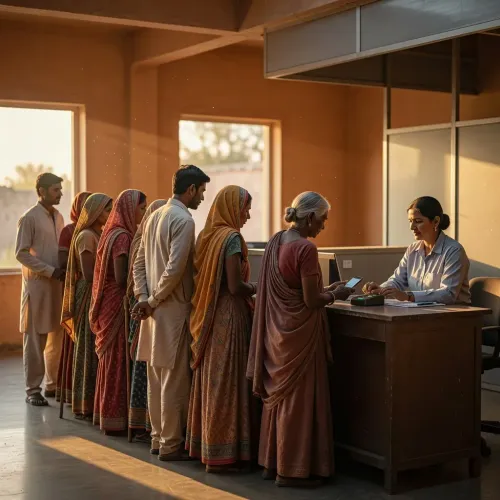
Odisha has progressively plugged central DBT platforms into its own beneficiary databases, applying the JAM layer to pensions, scholarships, and food subsidies, among other schemes. The state maintains its own beneficiary rolls, which, when seeded with Aadhaar and Jan Dhan data, allow scheme transfers to reach recipients directly — shrinking the window for leakage at the state level too.
The CMO's bilingual post signals that this governance philosophy is now part of Odisha's official political vocabulary: digital infrastructure is not merely an administrative convenience but a rights-delivery mechanism for the poor and eligible.
The proof of the framework's value will ultimately be in audited DBT savings data and the pace at which remaining schemes are brought onto the platform — numbers Odisha's welfare departments are best placed to publish next.
Point of View
Signalling ideological continuity with the BJP-led Union government's DBT architecture. For Odisha, which only came under BJP rule relatively recently, such messaging reinforces the party's welfare-delivery brand while building political capital among the state's large rural and low-income voter base. The JAM framing also conveniently shifts the accountability lens from outcomes — actual beneficiary coverage and exclusion errors — to process transparency, which can be a softer standard to meet. Analysts will watch whether the rhetoric is matched by published DBT savings figures or new scheme on-boardings onto the JAM platform.
NationPress
27 Oct 2026
Frequently Asked Questions
What is the JAM trinity in India?
The JAM trinity stands for Jan Dhan bank accounts, Aadhaar biometric identity, and Mobile phones. Together, they form the backbone of India's Direct Benefit Transfer system, enabling welfare payments to reach beneficiaries directly without intermediaries.
How does the JAM trinity reduce corruption in welfare schemes?
By routing transfers directly to an Aadhaar-seeded Jan Dhan account and verifying recipients via mobile, the JAM framework eliminates middlemen and ghost beneficiaries, closing off the most common channels through which public funds were diverted before reaching the poor.
Which welfare schemes in Odisha use Direct Benefit Transfer?
Odisha has integrated DBT platforms for several schemes including pensions, scholarships, and food subsidies , linking them to Aadhaar-seeded beneficiary databases to enable direct transfers.
When did India launch the JAM trinity and Direct Benefit Transfer?
The JAM framework was rolled out nationally from 2014 onward under the Direct Benefit Transfer initiative to link welfare payments to Aadhaar-seeded bank accounts and reduce leakage.
What did the Odisha Chief Minister's Office post about governance?
On 27 October 2026 , the Odisha CMO posted in Odia and English that the true meaning of good governance is ensuring every government rupee reaches its rightful beneficiary, citing PM Modi's JAM trinity as the tool making welfare delivery transparent and corruption-free.