Odisha CMO Hails Police Role in Defeating Naxal Violence
Synopsis
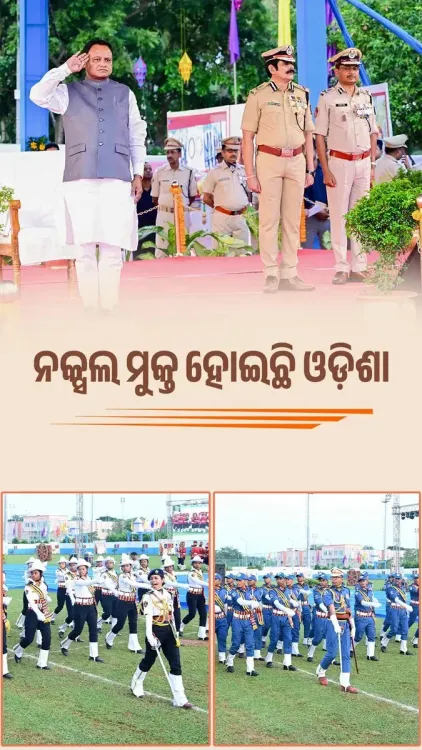
The Chief Minister's Office of Odisha commended the state police on 31 October 2026 for strengthening law and order and credited their sustained contribution to freeing the state from Naxal and Maoist violence, while reaffirming the government's commitment to police modernisation and resource enhancement.
Key Takeaways
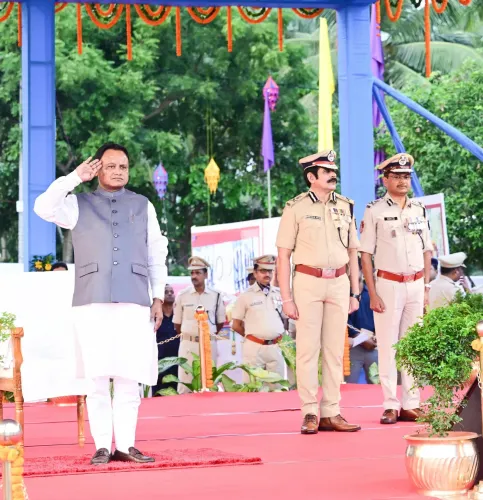
Odisha CMO publicly credited the state police with creating peace and security across the state on 31 October 2026 .
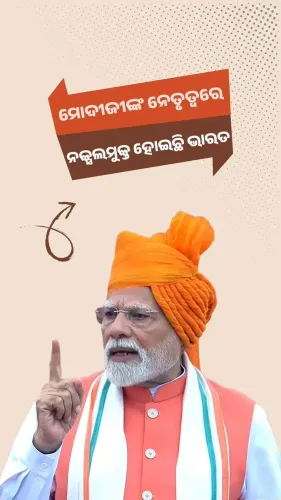
The government declared its 'contribution to freeing Odisha from Naxal and Maoist violence commendable' — framing the counter-insurgency effort as substantially successful.
A firm commitment was made to continued police modernisation , human resource expansion, and provision of necessary facilities.
Odisha has coordinated with central paramilitary forces under the national Left Wing Extremism (LWE) policy framework since the early 2010s, producing a sustained reduction in incidents.
Tribal communities in southern and western Odisha are the primary civilian beneficiaries of improved security conditions.
The next key data points are the Ministry of Home Affairs annual LWE report and Odisha's upcoming state budget allocations for police technology.
From the forests of southern Odisha to the state's western hinterland, a sustained campaign against left-wing extremism has quietly reshaped the security landscape — and on Saturday, 31 October 2026, the Chief Minister's Office of Odisha put that transformation on record, crediting the state police with delivering peace where Naxal and Maoist violence once held sway.
What the CMO's Office Said — and Why It Matters
The post, shared in both Odia and English, declared that 'the dedication and courage of Odisha Police have strengthened law and order and ensured peace and security across the state.' It went further, calling the force's contribution to 'freeing Odisha from Naxal and Maoist violence commendable' — language that signals a government confident enough to frame the counter-insurgency effort in the past tense, as a mission substantially accomplished.
The statement also flagged a forward commitment: 'The government remains committed to police modernisation and strengthening resources.' That phrase — modernisation plus resources — is the twin engine driving Odisha's security strategy, covering everything from surveillance technology and specialised units to expanded recruitment and welfare for personnel.
A Decade of Anti-Naxal Operations Behind the Headline
The confidence in the CMO's language is not accidental. Since the early 2010s, Odisha has operated within the national Left Wing Extremism (LWE) policy framework, coordinating state police with central paramilitary forces to conduct joint operations across the affected southern and western districts. The approach combined hard security pressure with development outreach to tribal communities — the population most caught between the state and the insurgents.
That dual strategy produced a sustained, measurable reduction in Naxal-related incidents over the past decade, a trend tracked annually by the Ministry of Home Affairs. Districts once classified as 'most affected' have progressively moved off the critical list. The CMO post is, in effect, a public audit of that long arc.
What Police Modernisation Means on the Ground
When Odisha's government talks about modernisation, it means concrete upgrades: better communications equipment, armoured vehicles, drone surveillance, forensic capacity, and — critically — filling vacancies in the force. Manpower gaps have historically been a structural vulnerability in LWE-affected states, where difficult terrain and remote postings make recruitment and retention hard.
Tribal communities across Malkangiri, Kandhamal, Koraput and neighbouring districts stand as the most direct beneficiaries. Reduced violence means roads get built, schools stay open, and healthcare workers can move without armed escort. Security and development, in this framework, are not sequential — they are simultaneous.
The Numbers to Watch Next
The real scorecard will arrive when the Ministry of Home Affairs releases its next annual LWE report, and when Odisha's state budget reveals fresh allocations for police technology or new specialised units. Those figures will tell whether the government's public confidence is backed by fresh investment — or whether this is consolidation of gains already made.
Either way, the message from Bhubaneswar is unambiguous: Odisha intends to hold the ground its police have won, and then push further.
Point of View
The government signals a transition from crisis management to institutional consolidation, a shift that carries electoral as well as administrative weight. The emphasis on modernisation and manpower also quietly signals to the Centre that Odisha is a model LWE-affected state deserving of continued federal funding and paramilitary support. Watch whether fresh budget allocations follow the rhetoric — that is where political intent becomes verifiable policy.
NationPress
1 Nov 2026
Frequently Asked Questions
What did the Odisha CMO say about Odisha Police in October 2026?
The Chief Minister's Office of Odisha praised the state police on 31 October 2026 for strengthening law and order, ensuring peace and security, and making a commendable contribution to freeing the state from Naxal and Maoist violence.
Has Odisha successfully reduced Naxal violence?
Odisha has recorded a sustained reduction in Naxal-related incidents over the past decade through joint operations with central paramilitary forces and development programmes in affected districts, though precise recent figures are subject to annual Ministry of Home Affairs reporting.
What does Odisha Police modernisation involve?
Police modernisation in Odisha covers upgrades to communications equipment, surveillance technology, armoured vehicles, forensic capacity, and efforts to expand recruitment and fill manpower vacancies in LWE-affected districts.
Which districts in Odisha were most affected by Naxal violence?
Southern and western Odisha districts including Malkangiri, Koraput, and Kandhamal were historically the most affected by Naxal and Maoist activity, with tribal communities bearing the greatest impact.
What is India's Left Wing Extremism policy framework?
India's national LWE policy framework, coordinated by the Ministry of Home Affairs, involves joint operations between state police and central paramilitary forces alongside development programmes in affected areas; Odisha has been part of this framework since the early 2010s.