Odisha CMO Highlights Record Paddy Procurement Under CM Majhi
Synopsis
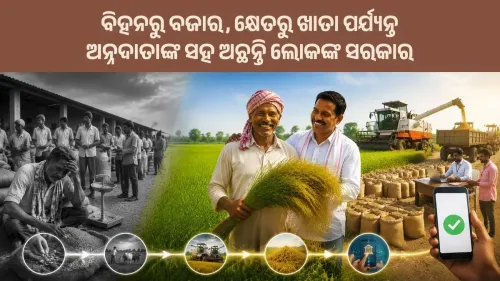
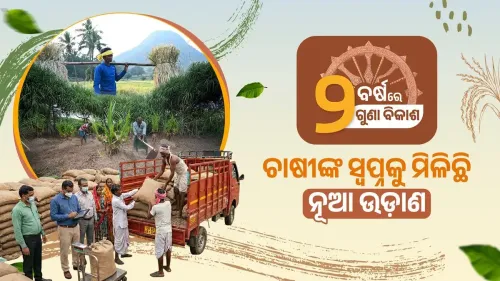
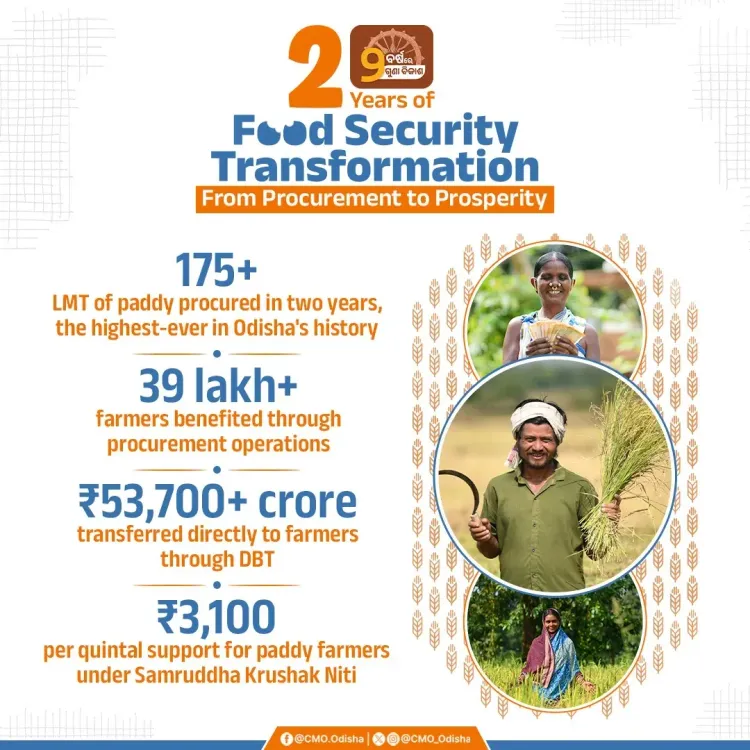
The Chief Minister's Office of Odisha on 25 June 2026 announced the state's highest-ever paddy procurement, timely Direct Benefit Transfers, and expanded farmer support under the Samruddha Krushak Niti, attributing the milestones to CM Mohan Charan Majhi's leadership since 2024.
Key Takeaways
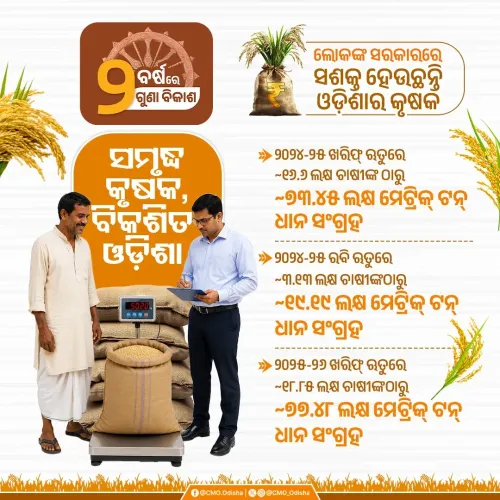
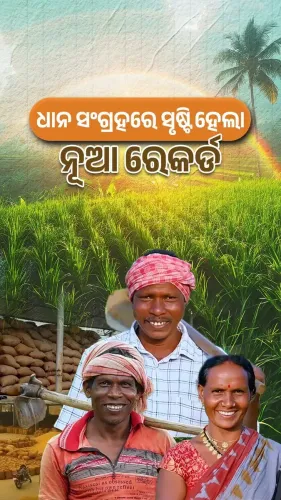
The Chief Minister's Office of Odisha announced Odisha's highest-ever paddy procurement in the state's history as of June 2026 .
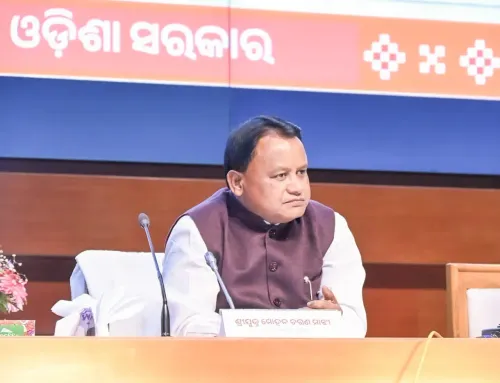
Chief Minister Mohan Charan Majhi has led the BJP government in Odisha since 2024 , with a stated focus on agriculture and rural welfare.
The Samruddha Krushak Niti is the state's consolidated farmer support policy, covering procurement reform and income measures.
Timely Direct Benefit Transfers (DBT) to farmers are cited as a key governance reform under the current administration.
The post tags @PMOIndia , aligning state agricultural achievements with central government food security priorities.
Kharif 2026 procurement data and upcoming state budget announcements will be the next indicators of policy progress.
The Chief Minister's Office of Odisha on Thursday, 25 June 2026, highlighted the state's agricultural achievements under Chief Minister Shri Mohan Charan Majhi, citing record paddy procurement, timely Direct Benefit Transfers, and expanded farmer support under the Samruddha Krushak Niti as evidence of a strengthened food security framework.
Context
The post by @CMO_Odisha states that Odisha has achieved 'the highest-ever paddy procurement in the state's history,' attributing this milestone to reforms driven under CM Majhi's leadership since 2024. The statement links timely Direct Benefit Transfers (DBT) and the Samruddha Krushak Niti to the government's stated commitment to farmer welfare and prosperity. The post also tags @PMOIndia, signalling alignment with central government priorities on food security and farmer income.
Odisha is one of eastern India's major paddy-producing states, with state agencies coordinating procurement operations alongside the Food Corporation of India (FCI) under Minimum Support Price (MSP) mechanisms. The government's communication frames the current administration's record as a decisive shift toward transparent, farmer-centric governance.
Policy Backdrop
Following the 2024 state elections, the BJP-led government in Odisha expanded paddy procurement operations and DBT mechanisms, building on infrastructure previously established under earlier state welfare frameworks. The Samruddha Krushak Niti represents the current administration's consolidated policy for farmer income support, procurement reform, and rural economic uplift.
Across India, states have increasingly adopted digital DBT and transparent procurement systems since 2018, with the aim of reducing leakages and ensuring direct, verifiable payments to farmers. Odisha's claimed procurement record fits within a national pattern of rising state-level purchases under MSP operations, as state governments compete to demonstrate agricultural governance credentials.
Stakeholders and Impact
Odisha's paddy farmers are the primary beneficiaries of the policies cited in the post. Timely DBT payments directly reduce dependence on intermediaries and informal credit, which has historically been a pressure point for cultivators during and after harvest seasons. Enhanced procurement coverage, if sustained, can provide price stability across the state's agricultural belts.
The government's emphasis on 'transparent governance' and 'record procurement' also carries political significance, as the Majhi administration seeks to consolidate its agricultural policy identity ahead of future budget cycles. The tagging of @PMOIndia underscores an effort to position state achievements within the broader national narrative on farmer welfare championed by the central government.
What's Next
The release of Kharif 2026 procurement data will be a critical test of the government's record claims, providing verifiable figures on volumes purchased, farmers covered, and DBT amounts disbursed. Any upcoming state budget announcements expanding the scope or funding of the Samruddha Krushak Niti will indicate whether the policy momentum highlighted in the post translates into concrete fiscal commitments.
As Odisha positions itself as a model for state-level food security governance, the administration's ability to sustain procurement volumes and ensure last-mile DBT delivery will determine the long-term credibility of its farmer-welfare narrative.
Point of View
Distinguishing itself from the previous dispensation's welfare architecture. This pattern of state governments amplifying MSP and DBT achievements through official social media has become a standard political communication tool across India, particularly ahead of budget cycles and election seasons. The real test will be whether Kharif 2026 data substantiates the record procurement claim with verifiable, auditable figures.
NationPress
25 Jun 2026
Frequently Asked Questions
What is the Samruddha Krushak Niti in Odisha?
The Samruddha Krushak Niti is an Odisha state government policy introduced under Chief Minister Mohan Charan Majhi that provides enhanced procurement support, Direct Benefit Transfers, and income measures for paddy farmers in the state.
What did the Odisha CMO announce on 25 June 2026?
The Chief Minister's Office of Odisha announced that the state had achieved its highest-ever paddy procurement, along with timely Direct Benefit Transfers and expanded farmer support under the Samruddha Krushak Niti.
Who is the Chief Minister of Odisha in 2026?
Mohan Charan Majhi is the Chief Minister of Odisha, leading a BJP government that came to power after the 2024 state elections.
How does Odisha's paddy procurement work?
Odisha's paddy procurement operates through state agencies in coordination with the Food Corporation of India under the central Minimum Support Price mechanism, with payments increasingly routed through Direct Benefit Transfers to farmers' bank accounts.
What is the significance of Odisha tagging PMO India in its farm welfare posts?
By tagging @PMOIndia, the Odisha government signals that its state-level agricultural achievements are aligned with the central government's national priorities on food security and farmer income, reinforcing cooperative federalism in policy communication.