Odisha CMO Highlights Tech-Driven Mining Reforms in Two Years
Synopsis
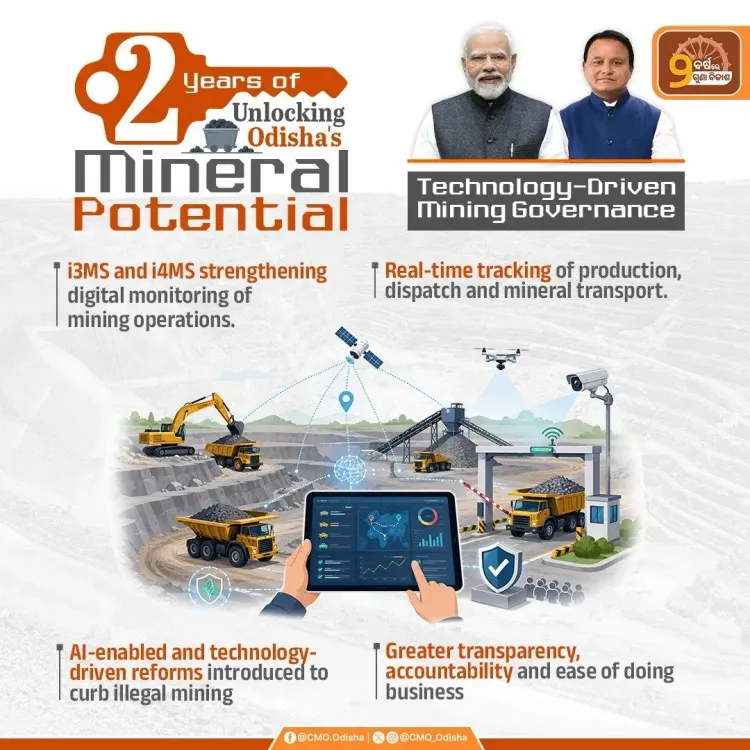
The Chief Minister's Office of Odisha marked two years in government by highlighting a technology-driven overhaul of the state's mining sector, citing digital platforms, real-time monitoring and AI-enabled tools as key drivers of transparency and operational efficiency in one of India's most mineral-rich states.
Key Takeaways
The Chief Minister's Office of Odisha on 14 July 2026 credited digital platforms, real-time monitoring and AI-enabled systems with transforming the state's mining governance over two years.
Odisha holds major deposits of iron ore, bauxite, chromite and coal, making mining administration a high-stakes governance priority.
The state was among the first to adopt e-auctions for mining leases following the 2015 MMDR Act amendment and launched the i3MS portal by 2016–17 to digitise royalty payments and permits.
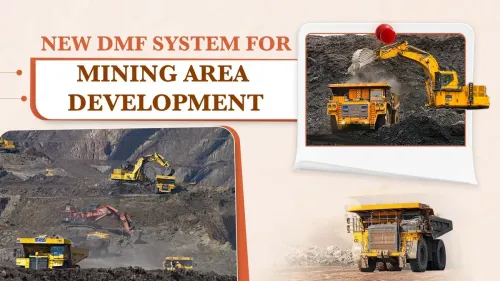
The District Mineral Foundation (DMF) , funded by mining royalty shares, is positioned to benefit from greater auditability under the digital framework.
The announcement aligns with the central government's National Mineral Policy 2019 push for reduced discretion and automated compliance across all mining states.
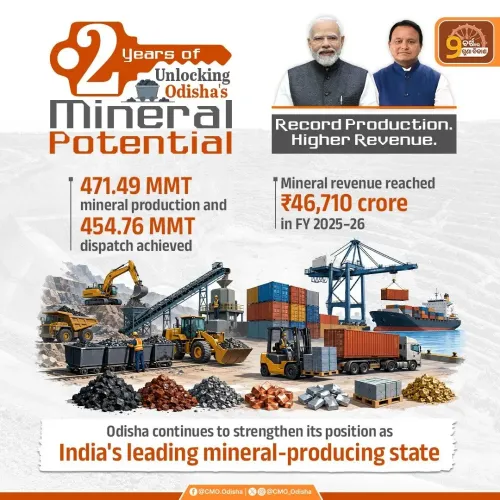
Concrete performance data — royalty figures, lease counts, DMF disbursements — will be the key test of the reform claims in the months ahead.
The Chief Minister's Office of Odisha on Tuesday, 14 July 2026, highlighted the state's shift toward a technology-driven mining ecosystem, citing digital platforms, real-time monitoring and AI-enabled systems as pillars of governance reform over the past two years under the hashtag #2YearsofLokankaSarakar (Two Years of Lokankas Government).
Context
The post, shared on the official CMO Odisha account, stated that 'innovation is reshaping the future of mining in Odisha' and credited technology adoption with strengthening transparency and improving operational efficiency. The communication forms part of a broader campaign under #BikasharaDharaOdishaSara — broadly meaning 'a stream of development across all of Odisha' — marking two years of the current state government.
Odisha is among India's most mineral-rich states, holding major deposits of iron ore, bauxite, chromite and coal that contribute substantially to both state revenue and national industrial output. Mining administration has long been a politically sensitive area, making governance reforms in the sector especially consequential.
Policy Backdrop
The state's push toward digital mining governance has deep roots. Following the 2015 amendment to the Mines and Minerals (Development and Regulation) Act, Odisha became one of the first states to allocate mining leases through transparent e-auctions, reducing discretionary allocation. By 2016–17, the state had rolled out the Integrated Mines and Minerals Management System (i3MS) portal to digitise lease applications, royalty payments and transportation permits.
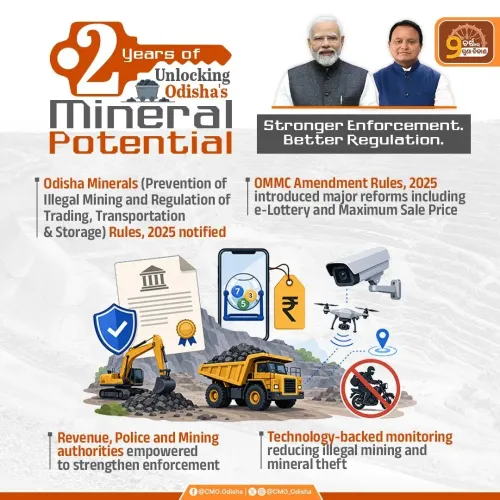
The current government's two-year record, as articulated by the CMO, builds on this foundation by layering AI-enabled tools and real-time monitoring onto existing digital infrastructure. This aligns with the central government's National Mineral Policy 2019 and directions from the Ministry of Mines urging states to reduce discretion, curb illegal extraction and adopt automated compliance frameworks.
The District Mineral Foundation (DMF), created under the same 2015 MMDR Act amendment, channels a share of mining royalties toward welfare and development of communities in mining-affected areas — a mechanism that gains credibility when underpinned by transparent, auditable digital systems.
Stakeholders and Impact
The primary beneficiaries of a more transparent mining ecosystem are diverse: mining leaseholders gain clearer compliance pathways and reduced regulatory friction, while tribal communities in mineral-rich districts stand to benefit from more accountable DMF fund flows. State revenue authorities gain better audit trails through real-time data.
Across India, states that have digitised mining administration report improved royalty collection and reduced instances of illegal transportation of minerals. For Odisha, where mining revenue is a critical budget line, the efficiency gains from such reforms carry direct fiscal implications.
What's Next
Attention will now turn to whether the state government tables concrete performance data — royalty collection figures, number of leases digitised, DMF disbursement records — to substantiate the claims made in the anniversary communication. Any new mineral-block auctions or changes to revenue-sharing rules expected in the coming assembly session will serve as a practical test of the reformed ecosystem's depth and durability.
As India's mining sector faces growing pressure to balance extraction with environmental accountability and community welfare, Odisha's stated model of a 'smarter, technology-driven mining ecosystem' may draw scrutiny as much as admiration from peer states and policy observers.
Point of View
But the absence of hard numbers — royalty collection data, leases migrated to digital systems, DMF utilisation rates — leaves the claim in the realm of political communication rather than verified policy outcome. Odisha's early-mover advantage in e-auctions and the i3MS portal gives the narrative a credible foundation, yet the specific AI and real-time monitoring systems cited for the two-year window remain unverified in public records. The broader pattern is clear: across India, mineral-rich states are competing to signal administrative modernisation as a proxy for investor confidence and anti-corruption credibility. Whether Odisha's model translates into measurable revenue gains and community welfare improvements will determine if this becomes a replicable template or a campaign talking point.
NationPress
14 Jul 2026
Frequently Asked Questions
What mining reforms has the Odisha government introduced in the last two years?
The Chief Minister's Office of Odisha has highlighted the adoption of digital platforms, real-time monitoring systems and AI-enabled tools to improve transparency and operational efficiency in the state's mining sector, building on earlier reforms like e-auctions and the i3MS portal.
What is the i3MS portal in Odisha?
The Integrated Mines and Minerals Management System (i3MS) is an online portal launched by Odisha in 2016–17 to digitise mining lease applications, royalty payments and mineral transportation permits, reducing paperwork and discretionary processes.
How does the District Mineral Foundation benefit communities in Odisha?
The District Mineral Foundation, created under the 2015 MMDR Act amendment, directs a share of mining royalties toward welfare and development projects in communities affected by mining operations in Odisha.
Is Odisha one of the top mining states in India?
Yes, Odisha is among India's most mineral-rich states, with significant deposits of iron ore, bauxite, chromite and coal that contribute substantially to state revenue and national industrial supply chains.
What is the National Mineral Policy 2019 and how does it relate to Odisha?
The National Mineral Policy 2019 issued by the central government directed all states to reduce administrative discretion, curb illegal mineral extraction and adopt real-time data platforms; Odisha's ongoing digitisation efforts are broadly aligned with these national directives.