CM Majhi: Odisha Moving from Minerals to Microchips
Synopsis
Odisha CM Mohan Charan Majhi, quoting PM Modi, declared on 25 October 2026 that the state is shifting from mineral-based industry to semiconductors and advanced computing under the double-engine BJP government, promising new jobs for Odisha's youth.
Key Takeaways
Odisha CM Mohan Charan Majhi posted on X on 25 October 2026 championing a shift from the state's mineral economy to semiconductors and advanced computing.
The post directly quoted Prime Minister Narendra Modi on the 'double-engine government' delivering a new technology ecosystem for Odisha.
Odisha has been one of India's most mineral-rich states, with iron ore, bauxite, chromite, and coal forming the economic base for decades.
The India Semiconductor Mission , approved in 2021 , provides the central policy framework that states including Odisha are aligning with.
No major semiconductor fabrication unit has been publicly confirmed in Odisha to date; approved anchor projects under the mission have been located in other states.
Youth employment in technology is the stated social dividend of this industrial pivot.
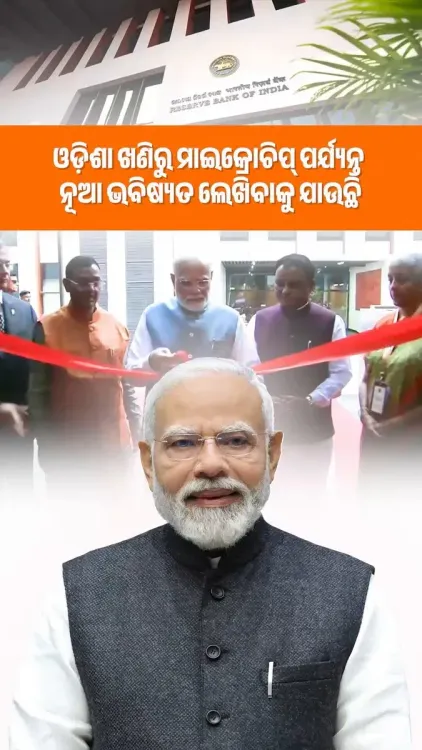
Odisha is rewriting its economic identity — and Chief Minister Mohan Charan Majhi wants the world to know it. On Sunday, 25 October 2026, Majhi took to X to declare that the state's development journey under the 'double-engine government' is gaining decisive new momentum, pivoting from its storied mineral wealth toward semiconductors and advanced computing.
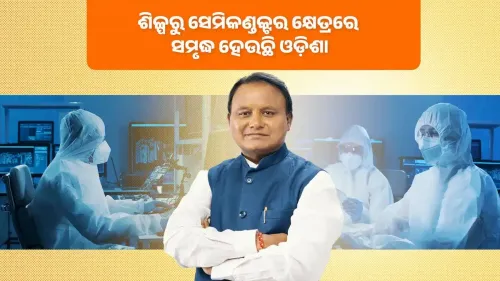
Majhi quoted Prime Minister Narendra Modi directly: 'Under the double-engine government, Odisha is advancing from minerals to microchips, building a strong technology ecosystem and creating new opportunities and jobs for its youth.' The Odia-language portion of the post reinforces the same vision — 'ଖଣିଜ ସମ୍ପଦରୁ ମାଇକ୍ରୋଚିପ୍' ('from mineral resources to microchips') — framing the shift as the state's 'new identity for the future.'
From Iron Ore to Integrated Circuits
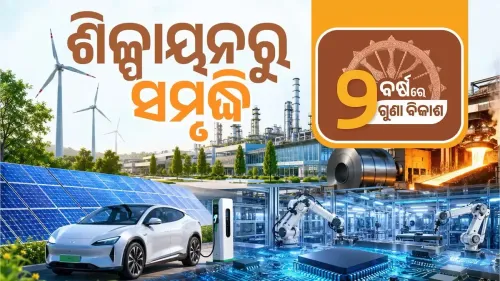
Odisha has long been one of India's richest repositories of iron ore, bauxite, chromite, and coal. That mineral base funded decades of heavy industry — steel plants, aluminium smelters, power stations. The political pitch now is that the same resource-driven revenue can seed a second, higher-value industrial chapter: electronics, semiconductors, and advanced computing infrastructure.
The national scaffolding for that ambition exists. The India Semiconductor Mission, approved in 2021, was designed precisely to build a domestic semiconductor and display manufacturing ecosystem, inviting states to position themselves as preferred destinations. BJP-governed states have been among the most vocal in aligning local investment pitches with that central framework, tying it to the broader Atmanirbhar Bharat push in electronics.
The 'Double-Engine' Political Framing
The phrase 'double-engine government' is a signature BJP formulation — the argument that a state with the same party in power at both the centre and in Bhubaneswar can unlock faster policy alignment, smoother fund flows, and stronger investor signalling. Majhi has led Odisha since June 2024, when the BJP ended the BJD's decades-long dominance in the state assembly. His post amplifying Modi's words on technology is a deliberate reinforcement of that political compact.
For Odisha's youth — the explicit beneficiary named in both the Hindi and Odia portions of the post — the promise is concrete: new employment doors opened by a technology sector that did not meaningfully exist in the state a decade ago.
Ambition Meets the Accountability Gap
The vision is bold. The specifics, so far, are thinner. No major semiconductor fabrication unit has been publicly confirmed for Odisha; the approved anchor projects under the India Semiconductor Mission have thus far been located in other states. The gap between the aspirational narrative and verifiable on-ground investment is the space that investors, opposition leaders, and job-seekers will be watching most closely.
The next concrete test will be whether Odisha can announce formal MoUs, land allocation, or investment commitments in electronics and advanced computing — with projected employment numbers attached — that turn today's political framing into tomorrow's factory floors.
Point of View
At which point the gap between Odisha's current semiconductor footprint and its stated trajectory will become a live electoral variable.
NationPress
25 Oct 2026
Frequently Asked Questions
What did Odisha CM Mohan Majhi say about semiconductors?
CM Mohan Charan Majhi posted on 25 October 2026 that Odisha is advancing 'from minerals to microchips' under the double-engine BJP government, quoting PM Modi's vision of building a technology ecosystem and creating jobs for the state's youth.
What is the double-engine government model in India?
The 'double-engine government' is a BJP political formulation arguing that states where the BJP governs both the state and the central government benefit from faster policy alignment, smoother fund flows, and stronger development momentum.
Is Odisha getting a semiconductor plant?
As of October 2026, no major semiconductor fabrication unit has been publicly confirmed for Odisha; approved anchor projects under the India Semiconductor Mission have been located in other states, though Odisha has expressed ambitions in this space.
What is the India Semiconductor Mission?
The India Semiconductor Mission was approved in 2021 to develop a domestic semiconductor and display manufacturing ecosystem, offering incentives to attract fabrication plants and related industries across Indian states.
How is Odisha's economy traditionally structured?
Odisha has historically been one of India's richest mineral states, with large reserves of iron ore, bauxite, chromite, and coal underpinning steel, aluminium, and power industries for decades.