Odisha Signs $11.5 Bn FDI Deal in Mining With IHC
Synopsis
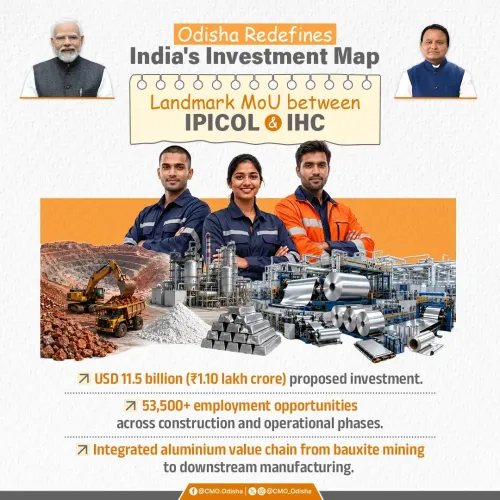
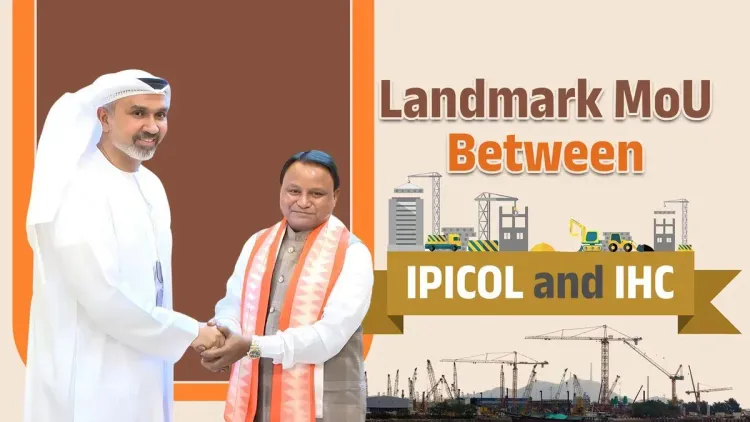
Odisha has signed a landmark MoU between IPICOL and IHC for a proposed USD 11.5 billion (₹1.10 lakh crore) investment in an integrated aluminium value chain — potentially India's largest FDI in mining and metallurgy — with over 53,500 jobs projected under Chief Minister Mohan Majhi's administration.
Key Takeaways
The IPICOL–IHC MoU proposes a USD 11.5 billion (₹1.10 lakh crore) investment in Odisha's mining and metallurgy sector.
The deal is described as potentially India's largest FDI in the mining and metallurgy sector.
The project targets creation of 53,500+ employment opportunities across the aluminium value chain.
The investment will develop an integrated aluminium value chain , from bauxite mining to downstream metal products.
The announcement was made by the Chief Minister's Office of Odisha on 2 July 2026 , crediting CM Mohan Majhi's leadership.
The MoU is a statement of intent; project execution remains subject to environmental, forest, and regulatory clearances.
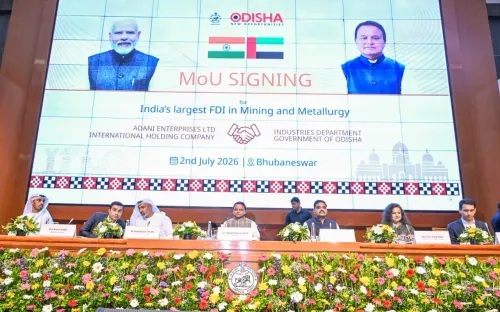
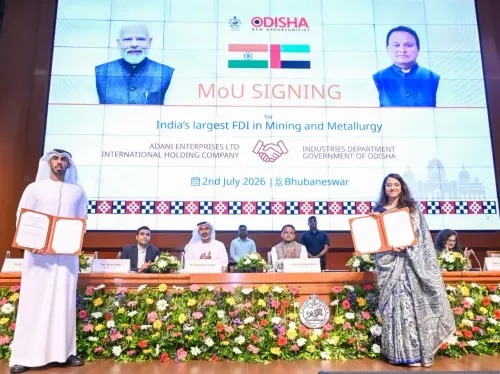
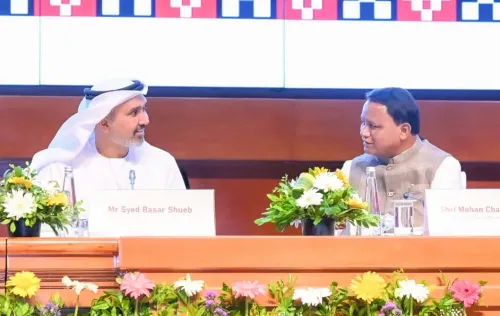
The Chief Minister's Office of Odisha announced on Thursday, 2 July 2026 that the state has signed a landmark Memorandum of Understanding between IPICOL (Industrial Promotion and Investment Corporation of Odisha Limited) and IHC, marking what the government describes as the country's largest proposed foreign direct investment in the mining and metallurgy sector, valued at USD 11.5 billion (₹1.10 lakh crore).
Context
The MoU envisions the development of an integrated aluminium value chain in Odisha, encompassing the full spectrum from raw material extraction to finished metal production. The partnership is expected to generate over 53,500 employment opportunities, spanning direct and indirect jobs across the value chain. The CMO's post, addressed jointly to @PMOIndia, signals the Centre's awareness and implied backing of the initiative.
The announcement credits the initiative to the 'visionary leadership' of Chief Minister Shri Mohan Majhi, who assumed office in June 2024 following the Bharatiya Janata Party's victory in Odisha's state assembly elections, ending 24 years of Biju Janata Dal rule. Since taking charge, the Majhi government has prioritised industrial investment as a pillar of economic policy.
Policy Backdrop
IPICOL is Odisha's nodal agency for facilitating industrial investment, functioning under the state's Department of Industries. It has historically been the primary vehicle through which the state signs MoUs with domestic and foreign investors, particularly ahead of and following the state's flagship Utkarsh Odisha investment summits.
IHC — International Holding Company — is a prominent Abu Dhabi-based conglomerate with diversified interests spanning energy, food, healthcare, and industrials. A partnership of this scale in aluminium aligns with IHC's broader strategy of deploying capital in resource-rich emerging-market economies. Odisha is home to some of India's largest bauxite reserves, making it a natural anchor for an aluminium value chain investment.
India's mining and metallurgy sector has been a focus of the Union government's Atmanirbhar Bharat and National Mineral Policy frameworks, which encourage deep-value processing of domestic mineral resources rather than raw export. A fully integrated aluminium chain — from bauxite mining through alumina refining to smelting and downstream fabrication — would directly serve this strategic objective.
Stakeholders and Impact
If realised, the ₹1.10 lakh crore investment would represent a historic inflow for Odisha and potentially the single largest FDI commitment in India's mining and metals sector to date. The 53,500-plus jobs figure encompasses roles across mining, refining, smelting, logistics, and ancillary industries, with significant potential for employment in Odisha's mineral-belt districts such as Koraput, Kalahandi, and Rayagada.
For the state government, the deal reinforces its pitch to position Odisha as a global investment hub — a narrative it has been building through successive investor conclaves and policy reforms in land acquisition, power supply, and single-window clearances. The explicit mention of PMO India in the post suggests the state is keen to project Centre-state alignment on this investment.
What's Next
An MoU is a statement of intent rather than a binding commitment; the investment will require environmental, forest, and regulatory clearances at both state and central levels before ground-breaking. The timeline for financial closure, land acquisition, and project phasing has not yet been disclosed in the official communication.
Observers will watch whether this deal is formalised into a definitive agreement and whether IHC proceeds to the detailed project report stage — the conventional next milestone after an MoU signing. Odisha's ability to convert high-value MoUs into operational projects will be a key test of the Majhi administration's industrial governance credentials in the months ahead.
Point of View
And it signals a deliberate effort by Chief Minister Mohan Majhi to establish industrial credibility distinct from his predecessor's legacy. At USD 11.5 billion, the proposed FDI — if converted into a binding agreement — would be a landmark in India's push to build domestic mineral processing capacity rather than export raw ore. The explicit loop-in of PMO India in the social media post is a calculated political signal, projecting Centre-state synergy on a deal that aligns squarely with the Union government's critical minerals and Atmanirbhar Bharat agenda. However, Odisha has a long history of large MoUs that stall at the clearance stage; the real test will be how quickly the state can translate this headline into shovels in the ground.
NationPress
2 Jul 2026
Frequently Asked Questions
What is the IPICOL IHC MoU signed by Odisha?
IPICOL (Industrial Promotion and Investment Corporation of Odisha Limited) and IHC have signed an MoU for a proposed USD 11.5 billion (₹1.10 lakh crore) investment to develop an integrated aluminium value chain in Odisha, announced on 2 July 2026.
Is this the largest FDI in India's mining sector?
The Odisha government describes the proposed IPICOL–IHC investment of USD 11.5 billion as the country's largest FDI in the mining and metallurgy sector, though the deal is currently at the MoU stage and binding commitments are yet to be formalised.
How many jobs will the Odisha aluminium project create?
The MoU projects the creation of over 53,500 employment opportunities across the integrated aluminium value chain, covering mining, refining, smelting, and ancillary industries.
Who is IHC and why is it investing in Odisha?
IHC (International Holding Company) is an Abu Dhabi-based conglomerate with diversified global interests. Odisha's vast bauxite reserves and the Indian government's push for domestic mineral processing make it a strategically attractive destination for a large-scale aluminium investment.
What happens after the Odisha IPICOL IHC MoU is signed?
An MoU is a non-binding statement of intent. The next steps include a detailed project report, followed by environmental, forest, and regulatory clearances at state and central levels before any construction or investment disbursement can begin.